






Ethereum continues to evolve, and its upcoming Fusaka upgrade marks another critical milestone on the network’s journey to becoming a truly scalable, secure, and user‑friendly global settlement layer. Scheduled for activation today, December 3, Fusaka follows Pectra upgrade and represents the next major stage in Ethereum’s long‑term roadmap.
This extensive upgrade introduces several Ethereum Improvement Proposals (EIPs) that focus on scaling data availability, improving validator efficiency, reducing bandwidth requirements, and enhancing overall user experience. At the heart of Fusaka lies PeerDAS (Peer Data Availability Sampling), a transformative technology expected to push Ethereum’s performance to new heights while keeping it decentralized.
Tomorrow: Fusaka
— Ethereum (@ethereum) December 2, 2025
Ethereum’s second major upgrade this year.
→ Feature highlight: PeerDAS - Unlocking up to 8x data throughput. For rollups, this means cheaper blob fees and more space to grow.
Learn more. https://t.co/3TOda5KjY2 pic.twitter.com/sEfeiTamy9
What is the Fusaka upgrade?
Fusaka is a hard fork, meaning it makes permanent changes to Ethereum’s rules and requires all nodes and validators to upgrade their software to remain part of the network. Like previous upgrades, it follows Ethereum’s dual‑naming convention. The term "Fusaka" combines "Fulu", a name derived from a star representing the consensus layer, and "Osaka", the Japanese city that will host Devcon 2025, symbolizing the execution layer.
Both layers of Ethereum receive simultaneous improvements that advance Ethereum’s scalability, efficiency, and usability. Fusaka serves as one link in a long chain of strategic upgrades that have gradually refined the system since Ethereum’s transition from proof‑of‑work to proof‑of‑stake in 2022.
Ethereum updates
Each major Ethereum update has built upon its predecessor:
- The Merge (2022): Transitioned Ethereum to an energy‑efficient proof‑of‑stake system.
- Shanghai/Shapella (2023): Allowed validators to withdraw staked ETH.
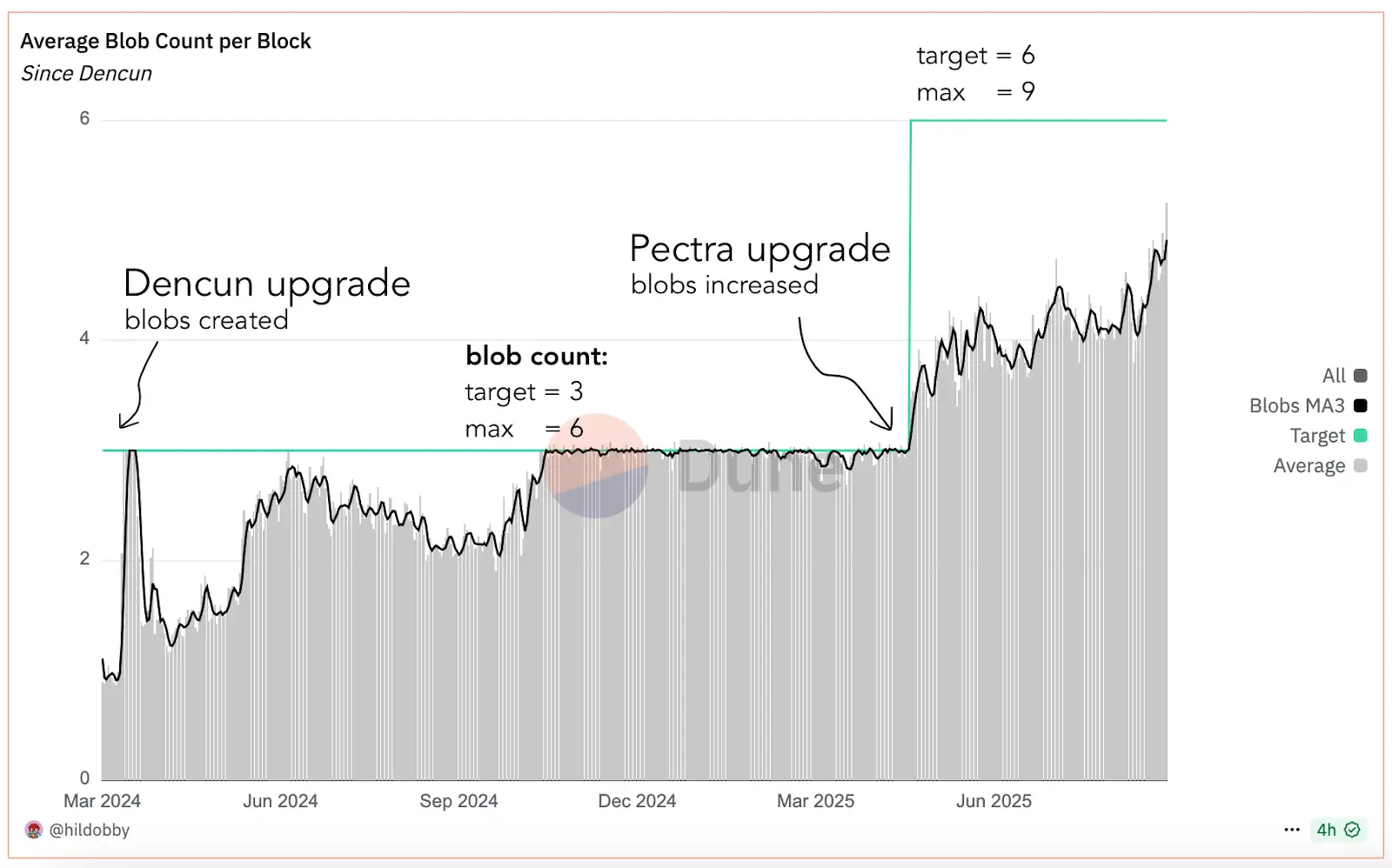
- Dencun (2024): Introduced "blobs" — ephemeral data storage that drastically lowered Layer 2 transaction costs.
- Pectra (2025): Increased blob capacity and improved validator flexibility.
- Fusaka (2025): Integrates PeerDAS to radically enhance data availability and scalability.
Fusaka transforms how Ethereum manages data by removing the need for every node to store the complete set of blob data. Instead, each node only keeps a small, random subset. This method opens up new levels of scale and makes sure that anyone can participate, even home validators.
The centerpiece: PeerDAS
The PeerDAS system, described in EIP‑7594, is the central feature of the Fusaka upgrade. It introduces data availability sampling, a technique that makes it possible to verify data integrity across the network without requiring every node to download and store all blob data.
Before Fusaka, all full nodes had to keep copies of every blob to ensure network safety. This design limited Ethereum’s scaling potential because larger or more frequent blobs demanded expensive hardware and bandwidth. Fusaka changes that model entirely.
Each node now stores only one‑eighth of the blob dataset. The data remains evenly distributed and recoverable because of erasure coding, which allows the entire data set to be rebuilt from any 50% subset of the total. This balance makes the system much more efficient while also making sure that the data is accurate.
Benefits of PeerDAS:
- Hardware and bandwidth demands drop sharply.
- Validation remains verifiable and secure.
- Blob scaling increases up to eightfold, enabling cheaper and faster Layer 2 operations.
PeerDAS keeps the network decentralized because more individuals can run validator or full nodes without costly infrastructure.
Blob parameter‑only forks: flexible scaling between major upgrades
Ethereum’s coordinated network upgrades take time and extensive testing. To address immediate scaling demands from Layer 2 networks, Fusaka introduces blob parameter‑only (BPO) forks as outlined in EIP‑7892.
These mini‑forks let clients coordinate safe increases in blob limits between major network upgrades. Validators and node operators can adopt updated blob parameters quickly, without waiting for a complete protocol fork.
For instance, after Fusaka activation, the initial target remains six blobs per block, the same as in Pectra. But successive BPO adjustments can raise this count to nine, twelve, or higher, depending on network needs.
This flexibility lets Ethereum grow with Layer 2 activity while still being stable and following strict testing procedures.
Strengthened fee mechanisms through EIP‑7918
Another important optimization comes from EIP‑7918, which modifies blob fee behavior. Under earlier mechanisms, when execution gas fees dominated, blob fees could collapse to negligible levels, reducing their usefulness as price signals.
EIP‑7918 corrects this through a proportional reserve price mechanism. When the reserve exceeds the nominal blob base fee, the chain treats the block as over target. That adjustment keeps blob fees meaningful and prevents them from dropping to one wei.
This makes sure that:
- The blob fee market remains responsive to network congestion.
- Rollups pay a fair compute cost relative to the resources they consume.
- Fee behavior stays predictable and avoids underpricing.
Core execution layer improvements
Beyond PeerDAS and fee reforms, Fusaka introduces several EIPs that refine how Ethereum handles computation and transaction limits at Layer 1.
Partial history expiry
Per EIP‑7642, clients will remove historical data predating the Merge, freeing significant storage space. Node operators experience lower hardware requirements while maintaining chain integrity.
Setting upper bounds for MODEXP
EIP‑7823 adds strict limits to the MODEXP precompile, capping input sizes at 8192 bits. This prevents abuse and guarantees stable client performance.
Transaction gas limit cap
With EIP‑7825, each individual transaction caps at 16,777,216 gas units (2²⁴). This proactive step maintains predictable validation times even as Ethereum raises overall block limits.
Adjusted MODEXP costs
EIP‑7883 recalibrates MODEXP gas pricing to match real compute costs. These changes smooth out block validation times and remove the risk of single transactions monopolizing resources.
RLP execution block size limit
EIP‑7934 introduces a 10 MiB cap on RLP‑encoded execution block size, with 2 MiB reserved for consensus data. This alignment lets blocks propagate evenly across the network.
Default gas limit increase
EIP‑7935 raises the default gas limit to 60 million. This upgrade enables more complex transactions, greater throughput, and improved performance metrics. Testing across devnets has validated that this level remains safe under stress.
User‑experience and developer enhancements
Fusaka pays equal attention to the everyday experience of users and developers, introducing improvements that make Ethereum easier to interact with and build upon.
Deterministic proposer lookahead
EIP‑7917 gives the Beacon Chain foresight of which validator will propose blocks in upcoming epochs. This knowledge improves network stability and allows mechanisms such as pre‑confirmations, where users can gain assurance that their transactions will appear in future blocks.
Count leading zeros opcode
EIP‑7939 adds the count leading zeros (CLZ) instruction to the EVM. This helps smart contract developers by simplifying common computations related to cryptographic proof handling and arithmetic operations.
secp256r1 precompile support
EIP‑7951 integrates support for the secp256r1 (P‑256) curve. This enables device‑native authentication, allowing Ethereum wallets to connect with secure hardware like Apple’s Secure Enclave, Android Keystore, or FIDO2 devices.
This change reduces reliance on seed phrases, introduces passkey‑style logins, and simplifies onboarding for mainstream users.
Meta improvements
Another practical update comes from EIP‑7910, introducing the eth_config JSON‑RPC method. This call allows developers and validators to confirm fork configurations directly from their nodes, addressing coordination challenges seen in previous testnet activations.
Real‑world implications of Fusaka
Layer 2s and scalability
PeerDAS combined with BPO forks will multiply blob availability and throughput. Layer 2 fees can fall further by 40–60%, making on‑chain interactions cost‑efficient for users worldwide.
Developers building rollup solutions receive more bandwidth for posting transaction data and greater capacity to accommodate user growth.
Node operators and validators
PeerDAS dramatically reduces bandwidth requirements. Each node handles only about one‑eighth of the total blob data, cutting daily download loads by almost 85%. Home validators can maintain full participation without enterprise‑grade connections, reinforcing decentralization.
Regular ETH holders
For everyday users, Ethereum’s experience becomes smoother. While Layer 1 gas prices remain steady, Layer 2 transactions become cheaper and quicker. The network remains backward‑compatible, and no ETH migration is required.
Developers and DeFi participants
The higher block gas limit and new EVM features enable more sophisticated decentralized finance tools and smarter contracts. Simpler instruction sets and EOF efficiencies lead to lower costs and cleaner codebases.
Institutional confidence
Consistent technical upgrades provide evidence of Ethereum’s maturity. Successful execution of Fusaka will reinforce confidence among financial institutions exploring blockchain integration, particularly because it delivers scalability without sacrificing decentralization.
The path forward after Fusaka
Ethereum’s improvement schedule continues beyond this milestone. The next planned upgrade, Glamsterdam, targets further refinements in 2026. It will build on Fusaka’s foundation to deliver more functionality under ongoing initiatives such as:
- The Surge: Completing Ethereum’s scaling vision with full Danksharding.
- The Verge: Introducing Verkle Trees to reduce node storage needs.
- The Purge: Streamlining protocol history and removing technical debt.
- The Splurge: Adding enhancements like account abstraction and new cryptographic tools.
The long‑term vision
Ethereum’s ultimate goal remains consistent to serve as the decentralized layer for global decentralized applications and financial infrastructure. The Fusaka upgrade brings that vision closer by demonstrating that Ethereum can scale dramatically while keeping security and decentralization intact.
By combining PeerDAS, increased gas capacity, better developer tools, and efficient fee mechanics, Fusaka transforms Ethereum into a stronger foundation for the next generation of decentralized technologies.
The Fusaka upgrade is more than another technical release. It is a demonstration of Ethereum’s capacity to evolve thoughtfully and sustainably. Once live on December 3, it will strengthen scalability, reduce costs for Layer 2s, and improve usability across the ecosystem.
For users, cheaper and faster transactions will expand accessibility. For developers, refined tooling and expanded capacity open new opportunities for innovation. For validators, leaner operation requirements lower barriers and support network diversity.
With Fusaka, Ethereum sets the stage for mass adoption without losing the decentralized ethos that defines it. It reaffirms that genuine scaling can exist hand in hand with openness, security, and community alignment.
 Roman Zaika
Disclaimer: All materials on this site are for informational purposes only. None of the material should be interpreted as investment advice. Please note that despite the nature of much of the material created and hosted on this website, HODL FM is not a financial reference resource, and the opinions of authors and other contributors are their own and should not be taken as financial advice. If you require advice. HODL FM strongly recommends contacting a qualified industry professional.