






In cryptocurrency trading, everyone is hunting for that “money button.” And what’s really interesting, some traders actually find it. It’s a well-thought-out trading strategy.
In this article, we’re breaking down the core crypto trading strategies used across the market. We’ll explore how to trade crypto, manage risk, avoid common mistakes, and choose strategies that fit individual psychology.
Understanding the basics of crypto trading
During crypto trading, you’re essentially betting that the price of an asset will go up or down. So what guides those decisions?
A crypto trading strategy is a clear plan that defines when to enter a trade, when to exit, how much money to risk, and what to do if the market moves against you. It helps you make decisions with a clear head.
But that’s not all. You can have the best strategy in the world, but without risk management, you’ll blow up your account before you ever get the chance to use it. Crypto risk management is about controlling potential losses by deciding in advance how much you’re willing to lose on a single trade.
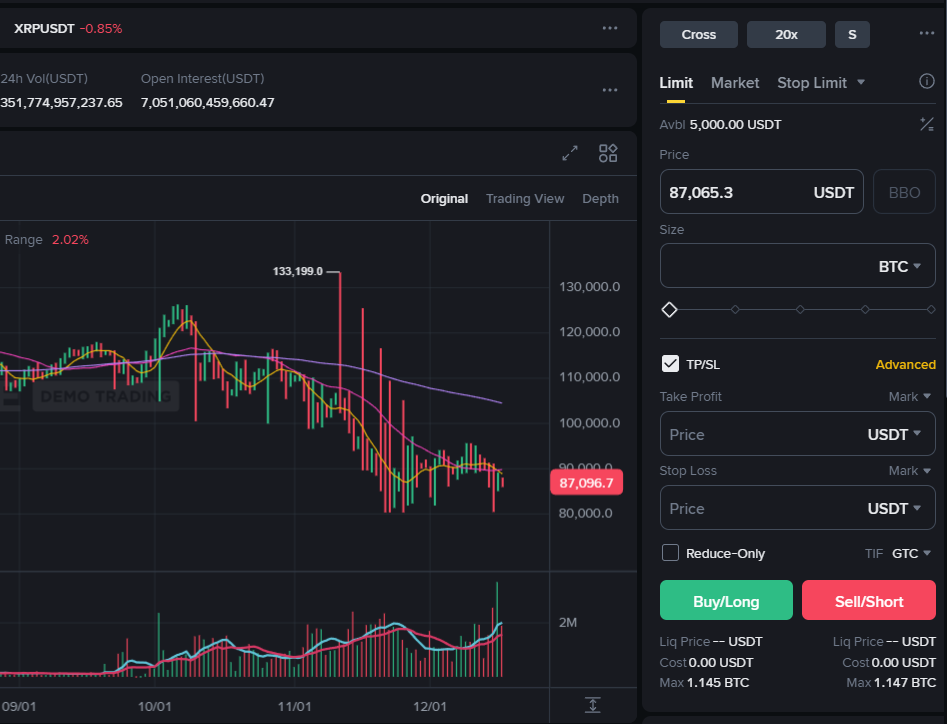
When risk management is ignored, losses can quickly lead to liquidation. Think of it as a game over. Liquidation is the automatic closure of a leveraged position by an exchange once losses reach your collateral.
Main crypto trading strategies
As much as we’d like it to be otherwise, there’s no trading strategy with a 100% win rate. The real goal is to find a strategy that matches your risk tolerance and the amount of time you’re willing to spend on trading.
Strategies can be divided into several categories. Some strategies will overlap across categories, but this helps you see both the similarities and the differences between them.
Strategies by time horizon (how long you hold a position)
- Scalping: It’s when you open dozens of trades within a couple of minutes, based on tiny price movements. Scalping crypto gives you zero room for hesitation, and constant stress and emotional fatigue make it extremely hard.
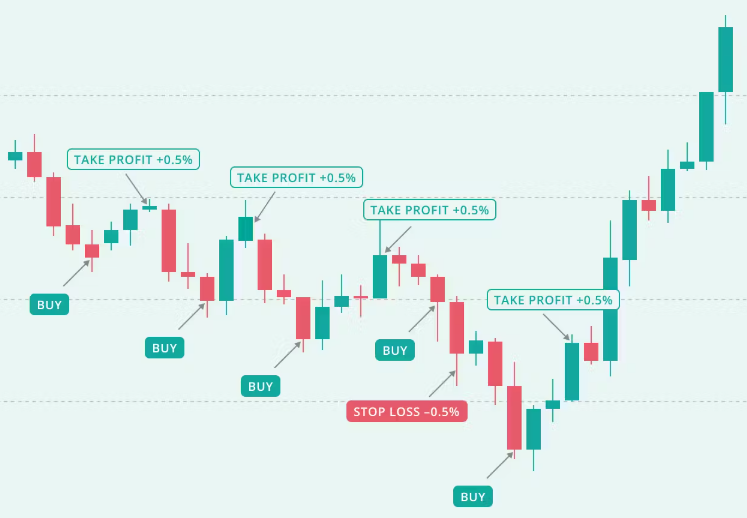
- Day trading: Day traders open and close positions within the same day. This approach is usually trend-driven on lower time frames, such as 1 hour, 4 hours, and 1 day. Most day traders fail not because the strategy is bad, but because they panic and break their own rules.
- Swing trading: Here, you hold positions for days or weeks to capture medium-term trends. You still rely on technical analysis, but focus on higher time frames where price action is clearer. It’s a zone where +30% or +50% moves happen, what traders call “catching a rocket.”
- Position trading (or holding): It’s what most people casually call “investing.” It focuses on market cycles and fundamental analysis of projects. This approach allows a “set it and forget it” mindset, with positions held for months or even years.
Strategies by decision-making approach (what your analysis is based on)
- News and sentiment-based trading: This approach reacts to announcements, macro events, narratives, social media sentiment, and market psychology. This is exactly where Warren Buffett’s rule applies: “Be fearful when others are greedy, and greedy when others are fearful.”
- Dollar-Cost Averaging (DCA): DCA crypto is for people who hate timing the market. You invest a fixed amount at regular intervals, regardless of price.
DCA removes emotion from decision-making, making it one of the best crypto strategies for beginners. It turns crypto exposure into a habit like hitting the gym. Just keep going!
Strategies by execution style (who pulls the trigger)
- Manual trading: All decisions and executions are made by the trader manually.
- Algorithmic or automated trading: You define the rules, the system executes them 24/7. Automation removes emotion, but still doesn’t remove risk. This category also includes trading bots offered by many crypto trading platforms.
- HFT Trading (High-Frequency Trading): HFT is a specialized subset of algorithmic trading used by institutions. Mega-fast computers execute thousands of trades in fractions of a second. Their algorithms are hunting for tiny price differences and arbitrage opportunities across markets.
Strategies by source of profit
- Crypto arbitrage uses price differences between markets and trading pairs. You buy where it’s cheaper and sell where it’s more expensive. In theory, it’s low-risk, but in practice, fees and competition make true arbitrage rare and hard to execute.
- Trend and momentum strategies: These strategies profit from sustained price movement in one direction. Traders enter positions in the direction of the trend and aim to exit as momentum weakens.
Common mistakes new traders make
You don’t make mistakes if you don’t do anything. What matters most is learning from them. Below are the mistakes almost every trader makes at the beginning of their journey.
Emotional trading
Emotional trading plays a major role during market crashes. When Donald Trump announced new tariffs on Chinese imports, global markets reacted immediately. Bitcoin dropped, altcoins fell even harder, and the sell-off escalated into a crash on October 10, 2025.
Instead of cutting losses, many traders held onto losing positions, hoping for a bounce. Prices kept falling, and liquidations followed.
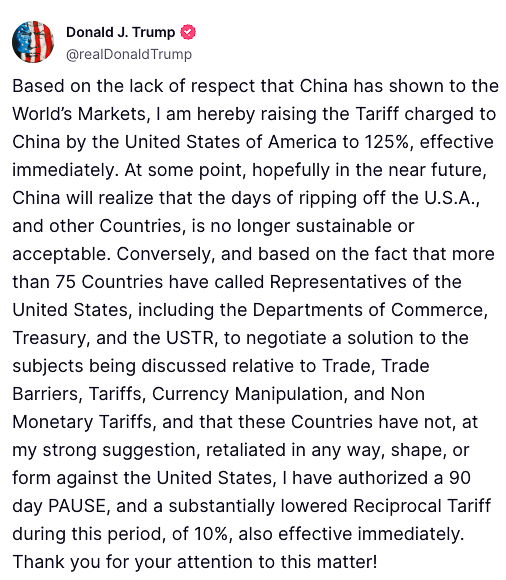
According to CoinDesk, nearly $646 million in leveraged positions were wiped out that night, with about 90% of them being long positions.
Reckless over-leveraging
Another classic mistake is using high leverage. Even a relatively small price move can wipe out your position entirely. Once losses reach your collateral, the exchange closes the trade automatically.
Machi Big Brother (real name is Jeffrey Huang), a well-known crypto trader, suffered multiple liquidations on Ethereum and Uniswap. He kept opening large leveraged positions and adding margin as the market moved against him. It resulted in losses of over $15.89 million, leaving just $61,783 in his account, CryptoRank reports.
Not keeping a trading journal
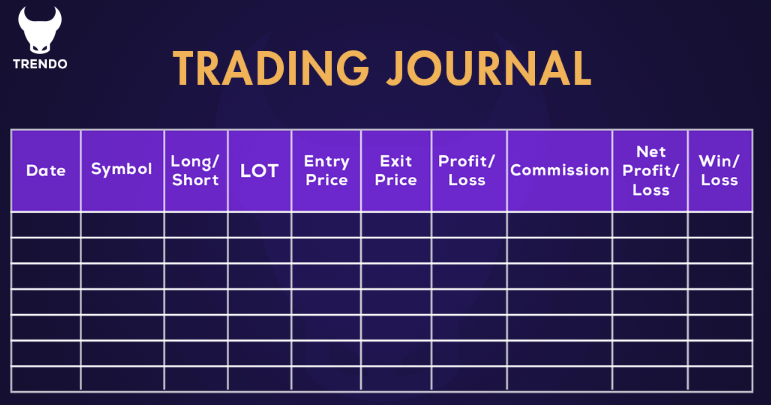
If you don’t document your decisions, you can’t learn from your mistakes or spot patterns in your behavior. Without a trading journal, real improvement is impossible.
Ignoring stop-losses
Use stop-losses in every single trade without exception, as they protect your capital. For example, if you enter a trade buying 10 shares at $100 each, without a stop-loss, a sudden market crash could see your shares drop to $50 each, resulting in a $500 loss on that trade. With a stop-loss set at $90, your loss would be limited to $100 (10 shares × $10 loss), protecting your capital.
Tips for successful crypto trading
I’m not going to tell you that you’ll always win. But I will tell you what actually works.
Always use risk management
This isn’t advice, it's a law. Every single trade needs a stop-loss. Every position needs a size limit. Think of it this way: you can survive ten bad trades in a row if each one costs you 2%. But one all-in trade that goes wrong? Liquidation. That’s game over.
The market always offers opportunities
The market is not running out of money. You don’t need to FOMO into every pump. When you truly believe opportunities are infinite, you stop revenge-trading after a loss.
Do fundamental analysis
Markets move on sentiment and news. For many, the market crash on October 10 was tragic proof of that. A ten-minute news check before each trading session can save you thousands.
Track your performance
Write down every trade: entry price, exit price, reasoning, result, and emotional state. Reviewing 20–30 trades will help you identify your behavioral patterns. Are you profitable? If not, why do you lose? Your ego might lie, but your journal won’t.
Build consistency
If your trading strategy and risk management are set up properly, you won’t disappear from trading for months because of one big loss. You move forward in small, consistent steps. A 1% profit per trade, repeated 50 times a month, can compound into impressive results.
How to choose a crypto trading strategy
The most important thing is that the strategy fits your psychology and lifestyle. Fast approaches like scalping and day trading crypto appeal to traders who want quick results and are comfortable with high emotional pressure.
Swing trading crypto is often a solid middle ground. It can deliver strong returns, but it also requires the discipline to sit through drawdowns without panic-selling at a loss.
If you don’t want to chase perfect entry points, position trading or Dollar-Cost Averaging (DCA) may be a better fit. These approaches favor patience over fast reactions.
For traders who prefer full control and want to understand the logic behind every trade, strategies based on manual analysis make sense. Those who want to reduce decision-making and emotional involvement can rely on automation tools to execute trades for them.
 Matvii Diadkov
Disclaimer: All materials on this site are for informational purposes only. None of the material should be interpreted as investment advice. Please note that despite the nature of much of the material created and hosted on this website, HODL FM is not a financial reference resource, and the opinions of authors and other contributors are their own and should not be taken as financial advice. If you require advice. HODL FM strongly recommends contacting a qualified industry professional.