





Institutional investors now view the industry primarily through the distinction between crypto assets and crypto companies in 2026. While early years were dominated by the price action of tokens like Bitcoin and Ethereum, 2026 is defined by the maturity of the underlying corporate entities: the exchanges, infrastructure providers, and payment giants that facilitate the global movement of digital value. Market capitalization remains the gold standard for measuring this influence, but unlike the speculative peaks of the early 2020s, a company’s valuation in 2026 is driven by audited revenue, regulatory standing in major jurisdictions like the U.S. and EU, and the long-term retention of its user base.
How crypto companies are valued in 2026
Evaluating a crypto company today requires a multi-dimensional framework that distinguishes between equity value and token market cap. For many firms, their public or private equity value is distinct from the market cap of a native token they may have launched. Analysts now look at the company's balance sheet holdings and the fully diluted value of tokens. This shift marks a transition from valuations being based on multiples of trading volume to multiples of stable fee revenue and SaaS-style infrastructure contracts.
The "Regulatory Premium" has also become a critical valuation metric. Companies holding a BitLicense in New York, MiCA compliance in Europe, or VASP licenses in Asia-Pacific trade at a significant premium due to their lower risk profiles. Furthermore, valuation is increasingly tied to a company’s role in Web3 infrastructure, specifically the degree to which other applications and protocols rely on its APIs, nodes, or custody solutions for daily operation.
Top 10 crypto companies
The following ranking reflects the total corporate valuation of these entities as of H1 2026, combining public market caps for listed firms and the latest funding or secondary market data for private giants.
1. Strategy Inc.
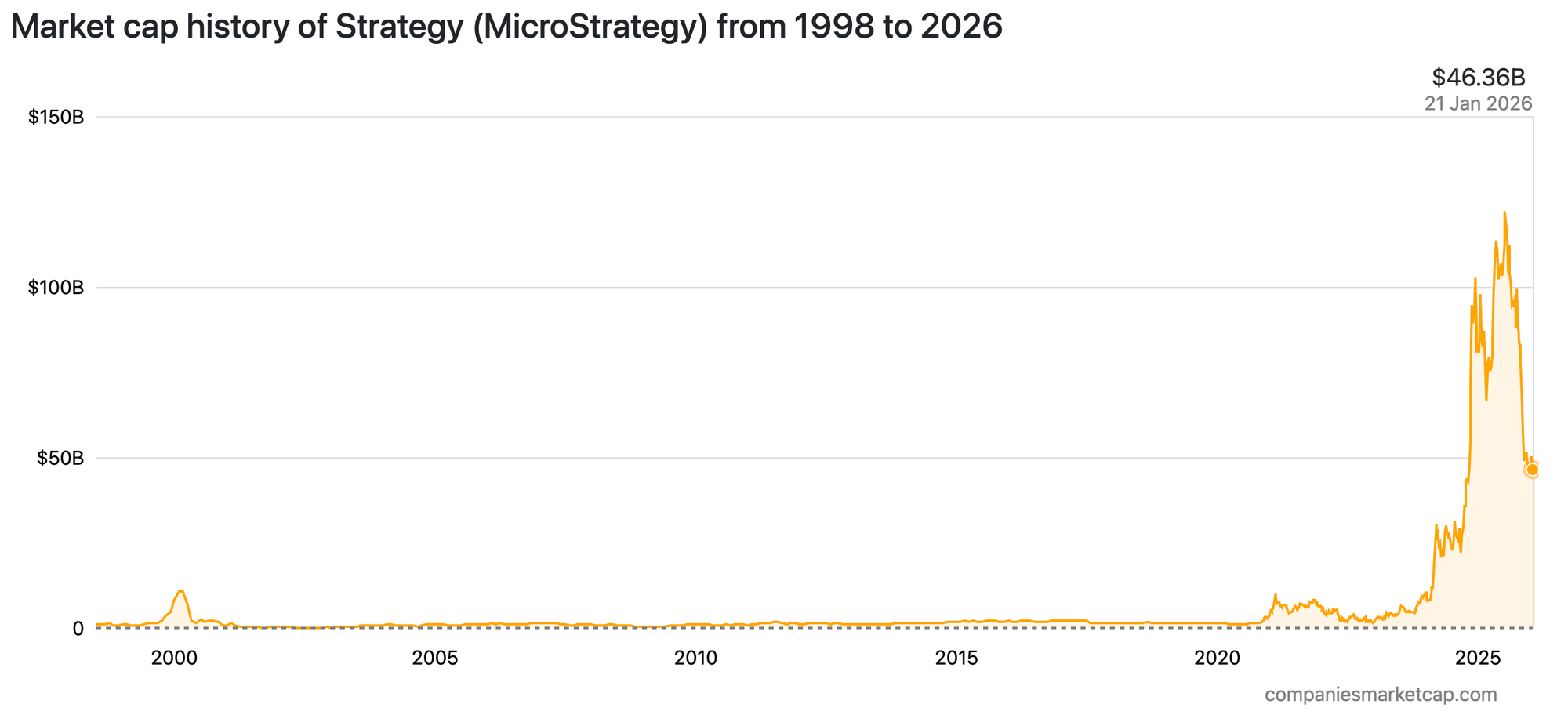
Under the leadership of Michael Saylor, Strategy Inc. has effectively transitioned from a software firm to the world's largest Bitcoin-backed treasury and digital asset holding company. As of January 2026, the company's market capitalization is $46.36 Billion, according to CompaniesMarketCap data. Its revenue model is primarily driven by the appreciation of its Bitcoin holdings, which now exceed 745,000 BTC, alongside institutional software services. The company remains a dominant market leader because it serves as a de facto Bitcoin ETF with leverage, allowing institutions to gain exposure to the asset through a highly liquid and regulated equity instrument.
2. Coinbase Global (COIN)
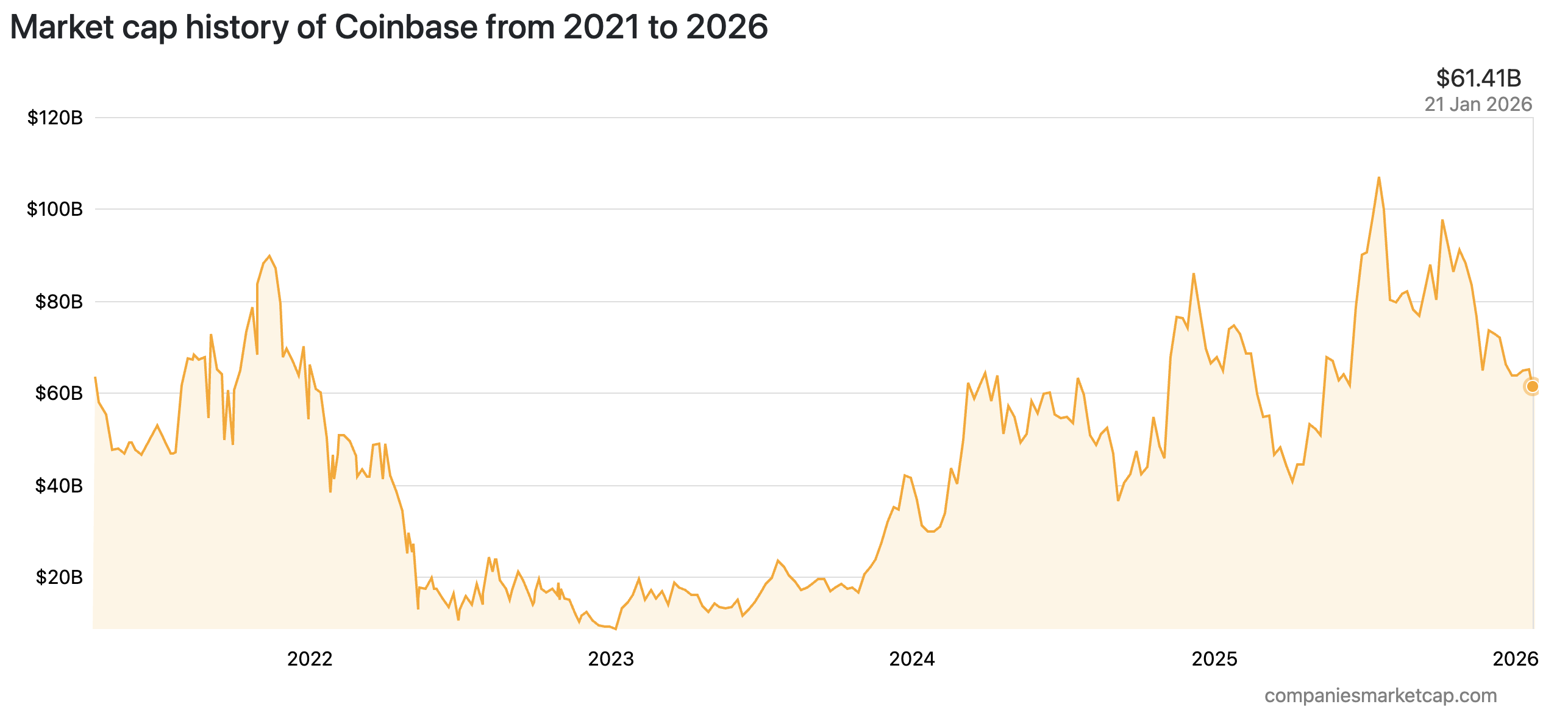
As the flagship of American crypto, Coinbase has evolved from a simple retail exchange into an institutional prime broker and the primary custodian for nearly all U.S. spot ETFs. Data from CompaniesMarketCap indicates that Coinbase's market capitalization is $61.4 billion. Its revenue is highly diversified across transaction fees and its "Subscriptions and Services" segment, which now accounts for a massive portion of its top-line growth. Its dominance in the Layer 2 space with the Base network and its successful integration of institutional derivatives have positioned it as a vertically integrated financial giant with significant influence over the Ethereum ecosystem.
3. Binance
Despite years of regulatory headwinds, Binance remains the world’s largest exchange by volume and the primary liquidity provider for the global market. While it remains private, its estimated corporate valuation is approximately $65 billion, roughly on par with Coinbase's public equity. The company relies heavily on spot and derivatives trading fees, supplemented by its ecosystem of BNB Chain-based services. Its resilience after the 2023-2024 settlements and its pivot toward full compliance in over 15 jurisdictions have stabilized its valuation.
4. Ripple
Founded in 2012, Ripple has spent the last several years solidifying its role as the bridge between traditional banking and the XRP Ledger. Its primary revenue model involves the sale of Ripple Payments software to financial institutions and the management of its XRP holdings. CNBC has projected Ripple's value at $40 billion, anticipating its potential 2026 IPO. The 2025 passage of the GENIUS Act in the United States provided the regulatory clarity Ripple needed to expand, and its valuation has been bolstered by the successful launch of its USD-pegged stablecoin, RLUSD.
5. Tether
As the issuer of USDT, Tether’s influence is systemic and reaches every corner of the crypto economy. Its token market cap nears $200 billion. According to the Bloomberg report from late 2025 and early 2026, Tether was exploring a $20 billion capital raise that would value the company at approximately $500 billion. The company reported significant financial performance in 2025, generating over $10 billion in net profit and holding $135 billion in U.S. Treasury exposure as of September 30, 2025. Tether acts essentially as a central bank for the crypto market, and its profitability has reached historic levels, allowing it to expand into energy and AI infrastructure.
6. Circle Internet Financial
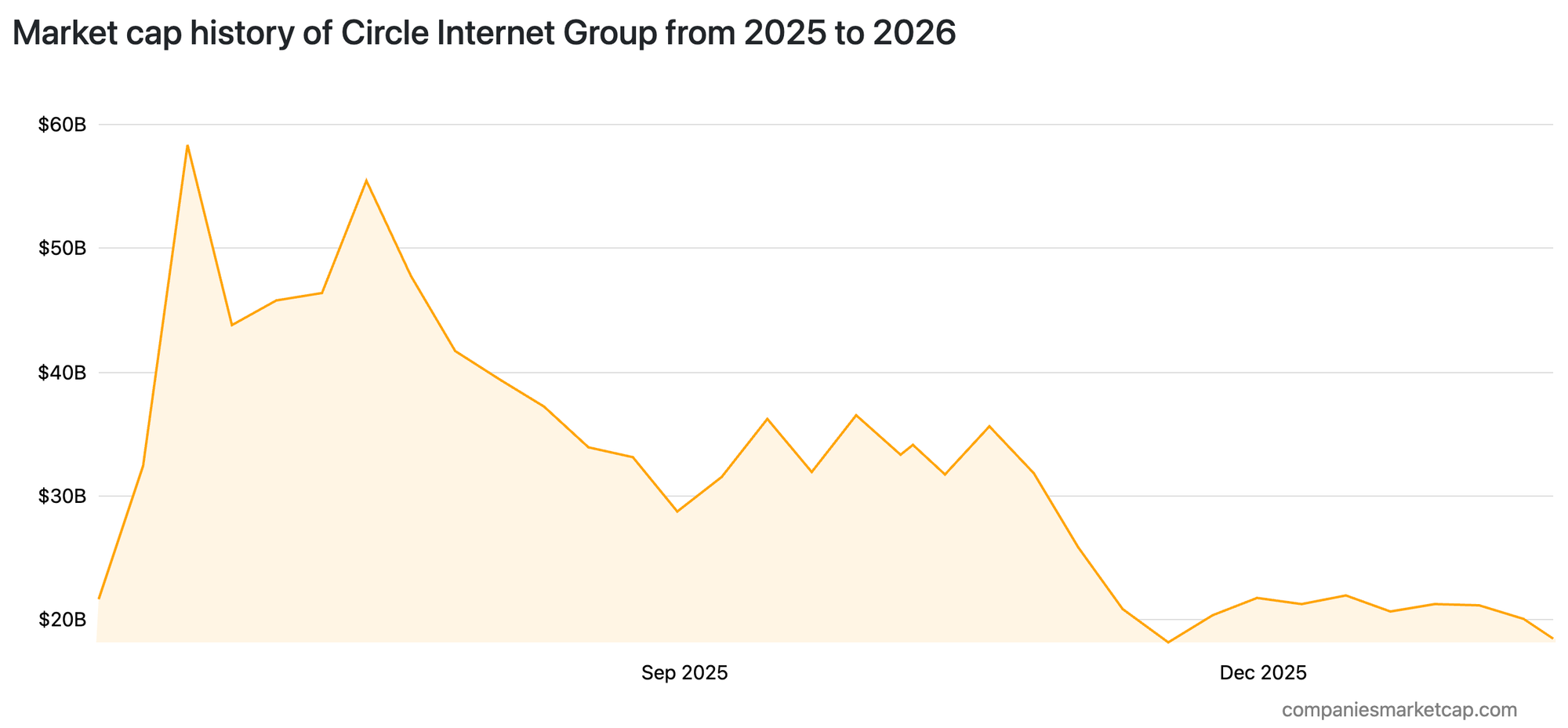
Circle is the issuer of USDC and serves as the primary regulated alternative to Tether, focusing on transparency and integration with Western financial systems. Following its successful public debut, the company maintains a market capitalization of approximately $18.49 billion. Its revenue model is built on interest income from reserves and transaction fees from its programmable money APIs. Circle is viewed by Wall Street as the primary partner for traditional fintech giants like Visa and Stripe.
7. Kraken
Kraken is a veteran exchange known for its high security and deep liquidity, particularly in European markets. In anticipation of its 2026 IPO, the exchange has been valued at $15 billion to $20 billion, as reported by HodlFM, November 2025. Its revenue model is split between trading fees and a robust "Staking-as-a-Service" arm for institutional clients. Kraken is often cited as the cleanest publicly listed alternative to Coinbase, especially after securing its MiCA license in Europe.
8. Block, Inc.
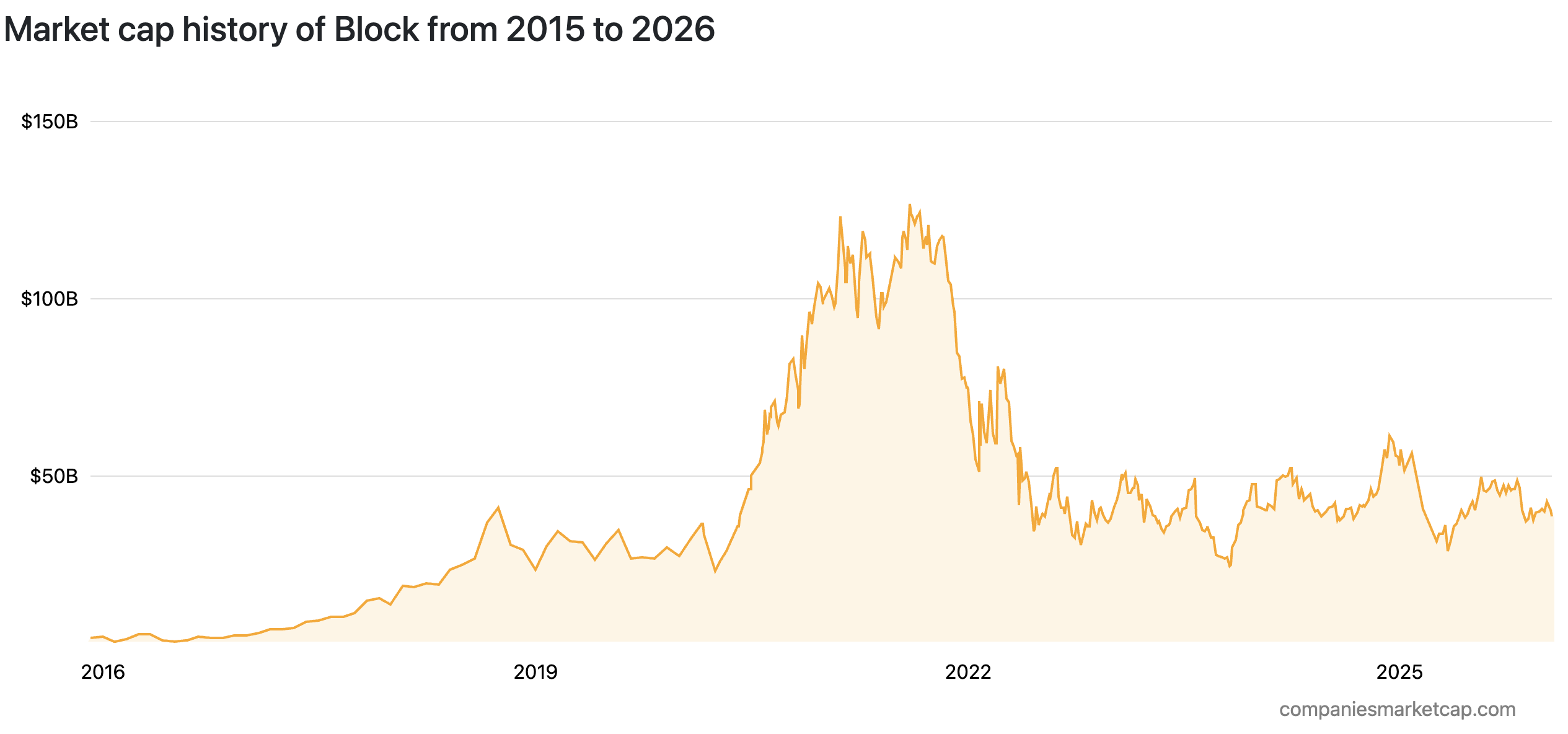
While Block is a diversified fintech company, its Bitcoin-centric units (TBD and Spiral), along with Cash App’s crypto services, represent a massive portion of the ecosystem's retail volume. CompaniesMarketCap data shows that the "crypto-pure" segment of the business is worth approximately $38.17 billion. The company focuses on Bitcoin sales revenue and merchant fees for Lightning Network-integrated payments, making it the leader in real-world Bitcoin commerce.
9. Galaxy Digital
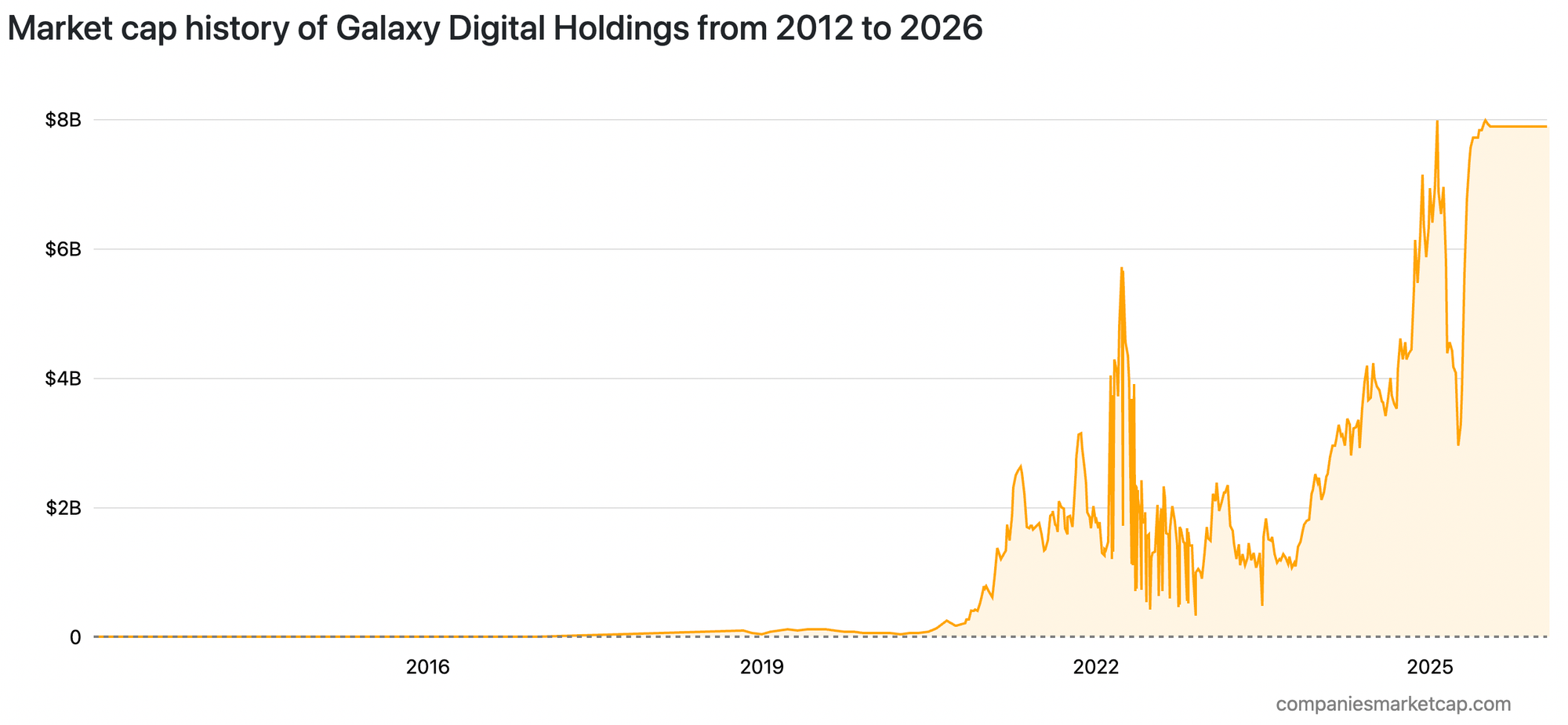
Founded by Mike Novogratz, Galaxy Digital operates as the premier investment bank of the crypto world, offering asset management, mining, and institutional advisory. Galaxy Digital has a market capitalization of $7.88 billion. It generates revenue through performance fees and principal investments in emerging Web3 companies. It currently serves as the primary advisor for corporate crypto mergers and acquisitions.
10. Consensys
Consensys is the leading Ethereum infrastructure company, responsible for the MetaMask wallet and the Infura node service. It was last valued in private rounds at $7 billion, according to CryptoRank data. As the primary on-ramp to the decentralized web, Consensys sits at the center of the Ethereum ecosystem. Its mid-2026 IPO filing highlights the massive revenue generated by its 50 million monthly active users and the growth of its Layer 2 network, Linea.
Risks and limitations of market cap rankings
Market capitalization does not always tell the full story of a company’s health. For private entities like Binance or Tether, valuations are often based on secondary market trades or internal projections that may lack the transparency of audited public filings. Furthermore, the disconnect between a company's equity and its native token remains a risk; a company's stock might rise while its native token falls, creating a complex picture for those trying to assess total enterprise value. Regulatory shifts also remain a wildcard, as changes in leadership or international policy can quickly impact the "Regulatory Premium" these firms currently enjoy.
Conclusion
By 2026, the crypto industry has moved beyond its initial phase of pure speculation. The companies listed here represent the new backbone of global finance, firms that are as much technology companies as they are financial institutions. Market capitalization in this era is a measure of scale, trust, and utility. As the industry continues to integrate with traditional markets, these leaders are well-positioned to remain the primary architects of the digital economy.
 Kataryna Dyl
Disclaimer: All materials on this site are for informational purposes only. None of the material should be interpreted as investment advice. Please note that despite the nature of much of the material created and hosted on this website, HODL FM is not a financial reference resource, and the opinions of authors and other contributors are their own and should not be taken as financial advice. If you require advice. HODL FM strongly recommends contacting a qualified industry professional.