





What if I told you that you could simply put your money in the right place and watch your profits grow automatically without any effort? You might suspect it’s a scam. However, it’s not. It's staking.
In this article, you’ll learn:
- what crypto staking is,
- how it works from a technical perspective,
- which platforms are considered the best,
- how to choose the right one for your needs,
- and what risks you should be aware of before getting started.
Start reading now!
What is staking crypto?
Crypto staking is a way to earn passive income by helping secure a blockchain network. Many modern blockchains rely on Proof-of-Stake (PoS), a system where participants lock up their crypto to support the network. This “locked” amount is called a stake.
The more crypto you stake, the higher your chances of being chosen as a validator. It’s the person who confirms transactions and adds new blocks. In return, validators earn staking rewards. They are usually paid out in newly issued tokens or transaction fees.
What keeps validators honest? PoS includes a penalty system known as slashing, where part of a validator’s stake can be taken away if they break the rules or go offline.
Most beginners don’t run validators themselves. Instead, many networks use Delegated Proof-of-Stake (DPoS), where you delegate your tokens to a trusted validator who handles the technical work. You still earn rewards minus a small commission.
So, it's a kind of teamwork: validators handle the technical responsibilities while delegators supply funds.
8 Best crypto staking platforms
In the list of top crypto staking platforms, you'll find both major exchanges that offer staking services and dedicated platforms designed specifically for staking.
Here is the full list:
- Binance Earn
- Coinbase Staking
- Lido Finance
- Rocket Pool
- MEXC Earn
- Bybit Earn
- OKX Earn
- Nexo
Let’s start with a comparison table outlining the main features of each platform.
Now, let’s take a closer look at each of them.
1. Binance Earn
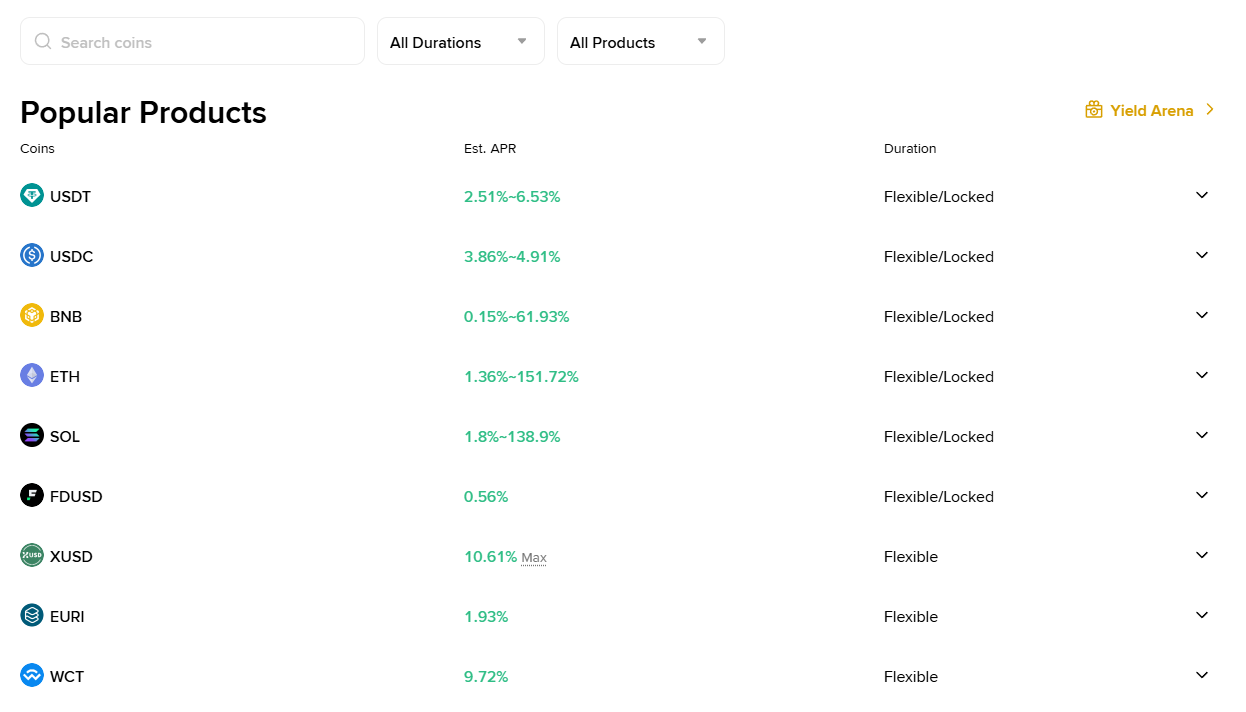
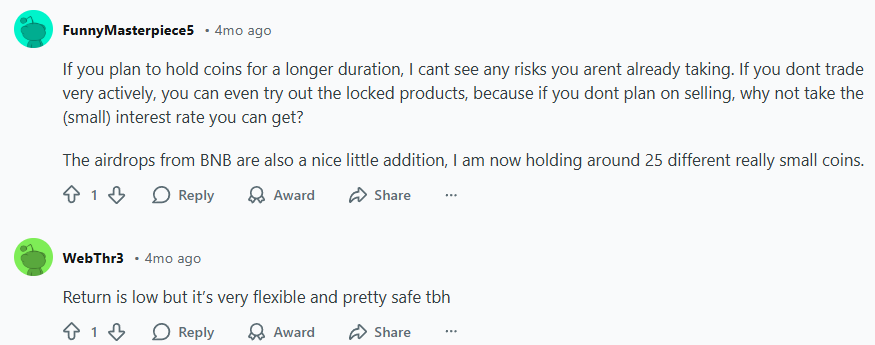
Binance Earn is one of the biggest and most flexible staking hubs on the market. It supports 100+ cryptocurrencies. The platform usually takes around a 10% commission on staking rewards.
A unique competitive advantage is the "Launchpool," where staking BNB or stablecoins earns you new, unlisted tokens. These airdrops often provide significantly higher effective yields (APY) than standard on-chain staking.
2. Coinbase Staking
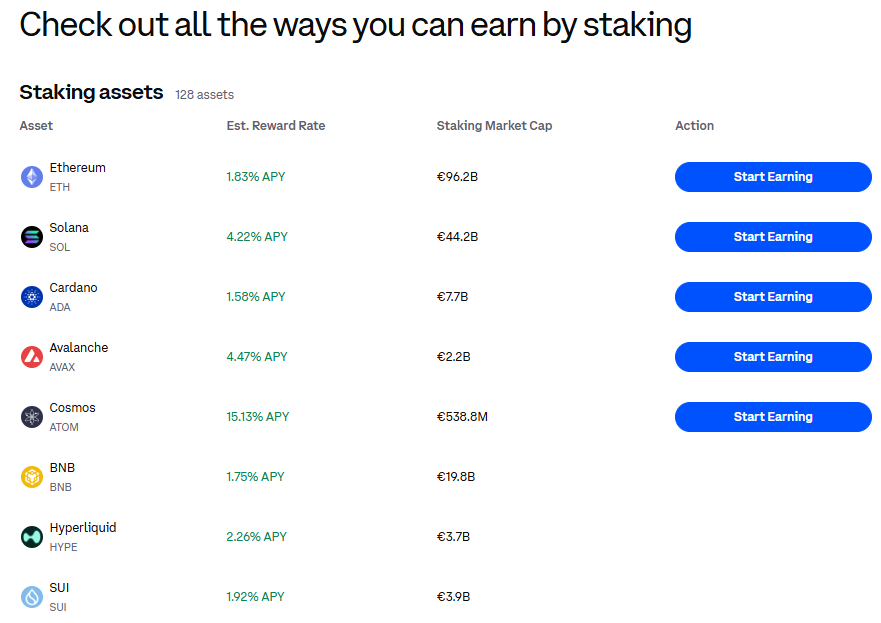
Coinbase is a publicly traded company (NASDAQ: COIN) regulated by the SEC and FinCEN. Among staking assets are ETH, SOL, ADA, MATIC, DOT, ATOM, AVAX, and many others.
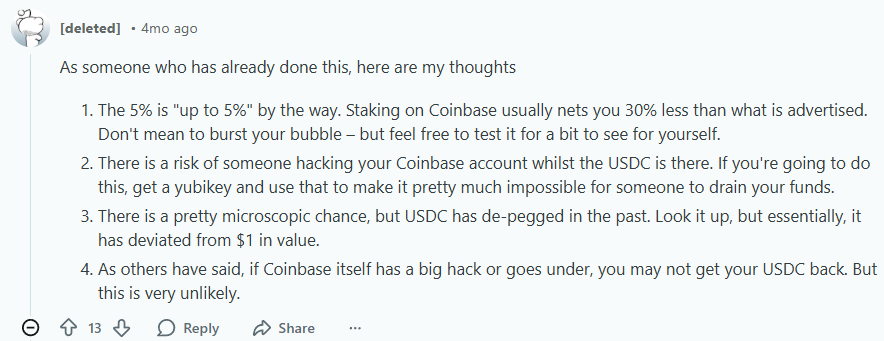
Basically, the main concern in this review is that the exchange will take 30%. And it’s true. That really is the size of their commission.
3. Lido Finance
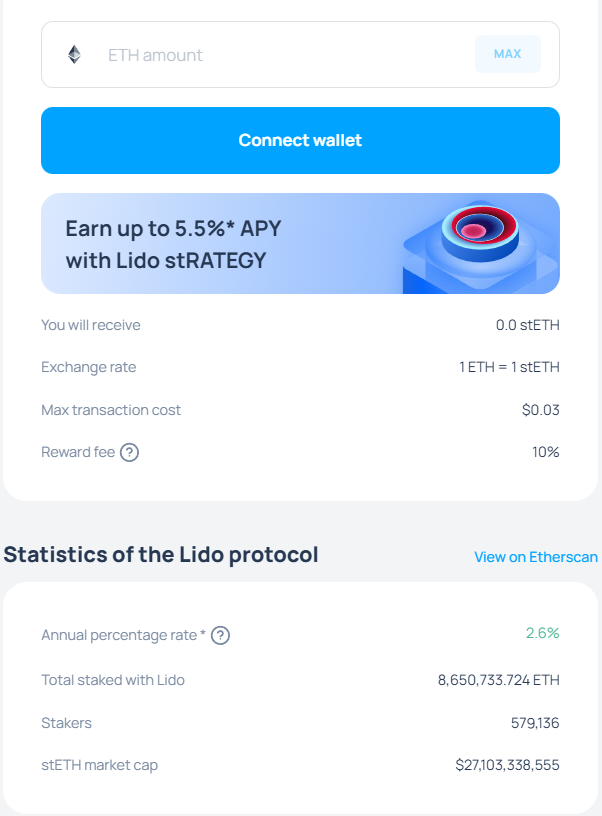
With over $70B TVL, Lido is the largest liquid staking protocol. It means you stake your crypto but stay fully liquid through tokenized receipts like stETH, stMATIC, stSOL, or stDOT. These tokens grow in value as rewards accumulate and can be traded or used in DeFi.
Lido takes a 10% fee on staking rewards and usually delivers around 3% APY for ETH, depending on network conditions. It’s governed by the Lido DAO, uses vetted node operators, and has deep integrations across DeFi.
4. Rocket Pool
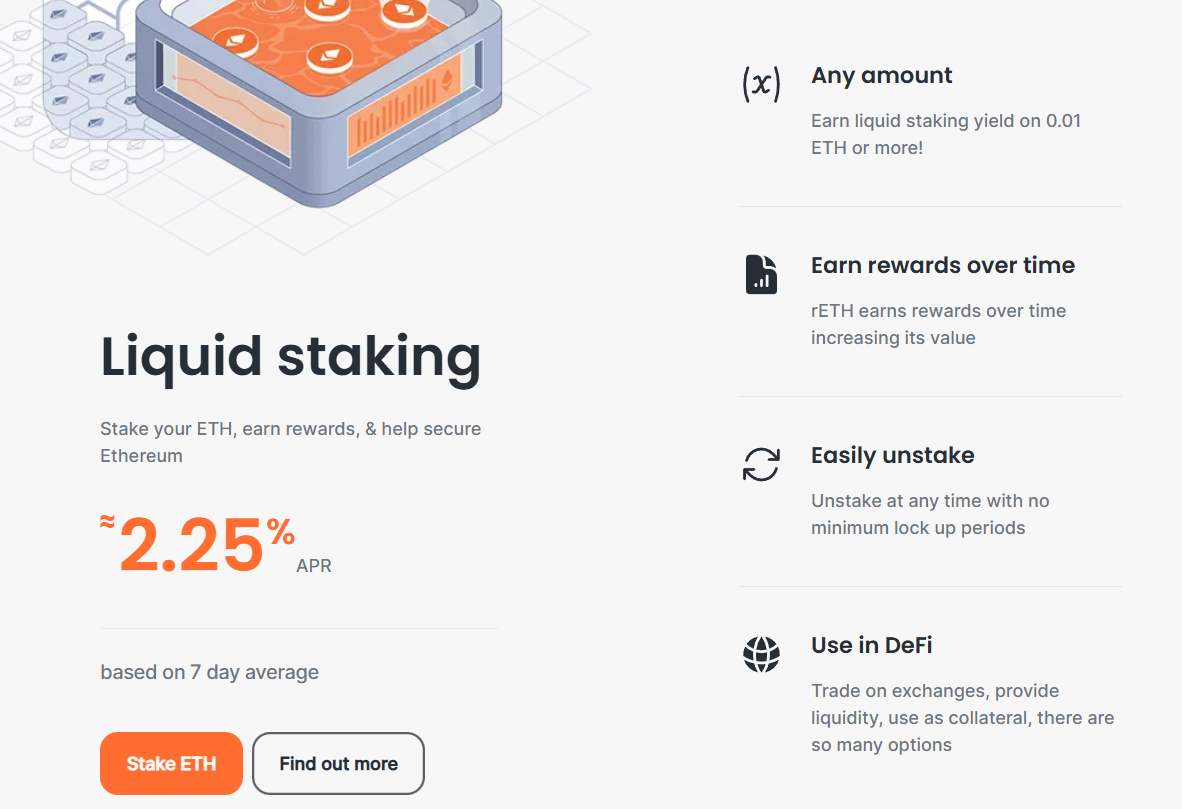
Rocket Pool is designed to support thousands of independent node operators. Regular users can stake as little as 0.01 ETH and receive rETH, a liquid token that rises in value as rewards accumulate.
The protocol charges node operators about 14% commission, but everyday stakers don’t pay direct fees, they simply earn slightly less due to this mechanism. Typical rETH APY is around 2.3–3%, depending on ETH validator rewards.
5. MEXC Earn
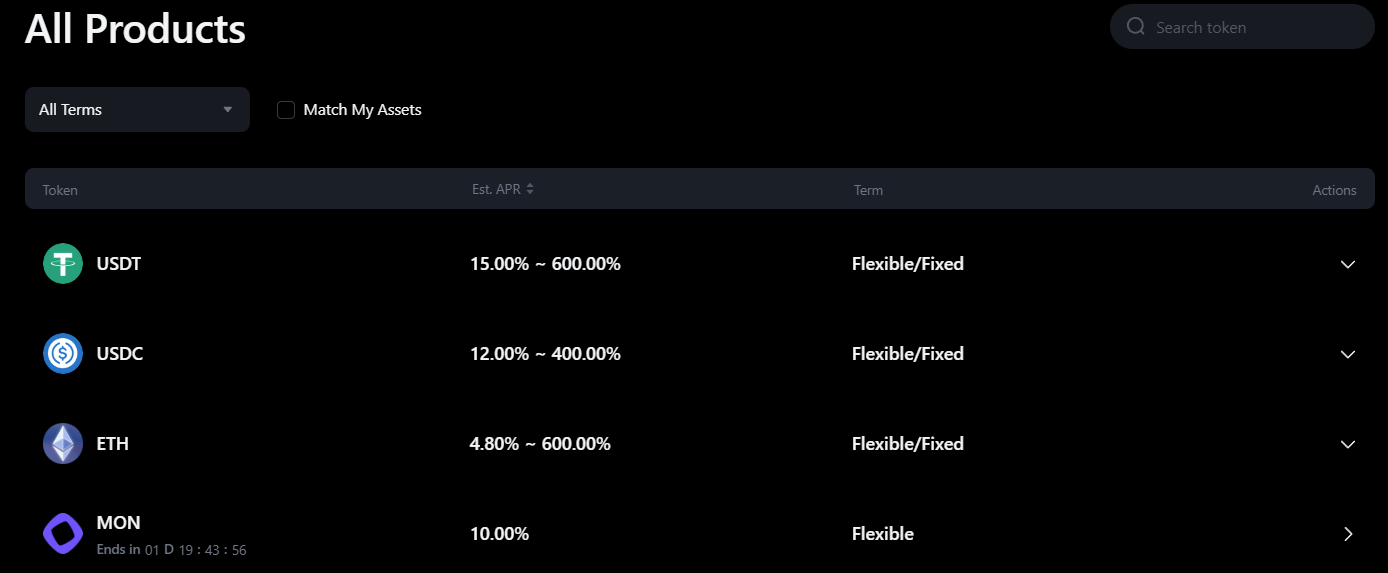
MEXC is known for offering "promotional" APYs that are significantly higher than the market average to attract users.
The platform provides a mix of simple staking, DeFi staking, flexible savings, and even cross-asset earning where you stake one coin but earn rewards in another.
It supports staking/earning on a vast number of "low cap" and new cryptocurrencies that major platforms like Coinbase or Binance do not yet list.
6. Bybit Earn
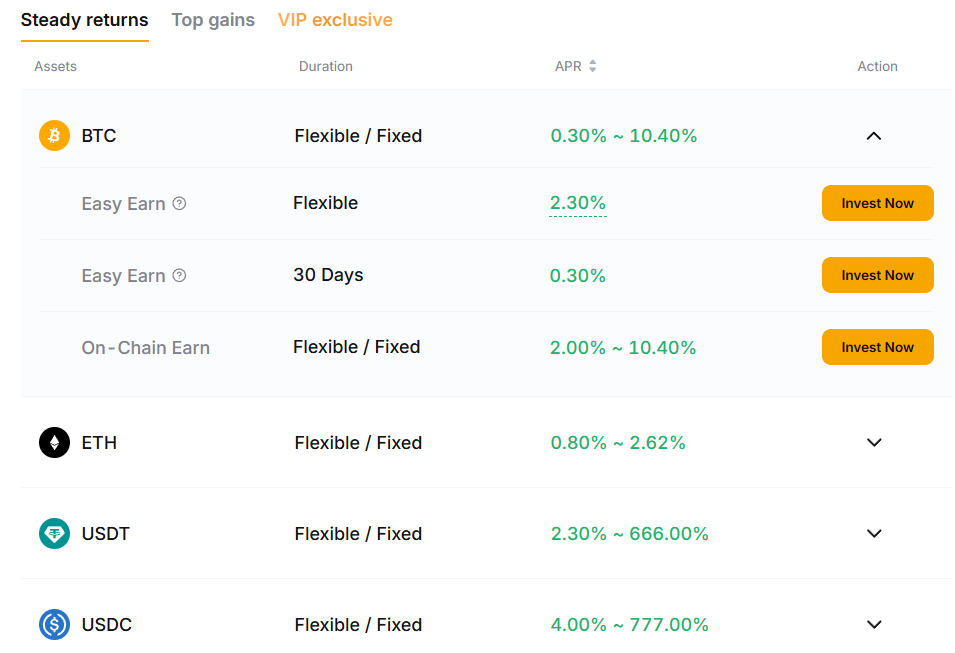
Bybit Earn offers two main earning products: Easy Earn (simple savings), and On-Chain Earn (direct PoS staking).
Besides, "Dual Asset" and "Double-Win" products allow advanced users to earn very high yields if they have a view on market direction (e.g., earning yield while waiting to buy the dip).
7. OKX Earn
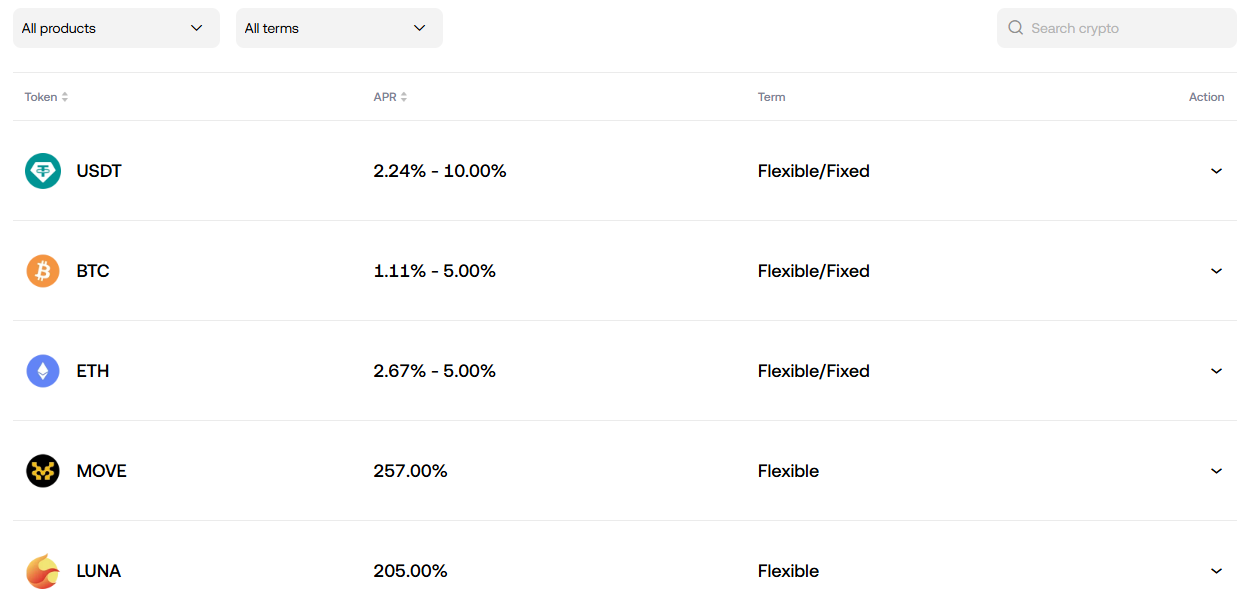
OKX Earn provides both standard staking and liquid staking options. Supported coins include 100+ tokens, including ETH, SOL, USDT, ADA, MATIC, and many more.
Users can receive liquid staking tokens like BETH (ETH) or OKSOL (SOL), which remain tradable. Staked assets can also be used as collateral for margin or lending. Rewards are calculated daily, and unstaking depends only on protocol rules.
"On-chain Earn" by OKX product integrates directly with protocols, giving you the transparency of DeFi (you can verify the stake on-chain) with the simplified interface of an exchange. Also, the platform offers a "Simple Earn" feature that pays hourly interest for many assets.
8. Nexo Earn
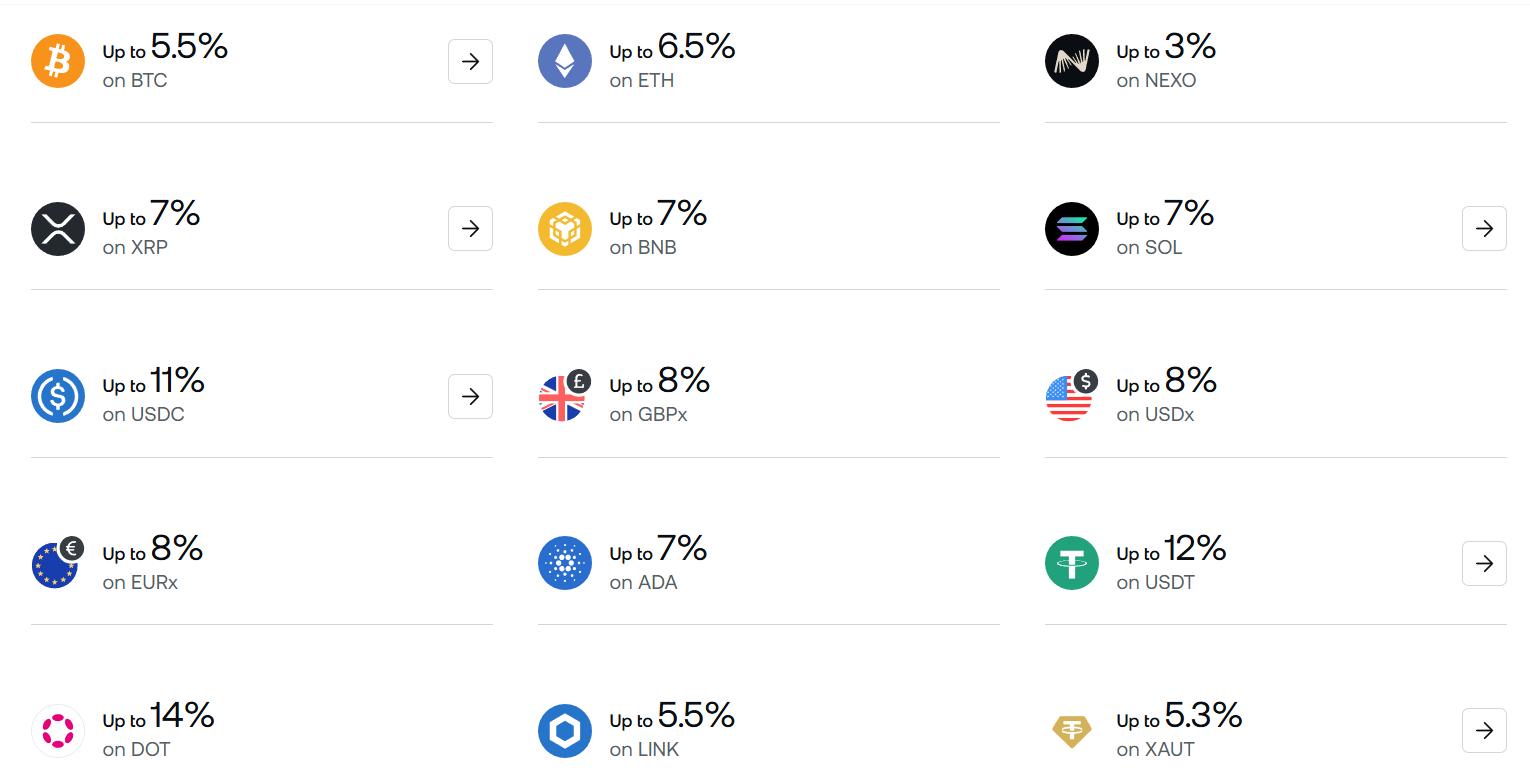
Nexo offers the highest rates. They can reach up to 14% annually, depending on your loyalty tier, the asset, and whether you choose to earn in NEXO tokens. The interest is paid daily and automatically compounded.
And for dessert, here’s the most exciting part — a table with staking rates for stablecoins, ETH, SOL, and a few other examples.
2025 Staking & Earn Rates
Factors to consider when choosing a staking platform
Among crypto platforms to stake might be various and malicious ones. Here are some points you can rely on when choosing a platform:
- It should be a platform you trust. Check whether the platform has been audited, holds any licenses, and has a clean security history. If a platform has been hacked before or refuses to publish audits, that’s a red flag.
- Choose between fixed and liquid staking. Your crypto staking rewards will depend on this.
- Ask yourself: how long am I comfortable keeping my crypto staked? Platforms propose different time periods during which you lock your assets. It can be days, weeks, months, or years.
- Pay attention to the size of platform fees. Deposit fees, withdrawal fees, and commissions on rewards can quietly eat into your profits.
Potential risks of staking
Nothing ventured, nothing gained. While staking is a popular way to earn passive income in the crypto world, it comes with inherent risks.
- Market volatility: crypto prices can swing wildly both in your favor and against you. Even if you’re earning 10–15% in rewards, your staked asset could drop by 40%. This is possible during a bear market.
- Slashing risk: if the validator you stake with behaves dishonestly or goes offline, the network can “slash” a portion of your staked funds. And this will happen solely because of the validator, you will have nothing to do with it. Slashing is rare on major networks like Ethereum, but more common on newer or less secure blockchains.
- Liquidity and lock-up periods: many staking platforms require you to lock your assets for weeks or months. During that time, you can’t sell or react to sudden market changes. This is the main risk of staking compared to holding.
- Platform risk: your staking provider could face technical issues, financial trouble, or regulatory challenges.
There are specific statistics available for Ethereum. As Everstake reports, across all validators in 2024–2025, losses from missed blocks (the main technical risk in staking) amounted to roughly 918.96 ETH, or about USD 3.6 million at current prices.
Making a choice
For the widest range of assets and plenty of earning options, Binance Earn is the one most people start with. When your goal is to hunt for high promo APYs and jump into experimental earning campaigns, MEXC usually has the most action.
If you care about daily compounding and boosted loyalty rewards, Nexo tends to offer some of the highest and most stable returns.
And for liquid staking fans, Lido is the easiest, most seamless choice, while Rocket Pool is perfect for those who prioritize decentralization above everything else.
FAQs
What is liquid staking?
Liquid staking is a more flexible alternative to traditional staking. It gives you a derivative token that represents your staked ETH. You can use them in DeFi, trade them, or sell them while your original ETH stays staked.
But if you lose it or spend it in a bad trade or liquidation, you also lose the right to withdraw the corresponding amount of staked ETH later.
Each platform issues its own version: Lido gives stETH, Rocket Pool issues rETH, Coinbase provides cbETH, and so on. These are independent ERC-20 tokens. They also trade freely on exchanges, just like regular tokens.
How are staking rewards taxed?
Staking rewards are taxed differently depending on the country, but in most places, there is a similar system. You pay tax on the initial reward value and then on any appreciation after that, but not on the original amount again. The United States, the United Kingdom, Australia, and Canada follow this system.
In France, most individual investors pay a flat 30% tax on crypto disposals, and staking rewards generally fall under that framework. Germany treats rewards as income, too, but crypto can become tax-free if you hold it long enough.
Is crypto staking safe?
Staking itself is generally safe. The real question is how safe the platform is where you deposit assets for staking, and how safe those assets are.
 Anastasiia G
Disclaimer: All materials on this site are for informational purposes only. None of the material should be interpreted as investment advice. Please note that despite the nature of much of the material created and hosted on this website, HODL FM is not a financial reference resource, and the opinions of authors and other contributors are their own and should not be taken as financial advice. If you require advice. HODL FM strongly recommends contacting a qualified industry professional.