




OpenAI announced that it will begin testing advertisements in ChatGPT in the coming weeks in the United States. The company will display ads for adult users on the free tier and its new low-cost ChatGPT Go subscription, priced at $8 per month. Higher-tier subscriptions, including Plus, Pro, Business, and Enterprise, will remain ad-free.
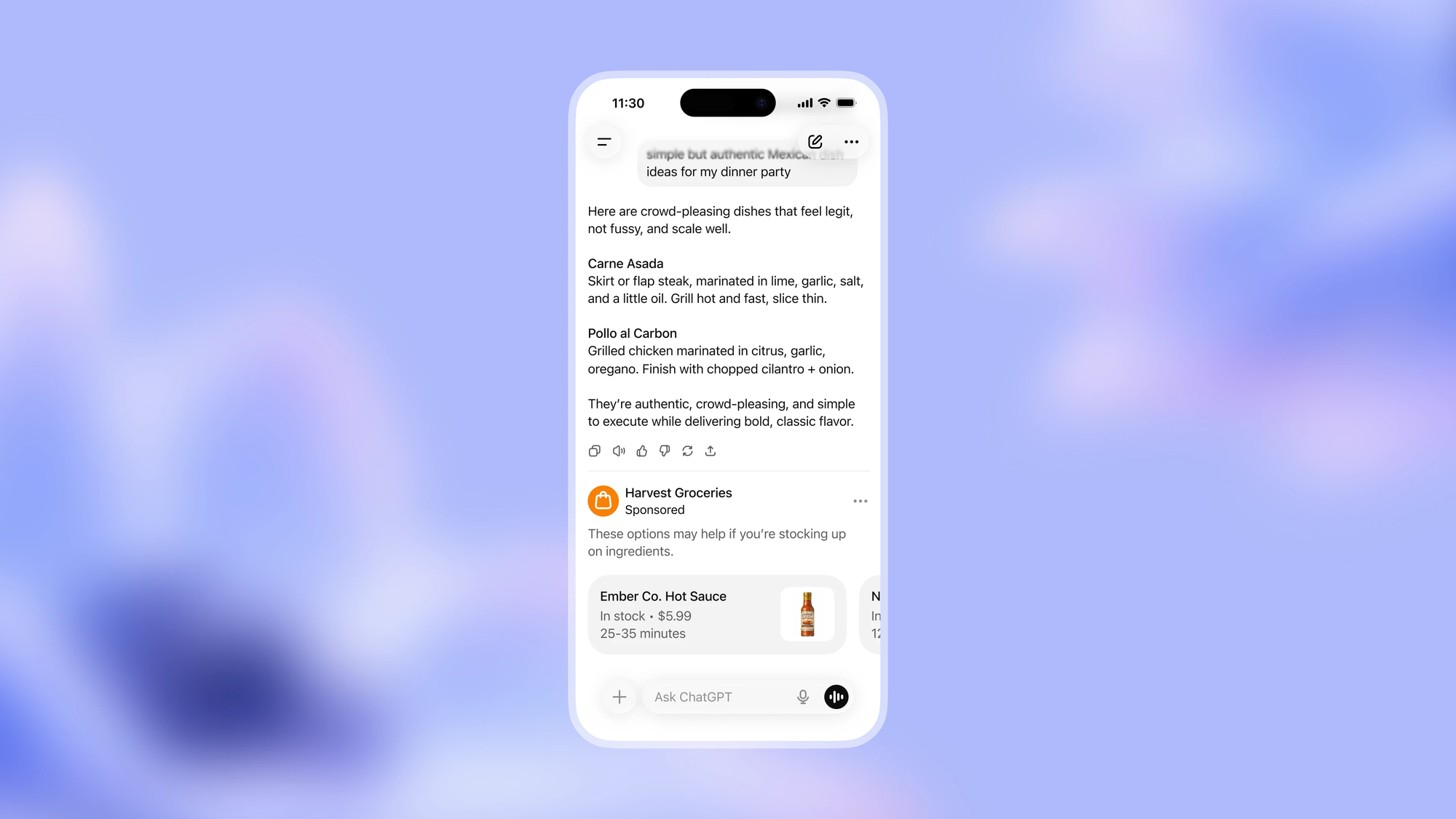
ChatGPT Go subscribers will gain expanded features such as longer memory, image creation capabilities, and file uploads. OpenAI emphasized that ads will not influence ChatGPT’s responses and will be clearly labeled as sponsored content at the bottom of replies. Ads will not appear in conversations involving politics, health, or mental health, and users under 18 will not see ads.
In the coming weeks, we plan to start testing ads in ChatGPT free and Go tiers.
— OpenAI (@OpenAI) January 16, 2026
We’re sharing our principles early on how we’ll approach ads–guided by putting user trust and transparency first as we work to make AI accessible to everyone.
What matters most:
- Responses in… pic.twitter.com/3UQJsdriYR
Ads support ambitious infrastructure spending
OpenAI CEO Sam Altman has historically expressed discomfort with ads, calling them “uniquely unsettling” and a “last resort.” The decision comes as the company faces rising operational costs. OpenAI reported spending roughly $8 billion in 2025 and projects operating losses up to $74 billion by 2028. It also committed over $1.4 trillion to AI infrastructure investments over the next eight years.
The company has around 800 million monthly users, but only about 5 percent pay for subscriptions. Advertising is expected to become a revenue source to help fund infrastructure and maintain broad access to ChatGPT tools. Altman said,
“It is clear to us that a lot of people want to use a lot of AI and don’t want to pay, so we are hopeful a business model like this can work.”
Principles guide ad integration
OpenAI outlined five principles to govern its ad approach. Ads must align with OpenAI’s mission to ensure artificial general intelligence benefits humanity. They must remain separate from ChatGPT’s responses, protect user conversations, provide choice over personalization, and prioritize long-term trust over revenue. The company plans to monitor user feedback closely and refine the format to ensure relevance and transparency.
Early ad formats include product placements at the end of ChatGPT responses. For example, a recipe question could display a clearly labeled sponsored product recommendation, or a travel inquiry could show a relevant hotel listing. OpenAI expects ads to help small businesses and emerging brands gain visibility in a highly competitive digital marketplace.
Competitive pressures and technical challenges
The move to ads also reflects OpenAI’s struggle to maintain market share amid rising competition. Similarweb data indicates ChatGPT’s market share dropped from 87 percent in January 2025 to 65 percent by early 2026. Google Gemini, by contrast, increased from 5 percent to over 18 percent. Analysts note that Google benefits from integrated hardware and distribution through Android, Gmail, Chrome, and YouTube, giving it an advantage over OpenAI.
Infrastructure costs remain a challenge. OpenAI relies heavily on Nvidia GPUs, which are more expensive than Google’s custom TPUs. Altman’s shift toward advertising indicates a need to diversify revenue sources to sustain growth and fund ongoing AI research.
Early user experience and privacy considerations
OpenAI acknowledged that introducing ads in a conversational AI poses risks. Users may discuss sensitive topics, and targeting ads requires careful handling of personal information. The company stated that it will not sell conversation data to advertisers and will allow users to turn off personalization. OpenAI emphasized that ads will be “extremely respectful” of privacy, and users will be able to dismiss ads or provide feedback.
The company’s initial ad rollout is a test limited to adult users in the U.S. OpenAI will monitor usage and trust metrics before expanding to other regions. The experiment represents a balance between accessibility and monetization, aiming to maintain ChatGPT’s reputation while securing funding for future AI innovation.
 Oleksii Shumak
Disclaimer: All materials on this site are for informational purposes only. None of the material should be interpreted as investment advice. Please note that despite the nature of much of the material created and hosted on this website, HODL FM is not a financial reference resource, and the opinions of authors and other contributors are their own and should not be taken as financial advice. If you require advice. HODL FM strongly recommends contacting a qualified industry professional.