

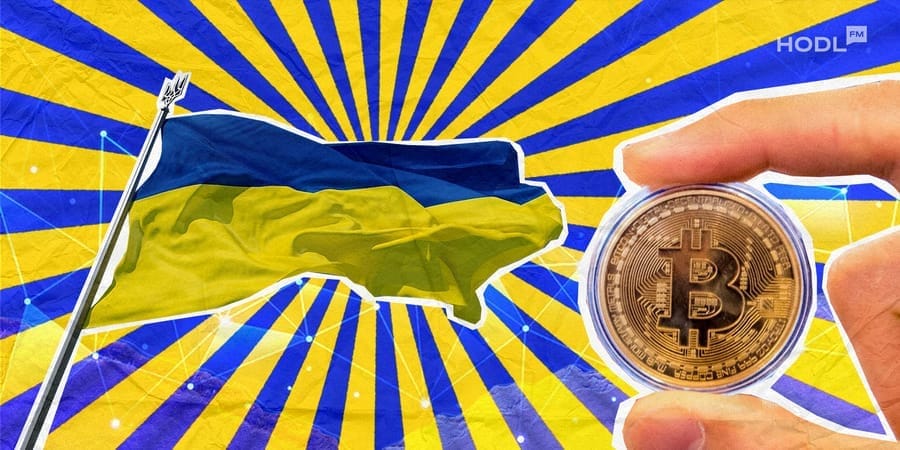



Ukrainian authorities have restricted access to the decentralized prediction platform Polymarket, citing unlicensed gambling activities. The National Commission for the State Regulation of Electronic Communications (NCEC) issued the decision under Resolution No. 695, published on December 10, 2025. Internet service providers are required to block the platform, and the domain polymarket.com has been added to the country’s public registry of prohibited internet resources.
Polymarket allows users to buy and sell shares tied to real-world events. Market prices reflect collective belief and are used to gauge probabilities rather than offer fixed odds. Despite this, Ukrainian regulators concluded that the platform meets the legal definition of gambling because users stake funds on uncertain outcomes and receive payouts if their predictions are correct.
Ethical concerns over war-related markets
The Ukrainian ban follows months of controversy regarding Polymarket’s Ukraine-related prediction markets. Throughout 2025, the platform hosted hundreds of millions of dollars in bets linked to Russia’s invasion, including wagers on territorial developments in the Donbas region. An open-source intelligence project, DeepState, accused Polymarket of using its real-time battlefield data without permission to create betting markets.
As of late December, Polymarket completed around 240 Ukraine-related bets totaling over $270 million, with an additional 120 active bets exceeding $140 million, according to Finance Magnates' reporting. The platform faced criticism for “monetizing human suffering” and “gamifying” the conflict.
Uneven enforcement of the ban
Implementation of the restriction has varied. While some users report complete inaccessibility, others are still able to access Polymarket without the use of any tools for circumvention. The regulator has instructed internet service providers to monitor compliance, and failure to enforce the ban may trigger further supervisory action.
The Ukrainian move is part of a broader regulatory trend in Europe. Romania recently blocked the platform, stating it operates without a gambling license and lacks safeguards for responsible betting and anti-money laundering. France and several other European countries have issued similar restrictions.
Polymarket’s U.S. comeback
While facing restrictions in Ukraine, Polymarket has returned to the United States after relocating offshore in 2022 over concerns regarding unregistered event-based derivatives. The platform recently launched its first U.S. mobile app, offering real-money sports markets under Commodity Futures Trading Commission (CFTC) oversight. This follows a CFTC no-action letter issued to a crypto derivatives exchange acquired by Polymarket, allowing it to operate event contracts within a regulated framework.
Against all odds.
— Polymarket (@Polymarket) December 3, 2025
Polymarket’s U.S app is now being rolled out to those on the waitlist.
We’re launching with sports — followed by markets on everything. pic.twitter.com/WOoVMszrqc
The platform has faced previous bans or restrictions in the United States, France, Belgium, Singapore, Thailand, and Romania. In the U.S., lawmakers are also examining legislation to prevent insider trading in prediction markets, including contracts linked to political or policy outcomes.
Legal ambiguity remains
The Polymarket case highlights the ongoing global debate over the classification of prediction markets. Regulators often treat such platforms as gambling due to monetary stakes and uncertain outcomes.
The Ukrainian restriction underscores the difficulty of operating a global crypto prediction platform. Even as Polymarket pursues regulatory compliance in the U.S., national authorities retain the power to enforce local gambling laws, particularly on politically sensitive or high-stakes events.
Outlook for crypto prediction platforms
The ban in Ukraine signals growing pressure on prediction markets worldwide. Platforms may need to obtain localized licenses, restrict sensitive event categories, and clarify their legal positioning. Long-term outcomes could involve full integration into regulated financial frameworks or legal separation from gambling laws. Until standards become clearer, crypto prediction markets can expect ongoing regional restrictions and regulatory scrutiny.
 Oleksii Shumak
Disclaimer: All materials on this site are for informational purposes only. None of the material should be interpreted as investment advice. Please note that despite the nature of much of the material created and hosted on this website, HODL FM is not a financial reference resource, and the opinions of authors and other contributors are their own and should not be taken as financial advice. If you require advice, HODL FM strongly recommends contacting a qualified industry professional.