

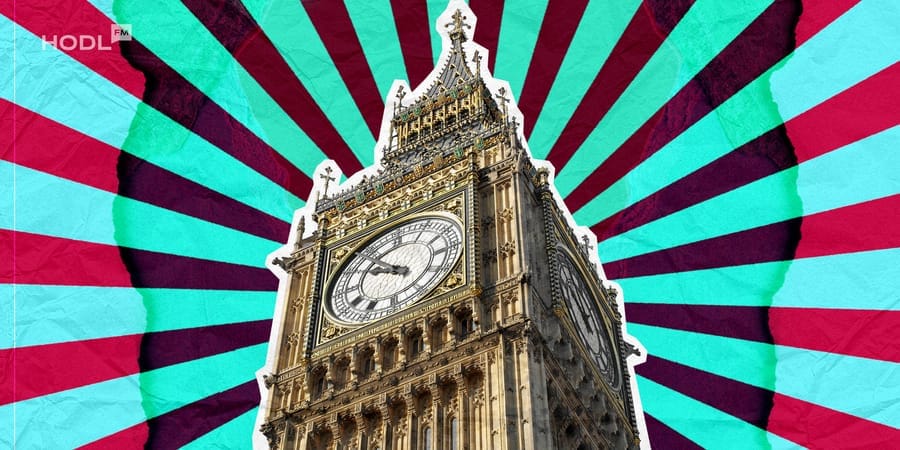



The United Kingdom has taken a legal step in the digital asset sector after the country officially recognized cryptocurrencies, stablecoins, and other digital tokens as personal property. The decision followed the approval of the Property (Digital Assets etc) Act, which received royal assent after passage through the House of Lords and confirmation by King Charles. The move closes a long period of debate over digital asset ownership and brings national law in line with earlier recommendations from the Law Commission of England and Wales.
The UK crypto bill follows the United States, which also introduced digital-asset legislation earlier this year. The two countries now share a more aligned approach to defining digital property rights, which supporters say helps users and institutions protect their assets within a predictable legal framework.
Law resolves years of uncertainty over digital asset ownership
Before this law took effect, UK courts handled digital asset disputes on a case-by-case basis. Judges treated tokens as property, but there was no single statutory rule. Parliament’s decision now formalizes that principle and confirms that digital or electronic items qualify as personal property even when they do not fall neatly into traditional legal categories.
CryptoUK described the change as a major shift because clear legislation now replaces inconsistent court decisions. The group noted that the new law gives institutions and individuals a stronger foundation when they attempt to prove ownership, manage estate issues, or recover assets after fraud.
The policy chief at Bitcoin Policy UK, Freddie New, said on X that the bill “becoming law is a massive step forward for Bitcoin in the United Kingdom and for everyone who holds and uses it here.” The group has advocated for clear digital-asset laws for several years and viewed the bill as essential for consumer confidence.
Update - this Bill is now on the way to the King's desk for Royal Consent and will shortly become law. See thread for some extra details👇
— Freddie New (@freddienew) December 2, 2025
A hugely significant step for English law and for UK citizens who use Bitcoin.@bitcoinpolicyuk have been supporting this since the Law… https://t.co/ZbBdK59yZi
Digital “things” now fall under personal property rights
The new legislation clarifies how the UK classifies digital assets. Personal property traditionally consists of a “thing in possession,” such as a vehicle, or a “thing in action,” such as a legal right. Digital assets do not sit neatly in either category. The Law Commission argued in 2024 that this technical gap created confusion in courts and raised the risk of inconsistent rulings.
The bill now confirms that a digital or electronic item can still carry personal property rights even when it does not fit the old definitions. CryptoUK said the law confirms “that digital or electronic ‘things’ can be objects of personal property rights.” This removes the uncertainty that previously surrounded crypto ownership and allows courts to approach disputes with a stable set of principles.
The Royal Assent to the Property (Digital Assets etc) Bill was formally announced in the chamber of the House of Lords at around 2:30pm today, which means it has now become an Act of Parliament.
— CryptoUK 🇬🇧 (@CryptoUKAssoc) December 2, 2025
UK courts have already treated digital assets as property, but that was all through…
Stakeholders welcome stronger protections for crypto users
Advocacy groups described the law as a significant upgrade to consumer protection. CryptoUK said on X that the law gives “greater clarity and protection for consumers and investors” and gives crypto holders “the same confidence and certainty they expect with other forms of property.” The group highlighted improved support for asset recovery during cases of theft or fraud and clearer guidance for insolvency processes.
BREAKING: UK Law Now Officially Recognises Digital Assets 🇬🇧
— CryptoUK 🇬🇧 (@CryptoUKAssoc) December 2, 2025
The UK has today taken an important step forward in recognising the role of digital assets in the modern economy. A new law has come into effect confirming that qualifying digital assets — including crypto-tokens,… pic.twitter.com/9QNADCXoz4
The measure also helps institutions that manage tokenized assets. Banks, exchanges, and fintech firms now receive explicit legal backing when they handle or store digital tokens. This provides a clearer path for compliance teams and reduces the risk of disputes that previously relied on untested interpretations of property law.
UK moves to strengthen its position in digital finance
The UK had faced concerns about falling behind the EU and the US in digital asset regulation. OMFIF’s Digital Monetary Institute warned that unclear legislation could weaken the country’s influence in global crypto markets. The government later increased coordination with US regulators and launched the “Taskforce for Markets of the Future” to promote cooperation on next-generation financial systems.
The government also focuses on political transparency as part of its broader digital-governance agenda. Officials have explored a ban on crypto donations to political parties under a new Elections Bill, which aims to preserve public trust in political funding.
Data from the country’s finance authority showed that roughly 12% of UK adults hold cryptocurrency, which reflects a steady rise in adoption. The new law arrives as the government prepares a wider regulatory framework that will apply traditional financial rules to crypto companies.
A new foundation for a modern digital economy
The formal recognition of digital assets as property gives the UK a clearer legal structure for innovation, investment, and consumer protection. Supporters say the clarity allows users to manage their holdings with greater confidence and gives businesses a stable environment for long-term development.
With clear property rights now established, the country begins shaping the next stage of its digital economy on firmer ground.
 Oleksii Shumak
Disclaimer: All materials on this site are for informational purposes only. None of the material should be interpreted as investment advice. Please note that despite the nature of much of the material created and hosted on this website, HODL FM is not a financial reference resource, and the opinions of authors and other contributors are their own and should not be taken as financial advice. If you require advice. HODL FM strongly recommends contacting a qualified industry professional.