


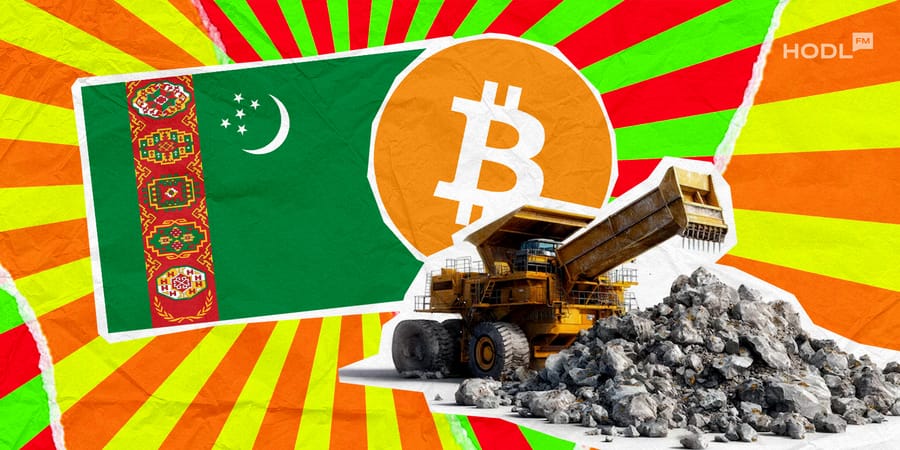



Turkmenistan has taken a major step in reshaping its economic direction with the introduction of a comprehensive legal framework for cryptocurrency mining and exchange operations. The new law, “The Law of Turkmenistan on Virtual Assets,” signed by President Serdar Berdimuhamedov in late November 2025, establishes a licensing and compliance regime that recognizes crypto as digital property but not as legal tender.
Law aims to regulate mining and digital asset platforms
Under the new framework, crypto mining, digital asset exchanges, and custodial services are now legal in Turkmenistan, but only under government supervision and registration. Oversight rests with the Central Bank of Turkmenistan and other state institutions, which will issue licenses and supervise operational compliance.
The law allows both domestic and foreign individuals and corporate entities to apply for licenses to mine or trade digital assets. All licensed entities must register their equipment and operations, adopt strict Know‑Your‑Customer (KYC) and Anti‑Money‑Laundering (AML) measures, and refrain from anonymous transactions.
Crucially, hidden or unauthorized mining is now explicitly banned. According to the text of the framework cited by local outlet Parahat, cryptocurrencies are viewed as “digital property” rather than currency, securities, or payment instruments, meaning the use of crypto for purchases or settlements remains illegal in the country.
New advertising regulations require licensed operators to display clear warnings about potential risks and prohibit companies from using state‑related symbols or making promises of profit in their marketing activities.
A shift in policy from isolation to digitalization
Turkmenistan, a landlocked Central Asian nation with around seven million citizens, holds about 10 percent of the world’s natural gas reserves and has long depended on gas exports to sustain its economy. The country’s major customers include China, while ongoing projects seek to expand supply routes to Afghanistan, Pakistan, and India.
Despite this wealth of natural gas, years of economic isolation, limited internet access, and strict government controls have restricted investment and innovation. The new law indicates a broader drive by President Berdimuhamedov to diversify national income streams and promote technological modernization.
In an article ahead of regional meetings with Russia, Turkey, and Iran, Berdimuhamedov stated,
“We are carrying out extensive work aimed at transforming our neutral country into a powerful, democratic, and rule‑of‑law state where citizens live happy lives.”
In an earlier step toward openness, Turkmenistan introduced electronic visas in April 2025, streamlining entry for foreign visitors. The crypto law is anticipated to “attract investment and advance the country's digitalization efforts,” as reported by Reuters in November.
Following regional models in crypto oversight
Turkmenistan’s regulatory shift appears influenced by neighboring countries that have sought to balance control and innovation. Kazakhstan, which shares a border with Turkmenistan, became a major mining hub after 2021 thanks to low energy costs and open policies toward blockchain technology. Uzbekistan already administers one of Central Asia’s most detailed licensing frameworks for crypto operations.
Further west, Pakistan, a Turkmen partner on regional energy projects, recently launched its Pakistan Virtual Assets Regulatory Authority and appointed former Binance CEO Changpeng Zhao as a strategic adviser.
By introducing its own regulated structure, Turkmenistan joins these nations in pursuing crypto‑related investments while maintaining tight government oversight.
Analysts highlight potential and limitations
Turkmenistan's move is an attempt to modernize its financial landscape without undermining political control. The explicit prohibition of anonymous crypto activity reflects the government’s longstanding preference for controlled, centralized systems.
Although the law emphasizes compliance to attract regulated investors, operational challenges are anticipated due to Turkmenistan’s restricted internet environment and limited access to global technology channels.
Still, the emergence of a structured legal base for crypto mining and exchanges marks an unprecedented moment for the isolated nation. As digital assets gain regional traction, Turkmenistan’s participation could open new business opportunities, especially if future regulatory adjustments improve foreign connectivity and transparency.
 Anastasiia G
Disclaimer: All materials on this site are for informational purposes only. None of the material should be interpreted as investment advice. Please note that despite the nature of much of the material created and hosted on this website, HODL FM is not a financial reference resource, and the opinions of authors and other contributors are their own and should not be taken as financial advice. If you require advice. HODL FM strongly recommends contacting a qualified industry professional.