

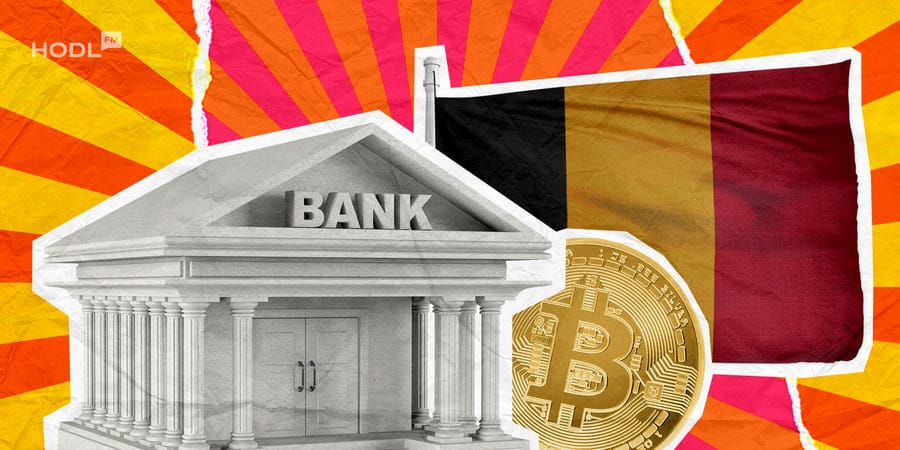



Belgium’s KBC Bank will allow retail investors to buy and sell Bitcoin and Ether starting next month through its online investment platform, Bolero. The move positions KBC as the first Belgian bank to offer direct crypto trading to everyday clients, according to the bank.
The launch takes place amid heightened regulatory oversight across Europe, as crypto service providers adjust to the European Union’s Markets in Crypto-Assets Regulation. The framework entered into force across the bloc in late 2025 and reshaped how banks and financial firms approach digital assets.
KBC said it has submitted a full Crypto Asset Service Provider notification to the relevant Belgian authority, a step that clears the path for the rollout under the new regulatory regime.
🇧🇪 KBC becomes the first Belgian bank to offer the purchase and sale of Bitcoin via Bolero.
— Florence Hum₿let⚡️🟠 (@HumbletFlorence) January 15, 2026
This initiative marks a new step in the integration of Bitcoin into traditional financial markets and in its gradual recognition as an investment asset.
Bitcoin ⚡️ Law pic.twitter.com/MOmT7e7Fwr
Crypto trading within a bank-controlled environment
KBC confirmed that customers will be able to trade Bitcoin and Ether directly through Bolero using the bank’s own custodial infrastructure. Assets will remain within the platform, and transfers to or from external wallets will not be permitted.
“This will enable self-directed investors in Belgium to invest in cryptocurrencies within a secure and fully regulated environment,” KBC said in a statement.
The model follows an execution-only structure. Clients will make their own investment decisions without receiving personalized advice. Before access becomes available, users must complete a knowledge and experience test designed to measure their understanding of crypto-related risks, including price volatility and the possibility of total loss.
The bank will also manage custody, which means customers will not control private keys themselves. KBC described the approach as a closed-loop system intended to limit fraud, reduce money-laundering risks, and maintain oversight within a regulated framework.
Demand from younger retail investors
KBC linked the decision to demographic trends among Belgian investors. Approximately 45% of Belgians in their thirties currently invest in cryptocurrencies, according to studies the bank cited.
About 60% of Bolero's users are under 40, making up a younger demographic. Bitcoin is regularly one of the most searched terms on the platform, according to KBC.
Bolero chief executive Céline Pfister said the platform aims to introduce crypto in an accessible way while ensuring that users understand the risks. Educational materials will become available through the Bolero Academy at launch.
MiCA compliance shapes rollout timing
The rollout comes at a moment when Belgium continues to finalize its MiCA implementation. While the regulation entered into force across the EU in late 2025, Belgium only adopted its national implementing law in December.
That law took effect on Jan. 3, 2026, officially designating the Financial Services and Markets Authority and the National Bank of Belgium as the country’s crypto regulators. According to the European Securities and Markets Authority public register, Belgium has not yet issued MiCA licenses.
Belgium’s slower implementation reflects wider debate within the EU over oversight and cross-border licensing. France has argued that ESMA should have direct authority over major crypto firms and raised concerns about passporting licenses from countries with looser standards. Other states, including Malta, have opposed further centralization, citing potential effects on competition and innovation.
Against this backdrop, KBC framed its move as a practical step within the existing regulatory structure.
“By offering the opportunity to purchase and sell crypto within a regulated framework, we are making innovation concrete and accessible,” said Erik Luts, chief innovation officer at KBC Group. “At the same time, we are demonstrating that KBC remains ready to assume its role as an innovator in a market where new players are rapidly evolving.”
European banks expand crypto access
KBC’s entry adds Belgium to a growing list of European markets where banks now offer direct crypto exposure. In Germany, DZ Bank secured authorization under MiCA earlier last year and launched its meinKrypto platform across the cooperative banking network.
The BaFin-approved platform allows customers of Volksbanken and Raiffeisenbanken to trade Bitcoin and other cryptocurrencies directly within their existing banking apps, subject to individual bank notifications.
In France, BPCE Group has also begun a phased rollout that allows customers to buy Bitcoin, Ether, and Solana through bank-linked platforms.
What sets KBC apart is its domestic position. As Belgium’s second-largest bank with millions of retail clients, its decision places crypto trading alongside traditional assets such as stocks and exchange-traded funds within a mainstream banking interface.
For Belgian investors, the shift reduces reliance on foreign crypto exchanges, which previously served as the primary access point for digital assets. For competing banks, the move raises pressure to respond as regulated crypto services gain visibility within traditional finance.
A cautious step into a volatile market
KBC has emphasized that the offering remains limited in scope. Only Bitcoin and Ether will be available at launch, and the closed-loop structure restricts external transfers.
The bank has repeatedly highlighted the risks associated with cryptocurrencies, even as it opens the door to broader participation. The approach reflects a balance between investor demand and regulatory caution, a theme that continues to shape Europe’s evolving crypto landscape.
 Gunel Ismayilova
Disclaimer: All materials on this site are for informational purposes only. None of the material should be interpreted as investment advice. Please note that despite the nature of much of the material created and hosted on this website, HODL FM is not a financial reference resource, and the opinions of authors and other contributors are their own and should not be taken as financial advice. If you require advice. HODL FM strongly recommends contacting a qualified industry professional.