


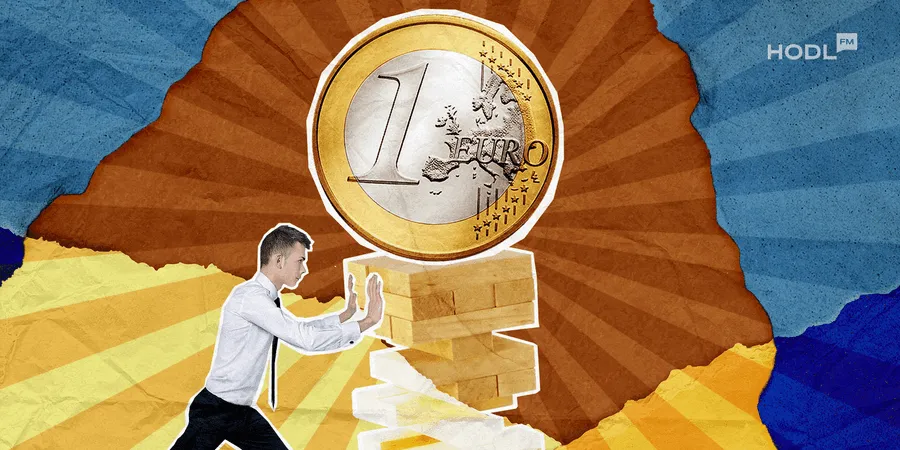



The Council of the European Union has agreed on its official negotiating mandate for two landmark financial regulations, one establishing the framework for a potential digital euro, and another safeguarding the role of cash as legal tender in the euro area. The dual initiatives aim to strengthen Europe’s monetary sovereignty, ensure payment resilience, and enhance the international standing of the euro.
Council sets course for dual-track euro modernization
The agreement, announced in an official Council press release on December 19, outlines the EU’s first unified position on developing a central bank digital currency (CBDC). The digital euro would be issued by the European Central Bank (ECB) and function alongside physical cash. Both online and offline use cases are included in the design, allowing payments to take place even when users are disconnected from the internet.
- Online mode — Transactions will undergo real-time settlement through the ECB’s infrastructure or designated intermediaries while conforming to current anti-money laundering standards.
- Offline mode — Peer-to-peer transfers will occur locally between authorized devices using near-field communication (NFC) chips, enabling the exchange of central bank–signed tokens without an internet connection. Users will later synchronize their wallets with the central ledger once connectivity returns.
According to the Council, the initiatives will improve the EU’s strategic autonomy, economic security, and financial resilience, areas seen as core to the bloc’s long-term competitiveness. The move signals strong political backing for the ECB’s ongoing technical work on digital euro prototypes.
Danish Minister for Economic Affairs Stephanie Lose said in the statement,
“The digital euro is an important step towards a more robust and competitive European payment system, and can contribute to Europe’s strategic autonomy and economic security, as well as a strengthened international role for the euro.”
Strengthening payment autonomy
Morten Bødskov, Denmark’s Minister for Industry, Business, and Financial Affairs, underscored how the Council’s position reflects Europe’s determination to control its own financial infrastructure.
“Europe’s strategic autonomy must be strengthened, including in the payments sector,” said Bødskov. “The proposal for a digital euro is specifically aimed at enhancing the resilience of the payments infrastructure in the euro area. The Council’s agreement therefore sends a clear signal that the EU is capable of taking action on this important agenda.”
Under the proposed regulation, the digital euro would serve as a publicly issued electronic form of money that remains directly backed by the ECB. It would coexist with private payment solutions such as debit and credit cards, ensuring users continue to have multiple options for transacting within the single market.
The framework also clarifies that digital euros should not become a store of value comparable to savings accounts. To that end, the Council’s text includes holding limits that will be defined by the ECB. These limits will prevent excessive accumulation that could influence funding flows or destabilize bank deposits.
Consumer safeguards and fee structure
To protect end users, payment service providers (PSPs) may not charge consumers for baseline services. Mandatory features such as opening or closing a wallet, transferring digital euros, or converting them from existing accounts must remain free. However, PSPs can introduce optional, paid “value-added” services.
During an initial five-year transitional period, interchange and merchant service fees will be capped at levels aligned with current digital payment methods. After the transition, the ECB will reset fee caps based on evaluated operating costs.
The Council text requires PSPs and digital wallet providers to receive fair access to mobile operating systems and hardware components, ensuring interoperability and equal competition.
Both online and offline usability
In a key departure from earlier discussions, the Council endorsed activating both online and offline functionalities upon launch. Offline payments will work even without internet connectivity, mirroring the privacy and resilience features of physical cash. Online transactions will connect directly to the ECB’s operations or through authorized intermediaries.
Christine Lagarde, President of the European Central Bank, recently confirmed the readiness of the digital euro’s technical design and urged EU lawmakers to advance its legal framework.
“It’s now for the European Council and certainly later on for the European Parliament to identify whether the Commission proposal is satisfactory, how it can be transformed into a piece of legislation or amended,” she said during a European Parliament session Thursday.
The ECB has suggested that the digital euro could enter practical use by 2029, following pilot testing expected around 2027, as Reuters reported.
Reinforcing euro cash and legal certainty
Alongside the CBDC regulation, the Council adopted its position on ensuring the availability and acceptance of cash across the European Union. The proposal clarifies that euro banknotes and coins must remain widely accepted and accessible, with minimal exceptions. Retailers will only be allowed to refuse cash in specific cases, such as online transactions or unmanned sales points.
To sustain these requirements, member states must monitor cash access and acceptance based on shared indicators and maintain resilience plans for disruptions to electronic payments.
The Council’s combined position on the digital euro and cash protection will now proceed to discussions with the European Parliament, which will shape the final legislative text. Once both institutions adopt the regulation, the ECB will have the authority to decide on the issuance and implementation timeline.
 Oleksii Shumak
Disclaimer: All materials on this site are for informational purposes only. None of the material should be interpreted as investment advice. Please note that despite the nature of much of the material created and hosted on this website, HODL FM is not a financial reference resource, and the opinions of authors and other contributors are their own and should not be taken as financial advice. If you require advice. HODL FM strongly recommends contacting a qualified industry professional.