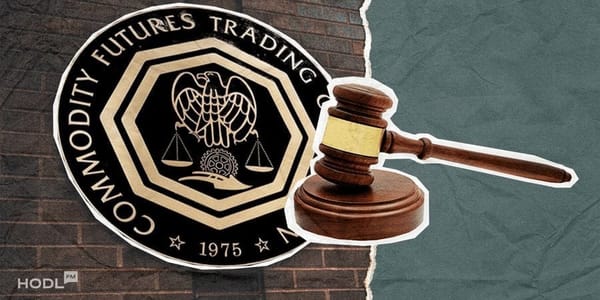





The U.S. Senate Agriculture Committee released updated text for its long-awaited crypto market structure legislation ahead of a scheduled hearing next week, marking incremental progress on a bill that remains stalled by political, industry, and jurisdictional disputes across Congress.
The revised draft, published Wednesday evening, reflects months of negotiations but also underscores unresolved divisions between lawmakers, regulators, and industry stakeholders. The Agriculture Committee is moving toward a markup, but the Senate Banking Committee is still working on it, which makes the overall legislative path unclear.
Agriculture Committee removes brackets and moves to markup
In a statement accompanying the release, Senate Agriculture Committee Chair John Boozman said he worked with Democratic Sen. Cory Booker to refine the bill, which aims to expand the Commodity Futures Trading Commission’s authority over digital assets.
“While differences remain on fundamental policy issues, this bill builds on our bipartisan discussion draft while incorporating input from stakeholders and represents months of work,” Boozman said. “Although it’s unfortunate that we couldn’t reach an agreement, I am grateful for the collaboration that has made this legislation better.”
The updated text removes all brackets that dominated the committee’s 155-page discussion draft released in November. Those brackets previously marked unresolved policy questions around decentralized finance, joint rulemaking between the CFTC and the Securities and Exchange Commission, and the treatment of stablecoins.
The new version also excludes sections included in earlier drafts, such as provisions on the treatment of certain noncontrolling blockchain developers and anti-money laundering requirements.
The Senate Agriculture Committee, which has jurisdiction over the CFTC, is scheduled to hold its hearing on Jan. 27. Any amended version would still need to reconcile with separate legislation from the Senate Banking Committee before advancing to a full Senate vote.
Industry reaction signals cautious support
Ji Hun Kim, chief executive officer of the Crypto Council for Innovation, described the release as a step forward for federal crypto regulation.
“The release of this market structure legislation is an important step toward a comprehensive framework for digital commodities,” Kim said. “Clear rules of the road are essential to protecting American consumers, supporting responsible innovation, and strengthening U.S. leadership.”
Banking Committee delays reshape legislative timeline
Momentum slowed further this week after the Senate Banking Committee postponed its own markup of a separate crypto market structure bill. According to a Jan. 22 Bloomberg report, the committee delayed action by several weeks, with a new timeline projected for late February or March.
Lawmakers shifted attention to housing affordability legislation amid pressure from the Trump administration. Housing costs remain a major political concern ahead of the 2026 congressional elections.
Earlier this week, President Donald Trump signed an executive order directing federal agencies to limit government-backed support for large institutional buyers of single-family homes. Lawmakers also began drafting measures to curb institutional ownership, even though estimates show such investors hold less than 1% of U.S. single-family housing stock.
A spokesperson for the Senate Banking Committee declined to comment on the delay. The White House did not respond to media inquiries.
Stablecoin yield dispute deepens industry divide
The Banking Committee delay followed a major setback earlier this month after Coinbase withdrew support for the bill. CEO Brian Armstrong cited concerns over stablecoin rewards, tokenized equities, decentralized finance provisions, and regulatory roles assigned to the SEC and CFTC.
The dispute centers on stablecoin yield. The GENIUS Act, passed last summer, bars issuers from paying direct interest but allows third-party platforms such as Coinbase to offer rewards. Banking groups argue that the structure could drain deposits from community banks, while crypto firms accuse banks of attempting to suppress competition.
“We’d rather have no bill than a bad bill,” Armstrong said, later adding in a Bloomberg interview that banking lobbyists were “trying to ban their competition.”
Patrick Witt, executive director of the President’s Council of Advisers on Digital Assets, responded sharply, warning that blocking legislation now could carry long-term consequences.
White House pressure meets congressional reality
President Trump publicly reinforced his support for crypto legislation during remarks at the World Economic Forum in Davos.
“Now Congress is working very hard on crypto market structure legislation, which I hope to sign very soon, unlocking new pathways to reach financial freedom,” Trump said, before adding, “Bitcoin, all of them.”
Despite that pressure, lawmakers acknowledge the uphill path ahead. Any final bill must merge Agriculture and Banking Committee versions, clear internal party divisions, and secure 60 Senate votes.
Industry estimates place the bill’s chances of passage between 20% and 30% without significant compromise, raising concerns that prolonged delays could leave U.S. crypto policy unresolved through the 2026 mid-term elections.
 Gunel Ismayilova
Disclaimer: All materials on this site are for informational purposes only. None of the material should be interpreted as investment advice. Please note that despite the nature of much of the material created and hosted on this website, HODL FM is not a financial reference resource, and the opinions of authors and other contributors are their own and should not be taken as financial advice. If you require advice. HODL FM strongly recommends contacting a qualified industry professional.