


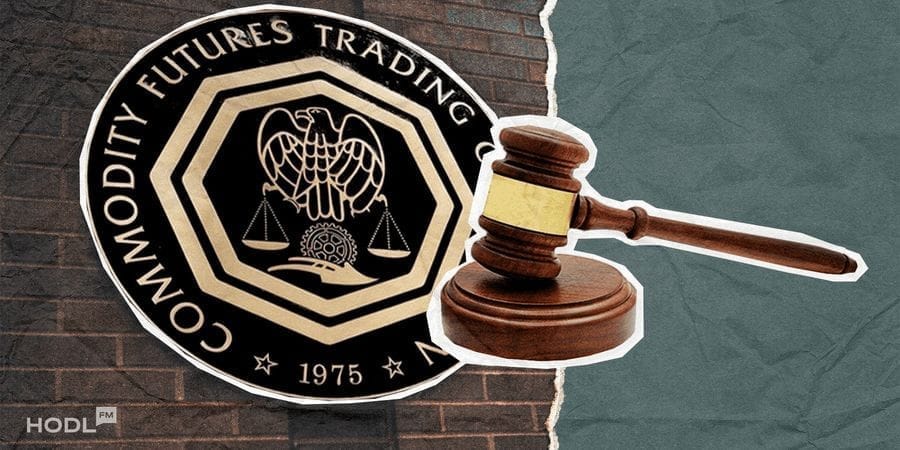


Mike Selig, the Trump-appointed chairman of the U.S. Commodity Futures Trading Commission (CFTC), unveiled a new program Tuesday designed to update U.S. financial rules for digital assets, prediction markets, and other emerging technologies.
Selig emphasized that clear, codified regulations are needed to reduce uncertainty for market participants, contrasting this with previous approaches that relied heavily on enforcement actions to manage novel financial products.
“Decades-old rules designed for pork bellies and wheat futures do not contemplate blockchain-native markets that trade 24/7,”
Moving beyond regulation by enforcement
In a published op-ed on X, Selig criticized the application of legacy futures rules to modern, blockchain-based markets. He argued that regulatory uncertainty has driven startups offshore and limited participation from U.S. investors.
The initiative, called “Future-Proof,” directs CFTC staff to review existing regulations, many originally drafted for commodities such as pork bellies and wheat to determine which rules need updating or replacement.
The goal is to ensure regulations reflect the continuous, global nature of blockchain markets and emerging trading platforms.
Selig noted that markets operating around the clock, including blockchain-native trading platforms and AI-assisted prediction markets, require frameworks that align with their operational realities rather than retrofitting decades-old rules.
“The CFTC must meet innovators where they are.”
U.S. crypto regulation in context
U.S. crypto rules have often relied on enforcement actions rather than clear regulations, leaving companies unsure how to operate. Some trading platforms and startups moved operations overseas to avoid legal uncertainty.
Experts mention that the CFTC’s “Future-Proof” initiative could establish straightforward rules for digital assets, prediction markets, and other emerging financial products, giving U.S. companies a reliable framework while keeping protections against fraud and market manipulation in place.
Focus on minimal, effective regulation
Selig outlined a strategy centered on targeted regulations designed to protect investors from fraud, manipulation, and abuse without restricting innovation. Proposed policy changes will follow formal notice-and-comment rulemaking, a process that provides legal clarity and durability across different administrations.
He highlighted the rapid growth of digital assets, valued at over $3 trillion, and the increasing role of AI in trading, asserting that regulation should address measurable risks rather than impose broad, uncertain constraints.
Coordination and innovation as priorities
The chairman stressed that coordination among regulators will be essential as Congress considers the Digital Asset Market Clarity Act, legislation that could designate the CFTC as the primary regulator for U.S. crypto markets.
Selig also pointed to the benefits of keeping innovation onshore. By providing predictable, transparent rules, U.S. markets can accommodate new products such as tokenized derivatives, decentralized prediction platforms, and AI-driven trading strategies while minimizing the risk of regulatory arbitrage.
“Financial rules must protect participants and the integrity of markets while allowing technology-driven innovation to operate safely in the U.S.,” Selig said.
 Anastasiia G
Disclaimer: All materials on this site are for informational purposes only. None of the material should be interpreted as investment advice. Please note that despite the nature of much of the material created and hosted on this website, HODL FM is not a financial reference resource, and the opinions of authors and other contributors are their own and should not be taken as financial advice. If you require advice. HODL FM strongly recommends contacting a qualified industry professional.