


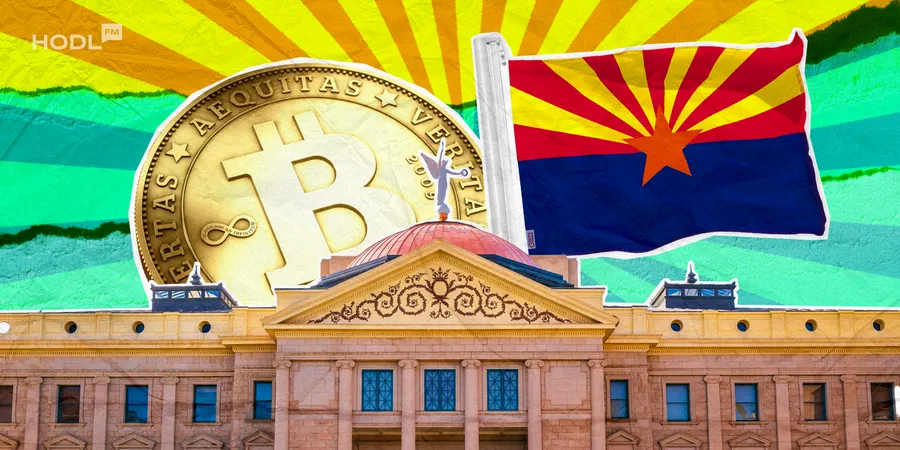



Arizona State Senator Wendy Rogers has introduced three new legislative proposals aimed at revising how digital assets are treated under the state’s tax code and by local governments. The package includes measures to exempt virtual currency from taxation, protect blockchain node operators from municipal fees, and update Arizona’s constitution to define how digital assets fit within property tax law.
Rogers proposes broad digital asset tax exemption
Senate Bill 1044 (SB 1044), would amend Arizona’s Revised Statutes to exclude virtual currency from property taxation. The bill defines virtual currency as “a digital representation of value that functions as a medium of exchange, unit of account, and store of value.” The definition would not apply to the U.S. dollar or foreign currencies.
If enacted, cryptocurrency holdings would become exempt from all property taxes at both state and local levels. However, SB 1044 includes a conditional enactment clause, the exemption would only take effect if voters approve a related constitutional amendment scheduled for the November 2026 general election.
That amendment is contained in Senate Concurrent Resolution 1003 (SCR 1003), which aims to clarify Arizona’s constitutional definition of property tax categories to explicitly exclude virtual currencies.
Under Arizona law, amendments affecting constitutional tax definitions must receive approval from voters. If the amendment passes, virtual currency would join a small number of categories permanently excluded from state property tax assessment.
Blockchain node operators gain attention under SB 1045
A separate measure, Senate Bill 1045 (SB 1045), targets how local governments treat blockchain infrastructure. The bill states that counties, cities, and towns may not impose “a tax or fee on a person that runs a node on blockchain technology.”
This clause would block municipal governments from singling out node operators who maintain decentralized networks within the state. The measure could move through both chambers of the Arizona Legislature and become law if signed by the governor, without requiring a voter referendum.
Supporters see the provision as a safeguard for individuals or businesses hosting blockchain hardware as part of distributed networks such as Bitcoin or Ethereum.
Expanding Arizona’s digital asset policy framework
Rogers’ new package follows previous attempts to build Arizona into a state with a recognized crypto regulatory framework. Arizona already allows the state government to take custody of unclaimed digital assets after three years, a rule developed from earlier proposals for a state-managed digital asset reserve.
Rogers previously co-sponsored a bitcoin reserve bill, which Governor Katie Hobbs vetoed in May. Afterward, Rogers said she planned to reintroduce similar legislation and called the veto a setback for Arizona’s innovation policy.
At the time of introduction, Rogers stated that her goal was to give state residents greater clarity about how digital assets are treated under Arizona law. Public records show that the senator promoted the bills this week on X, saying they would help “limit unnecessary crypto and blockchain-related taxes” and make the state more business-friendly for blockchain startups.
This is a resolution, not a bill.
— Wendy Rogers (@WendyRogersAZ) December 24, 2025
Thus, it would bypass Hobbs and go straight to the Nov 2026 ballot.
It’s a 70-30 polling issue that shows freedom-loving Arizonans loathe Photo Radar. https://t.co/m57CINC3Xq
Activity across other U.S. states
Arizona’s renewed focus reflects a broader national trend. New Hampshire and Texas have also passed bills supporting state-level digital asset reserves. Meanwhile, other states have chosen to focus on tax relief.
The Ohio House of Representatives advanced a proposal to exempt cryptocurrency transactions under $200 from state capital gains taxes, though the measure has not moved since June. In New York, Assemblymember Phil Steck proposed a 0.2% excise tax on digital asset transactions, but the bill remains in committee.
At the federal level, Wyoming Senator Cynthia Lummis introduced draft legislation to create a $300 de minimis capital gains exemption for digital asset transactions. Lummis recently announced her plan to retire from the U.S. Senate in January 2027.
Market snapshot
As these proposals advanced, Bitcoin traded at $87,341, down 3% over 24 hours, according to TradingView data. CoinMarketCap data shows current market capitalization stands near $1.74 trillion, with a circulating supply of 19,966,021 BTC out of a maximum of 21 million.
What comes next
The Arizona bills now proceed to committee review. SB 1045 could advance through the usual legislative process, while SB 1044 and SCR 1003 will depend on both legislative approval and voter consent in 2026. Whether or not they pass, Rogers’ legislative package highlights the growing effort among U.S. states to define the role of cryptocurrencies in local tax and governance systems.
 Gunel Ismayilova
Disclaimer: All materials on this site are for informational purposes only. None of the material should be interpreted as investment advice. Please note that despite the nature of much of the material created and hosted on this website, HODL FM is not a financial reference resource, and the opinions of authors and other contributors are their own and should not be taken as financial advice. If you require advice. HODL FM strongly recommends contacting a qualified industry professional.