




The Museum of Modern Art (MoMA) in New York has added eight CryptoPunks and eight Chromie Squiggles to its permanent collection. The acquisitions mark one of the most significant institutional acknowledgments of blockchain-based art. According to 1OF1_art, all 16 works were donated rather than purchased and will be displayed in MoMA’s Media and Performance department.
We are excited to celebrate the recent acquisitions of Chromie Squiggles and CryptoPunks into @MuseumModernArt's permanent collection.
— 1OF1 (@1OF1_art) December 20, 2025
We are all profoundly grateful to the artists and collectors who supported this important donation, uniting the collective generosity of this… pic.twitter.com/pw8TED4NfB
MoMA welcomes onchain art into its permanent collection
The new additions will sit alongside video and experimental technology works, expanding MoMA’s exploration of contemporary media. The museum confirmed on its website that the pieces can already be viewed digitally.
The CryptoPunks being introduced to the collection include #74, #2786, #3407, #4018, #5160, #5616, #7178, and #7899. Larva Labs founders Matt Hall and John Watkinson donated Punks #74 and #5160. Other contributors included Mara and Erick Calderon (CryptoPunk #2786), Rhydon and Caroline Lee (#3407), Ryan Zurrer of 1OF1 AG (#4018), judithESSS (#5616), the Tomaino Family (#7178), and the Cozomo de’ Medici Collection (#7899).
CryptoPunks, welcome to the @MuseumModernArt collection!
— CryptoPunks (@cryptopunks) December 19, 2025
Punk 4018, Punk 2786, Punk 5616, Punk 5160, Punk 3407, Punk 7178, Punk 74, and Punk 7899 have found a permanent home at MoMA, where they’ll be preserved and cared for as part of the museum’s history.
The collective… pic.twitter.com/hswHYVML2R
The Chromie Squiggles donations were coordinated by 1OF1_art, a digital art organization that helped bring the acquisitions together. 1OF1_art extended its thanks to MoMA curators Stuart Comer and Michelle Kuo for their role in facilitating the addition.
How CryptoPunks and Chromie Squiggles shaped NFT culture
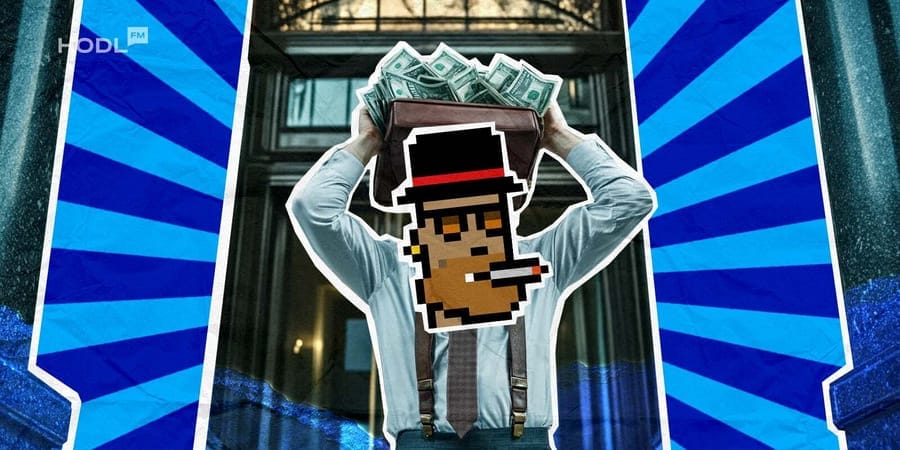
The CryptoPunks collection, launched in 2017 by Larva Labs, originated as 10,000 algorithmically generated 24-by-24 pixel avatars recorded on the Ethereum blockchain. The series is considered a blueprint for later profile-picture projects and predates Ethereum’s ERC-721 token standard, which would later formalize NFTs.
Chromie Squiggles, created by Erick Calderon (Snowfro) in November 2020 as part of Art Blocks, represent the early wave of generative blockchain art. The project became the genesis collection for Art Blocks, which reached a peak of $587 million in monthly sales in August 2021. Each Chromie Squiggle is a unique visual signature based entirely on algorithmic parameters.
The inclusion of both collections underlines MoMA’s evolving commitment to media that redefines the boundaries between technology and creativity. The acquisitions connect the lineage of experimental digital works from MoMA’s archives to the blockchain era.
NFT adoption accelerates among major art institutions
The decision to incorporate these pieces continues a broader institutional push to embed CryptoPunks within museums. In May, Yuga Labs transferred the CryptoPunks intellectual property to the Infinite Node Foundation, a nonprofit group led by Micky Malka, focused on digital art preservation. The foundation outlined its goal to “embed them in leading art institutions worldwide” as part of its stewardship.
This acquisition aligns with that initiative and adds a major institutional milestone for Web3 art. Other museums, including ICA Miami, have previously acquired individual CryptoPunks, but MoMA’s addition of multiple works represents a scaling up of museum-level engagement with NFTs.
Renewed interest in digital blue chips
The timing of MoMA’s acquisition coincides with renewed collector interest in blue-chip NFTs. In late July, CryptoPunks registered their highest weekly trading volume since March 2024, reaching $24.6 million, based on The CoinMarketCap data. Despite that activity, the collection’s market capitalization has cooled from its highs. CoinGecko data places the figure around $763 million, down from nearly $2.5 billion earlier in the year.
The contrast between market performance and artistic recognition highlights a broader shift from speculation to cultural integration. For many collectors and curators, these acquisitions signal that NFTs have moved beyond novelty status into historical documentation of digital creativity.
Cultural significance and preservation
MoMA’s addition of these onchain works aligns with its long history of embracing experimental forms, from photography and video to net art and performance. The integration of NFTs builds continuity with the museum’s mission to preserve, research, and exhibit works that define creative innovation in their era.
The acquisition also introduces new conservation considerations for institutions. Maintaining blockchain art involves issues of storage, metadata, and digital provenance, factors that museums must now integrate into traditional preservation models.
While this marks a cultural milestone for Web3 art, it also establishes a framework for how major institutions might engage with decentralized technologies in the years ahead. MoMA’s step reshapes how audiences might encounter digital-native art within canonical museum spaces.
 Gunel Ismayilova
Disclaimer: All materials on this site are for informational purposes only. None of the material should be interpreted as investment advice. Please note that despite the nature of much of the material created and hosted on this website, HODL FM is not a financial reference resource, and the opinions of authors and other contributors are their own and should not be taken as financial advice. If you require advice. HODL FM strongly recommends contacting a qualified industry professional.