

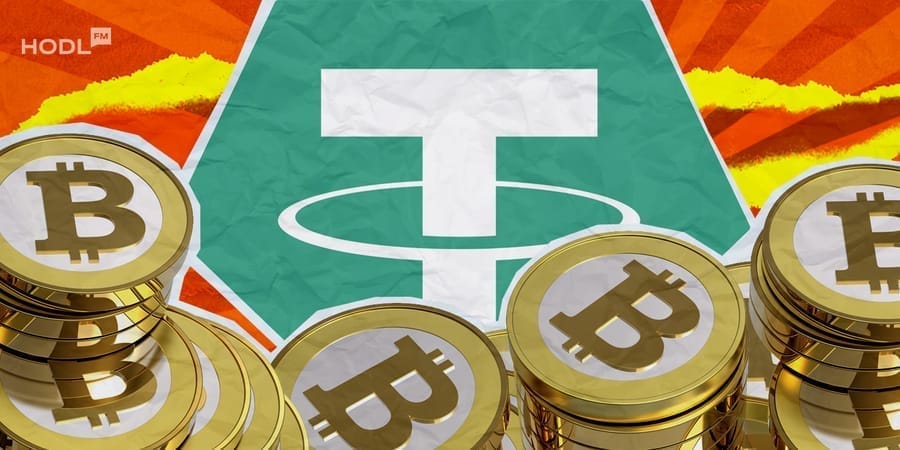


Tether Holdings SA is moving to tighten control over its shareholder base as it prepares a fundraising round that could raise as much as $20 billion and value the company at roughly $500 billion.
As part of that effort, the stablecoin issuer has intervened to stop at least one existing investor from selling shares outside the company’s preferred process.
Executives are now weighing ways to provide future liquidity to investors once the deal is completed, including share buybacks and the possibility of digitally representing company shares on a blockchain through tokenization, according to people familiar with the discussions.
In a statement addressing the matter, Tether said it had “received clear confirmation that these efforts will not proceed.” adding:
“It would be imprudent, and indeed reckless, for any investor to attempt to circumvent the established process led by Tier 1 global investment banks or to engage with parties not authorized by Tether’s management,” the company said.
Tether did not identify the shareholders involved.
Guarding a high-stakes fundraise
At a $500 billion valuation, Tether would rank among the world’s most valuable private companies. The company has indicated it wants to attract long-term, strategic investors rather than facilitate near-term exits for existing holders. Management is not currently planning to allow shareholders to divest as part of the main funding round, according to people familiar with the strategy.
The lack of a public listing timeline adds to the pressure. Without a clear path to an initial public offering, new and existing investors could face a long wait before traditional liquidity options become available.
One early investor, Blockchain Capital, had considered selling some of its holdings before news of the fundraising effort became public, according to a person familiar with the matter. That plan was later dropped.
Tokenization and buybacks as liquidity tools
Among the options under review is tokenization, a process that digitally represents ownership of real-world assets on a blockchain. The approach has gained traction across financial markets as firms look for faster settlement and more flexible trading structures.
Several companies have already tested tokenized equity models, allowing shares to trade on blockchain networks rather than through traditional market infrastructure. Tether itself entered the space last year with the launch of its Hadron platform, which enables the tokenization of assets such as stocks, bonds, and commodities.
Despite growing interest, the sector remains relatively small.
The total value of tokenized real-world assets traded on blockchains stands at around $18 billion, according to industry data, a fraction of the size of global equity markets.
Buybacks represent another potential path. Crypto and fintech firms have increasingly used share repurchases to provide liquidity for early investors and employees without going public. In recent years, Ripple has bought back more than a quarter of its outstanding shares, while Revolut has offered to repurchase employee equity at a discount to its most recent valuation.
A profitable stablecoin giant
Tether’s financial position gives it unusual flexibility. The company issues USDT, the world’s largest stablecoin, which is backed by reserves and pegged to the US dollar. About $186 billion worth of USDT is currently in circulation, making it the dominant token in the sector.
Tether earns revenue from the assets backing those reserves and has said its annual profit could reach approximately $15 billion this year. The company has deployed capital well beyond crypto markets, including recent moves to increase its stake in Juventus Football Club.
For now, management appears focused on maintaining valuation discipline and message control as it courts major investors, including large global asset managers and technology-focused funds. Whether tokenized shares or buybacks ultimately emerge as formal liquidity solutions remains under review, but the company has made clear that any such steps will be taken on its terms.
 Gunel Ismayilova
Disclaimer: All materials on this site are for informational purposes only. None of the material should be interpreted as investment advice. Please note that despite the nature of much of the material created and hosted on this website, HODL FM is not a financial reference resource, and the opinions of authors and other contributors are their own and should not be taken as financial advice. If you require advice. HODL FM strongly recommends contacting a qualified industry professional.