





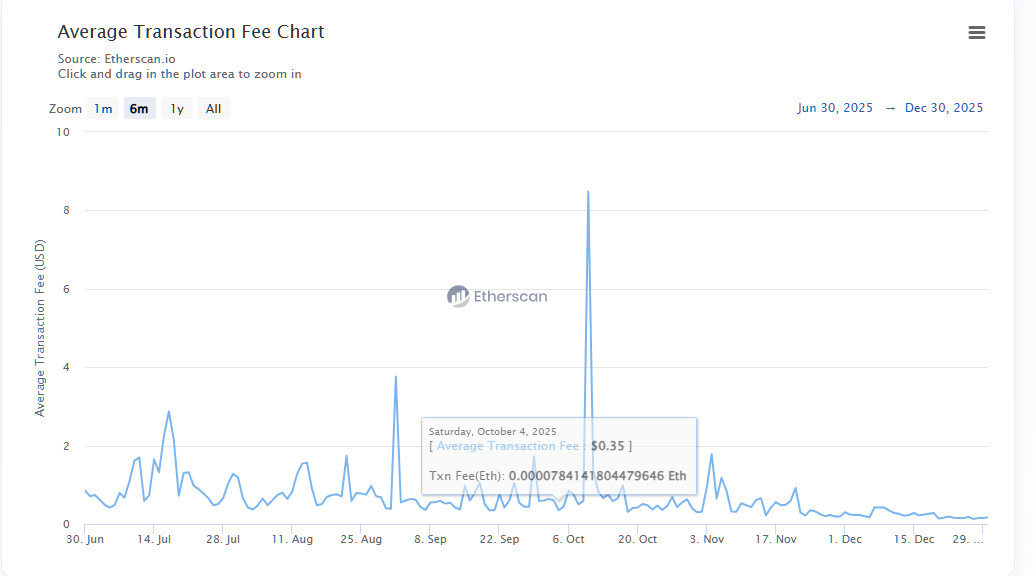
Ethereum’s mainnet processed roughly 2.2 million transactions in a single day this week, setting a new on-chain activity record while average transaction fees slid to about 17 cents.
The milestone was recorded on Tuesday, according to data from Etherscan, marking a sharp contrast with earlier periods when congestion routinely priced users out of the network.
At the peak of the last cycle in May 2022, average Ethereum fees surged beyond $200 per transaction during periods of intense demand.
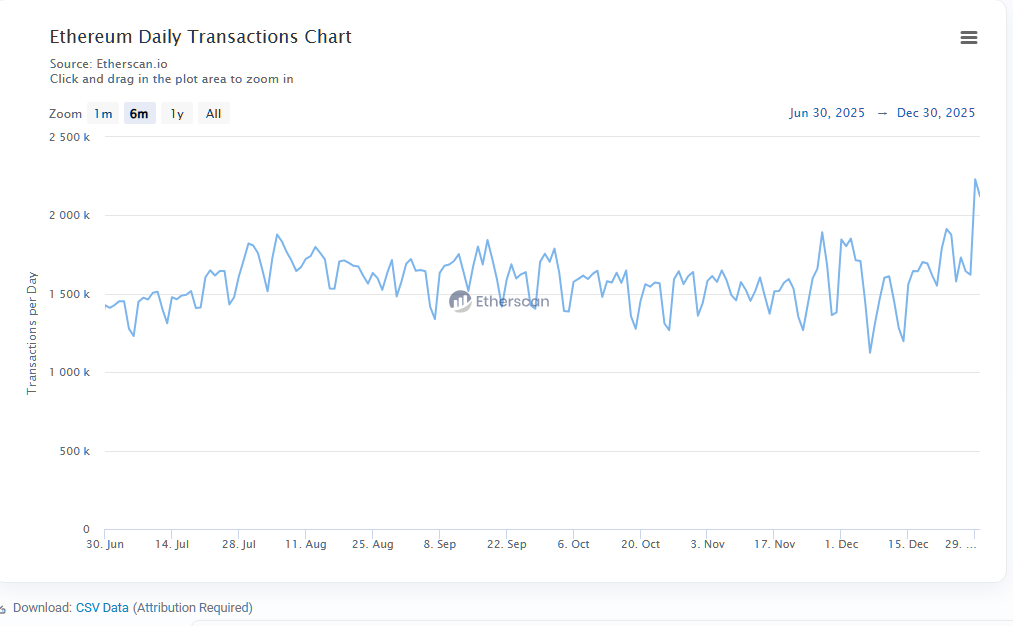
Falling fees and network upgrades drive renewed Ethereum L1 activity
Fees have been trending lower for much of the past year. On Oct. 10, during a major liquidation event that rippled through crypto markets, average transaction costs still hovered near $8.50. Since then, steady protocol upgrades and capacity increases have pushed costs down even as usage climbed.
That combination is notable.
Historically, high fees drove users toward cheaper layer-2 networks and alternative blockchains. The latest data suggests activity is flowing back to Ethereum’s base layer, signaling renewed confidence in L1 as a settlement environment rather than just a security anchor for rollups.
Developer activity supports that view. Token Terminal data shows that the number of new smart contracts deployed on Ethereum reached about 8.7 million in the fourth quarter, the highest level recorded. Builders appear increasingly comfortable using Ethereum directly for contract deployment and final settlement as costs normalize.
Upgrades reshaped Ethereum’s fee dynamics in 2025
Two major network upgrades this year played a central role in shifting Ethereum’s economics.
The Pectra upgrade, activated in May, focused on validator-side improvements, staking flexibility, and groundwork for future scalability enhancements. While less visible to end users, those changes helped streamline validator operations and prepare the network for higher throughput.
Fusaka delivered a more direct capacity boost. The upgrade raised Ethereum’s gas limit from 45 million to 60 million, allowing more computation and transactions per block. Validator support for the increase was already strong earlier in the year, with more than half signaling approval as far back as February.
Together, these changes expanded block space without sacrificing stability, easing congestion and reducing fee pressure during periods of elevated demand.
Staking flows point to rising validator confidence
On the consensus side, Ethereum’s staking dynamics have also shifted. Earlier this week, the staking queue flipped decisively toward deposits, with nearly twice as much ETH waiting to be staked as queued for exit for the first time in six months.
Unstaking typically signals intent to sell or reallocate capital, while staking reflects a willingness to lock up ETH for longer horizons. The reversal suggests validators are leaning toward commitment rather than liquidity, reinforcing the broader picture of improving network confidence.
Ethereum’s record transaction count, falling fees, and rising staking participation all point to a network that is processing more activity with less friction, a combination that has historically proven difficult to sustain.
For now, the data shows Ethereum doing exactly that.
 Oleksii Shumak
Disclaimer: All materials on this site are for informational purposes only. None of the material should be interpreted as investment advice. Please note that despite the nature of much of the material created and hosted on this website, HODL FM is not a financial reference resource and the opinions of authors and other contributors are their own and should not be taken as financial advice. If you require advice of this sort, HODL FM strongly recommends contacting a qualified industry professional.