





Bitcoin mining manufacturer Canaan is expanding its renewable-energy ambitions, entering a new partnership designed to make clean power a more reliable backbone for industrial-scale mining.
The company has teamed with green-power developer SynVista Energy to build an adaptive mining platform that automatically adjusts computing demand to match fluctuating renewable output.
We’re excited to announce our new partnership with SynVista Energy, launching a renewable-adaptive Bitcoin-mining ecosystem that integrates clean power, storage, and hash-rate in one intelligent platform. ⚡️
— Canaan Inc. (@canaanio) December 2, 2025
AI-driven load balancing.
Distributed behind-the-meter mining.
On-chain… pic.twitter.com/RnCIbQ8R7v
Mining hardware built for variable power
The firm describes the initiative as a shift “from isolated pilots to an engineered, replicable solution,” positioning it as a framework miners can use to remain both economically viable and prepared for future regulation. Canaan notes that high renewable penetration often brings volatility and curtailment risk, and traditional mining strategies struggle to convert surplus clean energy into predictable returns.
Bitcoin mining has long faced criticism for consuming power comparable to mid-sized countries such as Poland or Thailand.
Supporters counter that mining can actually strengthen grid stability, especially as AI data centers place increasing pressure on electricity systems. Canaan’s adaptive approach is meant to demonstrate how mining can operate as a flexible, demand-responsive load.
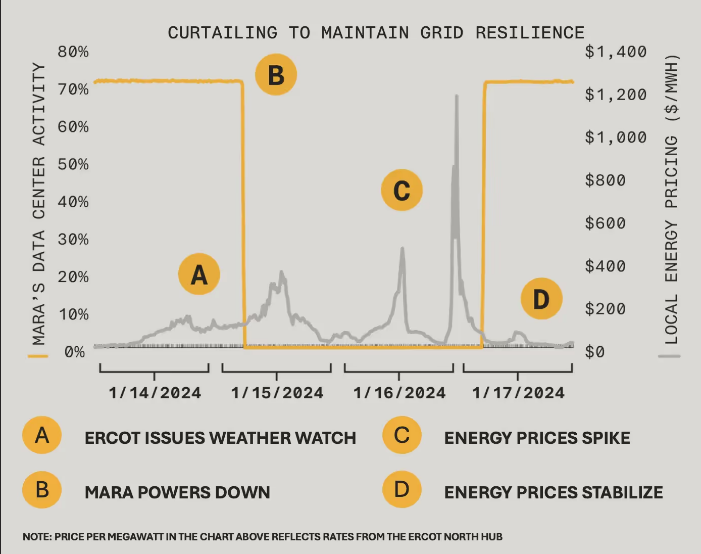
"Bitcoin is a variable load, meaning that you can dispatch it, so you don’t add any bricks to the bottom of that pyramid. You don’t make the column go higher. In fact and this is the big in fact, you are benefiting the grid, and this is a big change. You’re benefiting the grid because ultimately what you want to be able to do is to provide the maximum amount of monetization from a given portfolio of grid assets without having to spend more for CapEx for additional infrastructure.”
Chris Ruppel, MARA’s Director of Distributed Energy Resources and Energy Origination
Tokenizing renewable output and carbon savings
Beyond the mining platform itself, Canaan and SynVista plan to tokenize generation output, carbon reductions, and mining yields onchain. The companies say this will form a verifiable data foundation for real-world-asset (RWA) securitization of green-energy plants.
Canaan argues that this digital backbone could eventually support tokenization of cash flows and carbon credits, improving transparency and liquidity for green assets while connecting the energy transition to the broader digital economy.
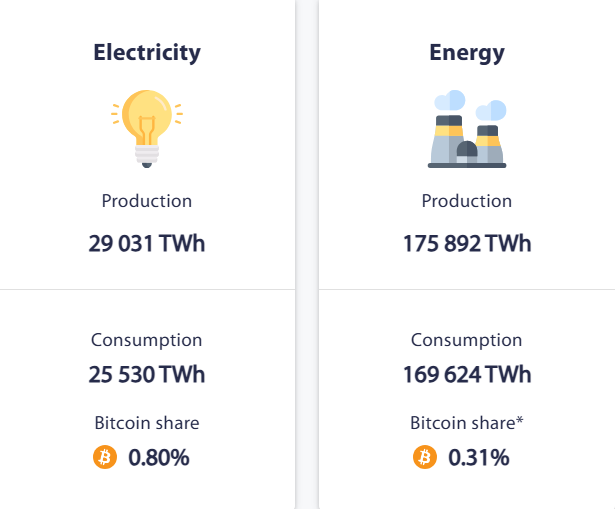
Current data from the Cambridge Bitcoin Electricity Consumption Index estimates Bitcoin’s share of global electricity use at around 0.8%. Meanwhile, renewable energy powering miners has grown at an average annual rate of 5.8%, according to a report from the MiCA Crypto Alliance.
The SynVista collaboration builds on Canaan’s recent renewable-focused initiatives. In October, the company launched a gas-to-computing pilot in Canada that converts stranded natural gas into mining power. A month earlier, it signed a deal with Soluna Holdings to deploy machines at a wind-powered data center in Texas, a partnership that has now become a notable example of renewable-powered infrastructure for both Bitcoin mining and AI computing.
Soluna and Canaan expand wind-powered mining partnership
Soluna and Canaan’s relationship demonstrates how renewable-powered data centers are becoming a strategic pathway for energy-intensive digital operations. Under a new hosting agreement, Soluna will install 20MW of Canaan’s Avalon A15 XP miners about one exahash per second at its Project Dorothy facility in Texas, with deployment set for early 2026.
Canaan CEO Nangeng Zhang calls the dual-power model, wind-first with grid backup, a unique advantage that offers both reliability and cost efficiency.
Project Dorothy operates largely on behind-the-meter wind power, meaning electricity is generated on-site rather than pulled from the broader grid. This avoids transmission constraints and cuts exposure to volatile electricity pricing. The facility can still draw from the grid when needed, maintaining high uptime and operational stability.
Soluna CEO John Belizaire says the partnership reflects a shared commitment to “making renewable energy a global superpower.”
Monetizing surplus clean energy
The agreement fits within Soluna’s 2.8GW pipeline of renewable-powered computing projects under development across the U.S. The company’s model is built around converting surplus or curtailed clean energy into productive computing capacity for industries like mining and AI.
This approach solves two persistent problems: renewable energy oversupply during off-peak periods and the rising demand for scalable digital infrastructure. Project Dorothy illustrates how renewable-powered data centers can meet both challenges while maintaining sustainability targets.
 Tanya Petrusenko
Disclaimer: All materials on this site are for informational purposes only. None of the material should be interpreted as investment advice. Please note that despite the nature of much of the material created and hosted on this website, HODL FM is not a financial reference resource, and the opinions of authors and other contributors are their own and should not be taken as financial advice. If you require advice. HODL FM strongly recommends contacting a qualified industry professional.