



As markets wobble, the world’s biggest asset manager doubles down on blockchain-backed finance.
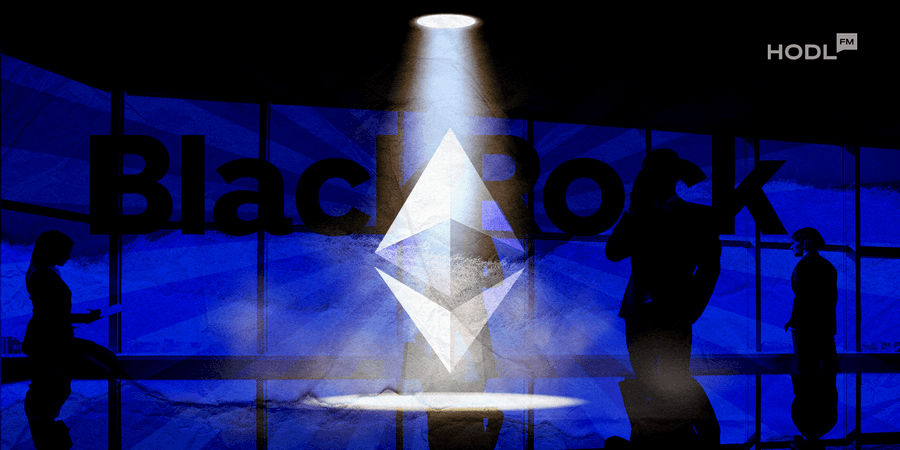
BlackRock’s top leadership believes the future of global markets is heading toward a unified digital layer and tokenization will be the force that merges crypto and traditional finance. CEO Larry Fink and chief operating officer Rob Goldstein, both once skeptical of digital assets, now argue that tokenization is poised to reshape the way investors buy, hold, and move assets.
In a joint op-ed published in The Economist, Fink and Goldstein describe tokenization not as a replacement for the current financial system but as the connective tissue that will link it to the crypto economy.
“Think of it instead as a bridge being built from both sides of a river,” they wrote.
On one side are traditional institutions; on the other, digital-first innovators such as stablecoin issuers, fintech startups, and public blockchains.
The two sides, they said, “aren’t competing so much as learning to interoperate.”
Tokenization is shaping the next evolution of global markets. In @TheEconomist, Larry Fink and Rob Goldstein discuss how tokenization can modernize market infrastructure, enhancing efficiency, transparency, and access by connecting traditional and digital finance. Read more: pic.twitter.com/Hf1Q7HbxaZ
— BlackRock (@BlackRock) December 1, 2025
BlackRock Official X Source.
Tokenization’s promise becomes clearer
According to Fink and Goldstein, the first hurdle was simply seeing past the crypto hype cycle. During the boom, tokenization was often overshadowed by speculation and meme-driven trading. But recent years have shown that placing real-world assets from money-market holdings to bonds, on blockchain rails can significantly expand the investable universe beyond publicly traded equities and fixed-income products.
BlackRock itself now operates the world’s largest tokenized cash market fund, the BlackRock USD Institutional Digital Liquidity Fund (BUIDL), which launched in March 2024 and holds roughly $2.8 billion in assets.
The fund has become a flagship example of how tokenized instruments can offer instantaneous settlement, transparent ownership, and on-chain auditability without disrupting the underlying economics of the asset.
Regulation must evolve with the market
Despite their enthusiasm, Fink and Goldstein emphasize that tokenization must advance under clear and consistent regulatory frameworks. They argue that regulators should focus on the underlying risks of an asset, not the technology wrapping it. “A bond is still a bond, even if it lives on a blockchain,” they wrote.
They compare the shift to previous market milestones. Bond ETFs once served as a bridge between the dealer-driven world of fixed income and public exchanges, opening the door to more efficient, transparent trading. Spot Bitcoin ETFs now sit on that same evolutionary arc, helping digital assets find footing within regulated markets.
Tokenization, they believe, is the next step.
Bitcoin ETF turbulence tests investor sentiment
BlackRock’s long-term vision arrives at a moment when crypto markets are facing renewed pressure. The firm’s iShares Bitcoin Trust (IBIT) recently saw its largest single-day redemption $523 million amid a broader pullback that has erased nearly 30% of Bitcoin’s value since October highs. Across all U.S. spot Bitcoin ETFs, more than $3 billion has exited this month alone.
The downturn has thinned liquidity and pushed traders into protective positions, with options markets showing increased hedging around potential drops toward the $80,000 level.
Market strategists say institutions are growing cautious as macroeconomic uncertainty clouds rate expectations.
Yet the institutional appetite isn’t evaporating. Harvard University tripled its IBIT exposure in the third quarter, raising its holdings to 6.8 million shares, now its largest public equity position, ahead of both gold and major tech stocks. Other endowments and sovereign funds have quietly increased allocations as well, signaling that the long-term thesis remains intact despite short-term volatility.
 Tanya Petrusenko
Disclaimer: All materials on this site are for informational purposes only. None of the material should be interpreted as investment advice. Please note that despite the nature of much of the material created and hosted on this website, HODL FM is not a financial reference resource, and the opinions of authors and other contributors are their own and should not be taken as financial advice. If you require advice. HODL FM strongly recommends contacting a qualified industry professional.