




RollerCoin’s game of the year moment in 2025
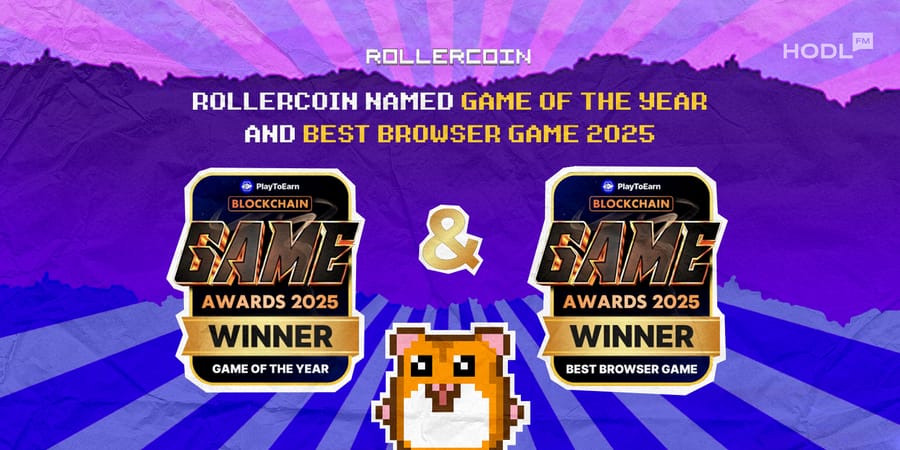
At the 2025 Blockchain Game Awards, RollerCoin took home two major titles: Game of the Year and Best Browser Game. In a sector known for fast hype cycles and short-lived launches, the win stood out. Not because of flashy token mechanics or record-breaking NFT sales, but because it highlighted a different direction for Web3 gaming.
The award points to a growing shift in how the industry defines success. Instead of focusing on speculative yield or launch-day traction, recognition now leans toward games that keep players engaged over time. RollerCoin’s moment in 2025 reflects that change clearly.
RollerCoin as a case study, not an exception
RollerCoin launched in 2018 as a browser-based crypto mining game and has grown to more than 5 million players, delivering over $10 million in real crypto payouts, including 86 BTC mined and rewards distributed across more than 16 supported tokens.The game blends arcade-style mini-games with tycoon progression, letting players build a virtual mining operation directly in the browser without downloads or mandatory wallet setup.
Unlike many Web3 games built around short-term incentives, RollerCoin differentiates itself through fun-first design, low entry barriers, and long-term community engagement.
- Fun-first gameplay: The core goal for players is to build their own mining empire through gamified mechanics and earn real crypto rewards in the process.
- A low barrier to entry has supported that growth: Players can start without spending and still earn real rewards through active play. That simplicity helps attract both crypto-native users and newcomers who are curious but cautious. Browser-based and mobile-first access removes friction that has slowed adoption across much of Web3 gaming.
- Narrative and community play a central role in retention: Narrative and community play a central role in retention. RollerCoin’s exceptionally active community contributes directly to the game’s ongoing development: from frequent in-game events to structured creator and ambassador programs. These efforts support lore-based events built around an evolving storyline, giving players reasons to return beyond daily rewards or progression milestones.
While many play-to-earn projects struggled to survive beyond a single market cycle, RollerCoin continued to grow through regular updates and active community involvement.
Why fun-first Web3 games are winning
Early play-to-earn models focused heavily on grinding and financial incentives. Over time, players burned out. Complex onboarding, passive reward systems, and repetitive mechanics pushed many users away.
Fun-first design changed that dynamic. Games that prioritize gameplay, progression, and replay value now attract stronger engagement. Players return because they enjoy the experience, not just the rewards.
RollerCoin fits that model by tying earning directly to active play and long-term progression, rather than idle mechanics.
How RollerCoin team sees Web3 gaming evolving in 2026
As Web3 gaming moves into its next phase, the RollerCoin team expects a stronger focus on fun-first design, deeper gameplay, and long-term retention, alongside expansion into new markets and broader audiences.
Earn-based progression, tycoon-style systems, and community-driven features shape how the team views the direction of Web3 games in 2026.
- Instant-Play Will Become the Default: RollerCoin expects browser-based and instant-play experiences to dominate Web3 gaming in 2026. Games that require minimal setup will compete more effectively for mainstream attention.
- Gameplay-Driven Rewards Over Passive Yield: The shift away from passive earning systems will continue. Rewards will follow active play, skill, and progression. Engagement will drive value, not idle mechanics.
- Longevity as a Core Success Metric: Live operations, regular updates, and seasonal content will define quality. Games that survive multiple market cycles will set the standard.
- Community Influence on Game Direction: Player-driven events, user-generated content, and social competition will play a larger role. Communities will help shape culture and direction, not just consume content.
- Accessibility Expanding the Web3 Gaming Audience: Inclusive design will continue to attract new players. Games that welcome casual users alongside experienced crypto players will lead adoption.
- Expand new markets: RollerCoin sees geographic and audience expansion as a key direction for Web3 gaming in 2026. By lowering entry barriers and focusing on fun-first, instant-play mechanics, the platform aims to reach new regions and player segments, including users coming from traditional Web2 games.
RollerCoin’s Game of the Year moment reflects where Web3 gaming stands today, and where it’s heading next. The industry is starting to reward games that people actually want to play.
 Oleksii Shumak
Disclaimer: All materials on this site are for informational purposes only. None of the material should be interpreted as investment advice. Please note that despite the nature of much of the material created and hosted on this website, HODL FM is not a financial reference resource, and the opinions of authors and other contributors are their own and should not be taken as financial advice. If you require advice. HODL FM strongly recommends contacting a qualified industry professional.