





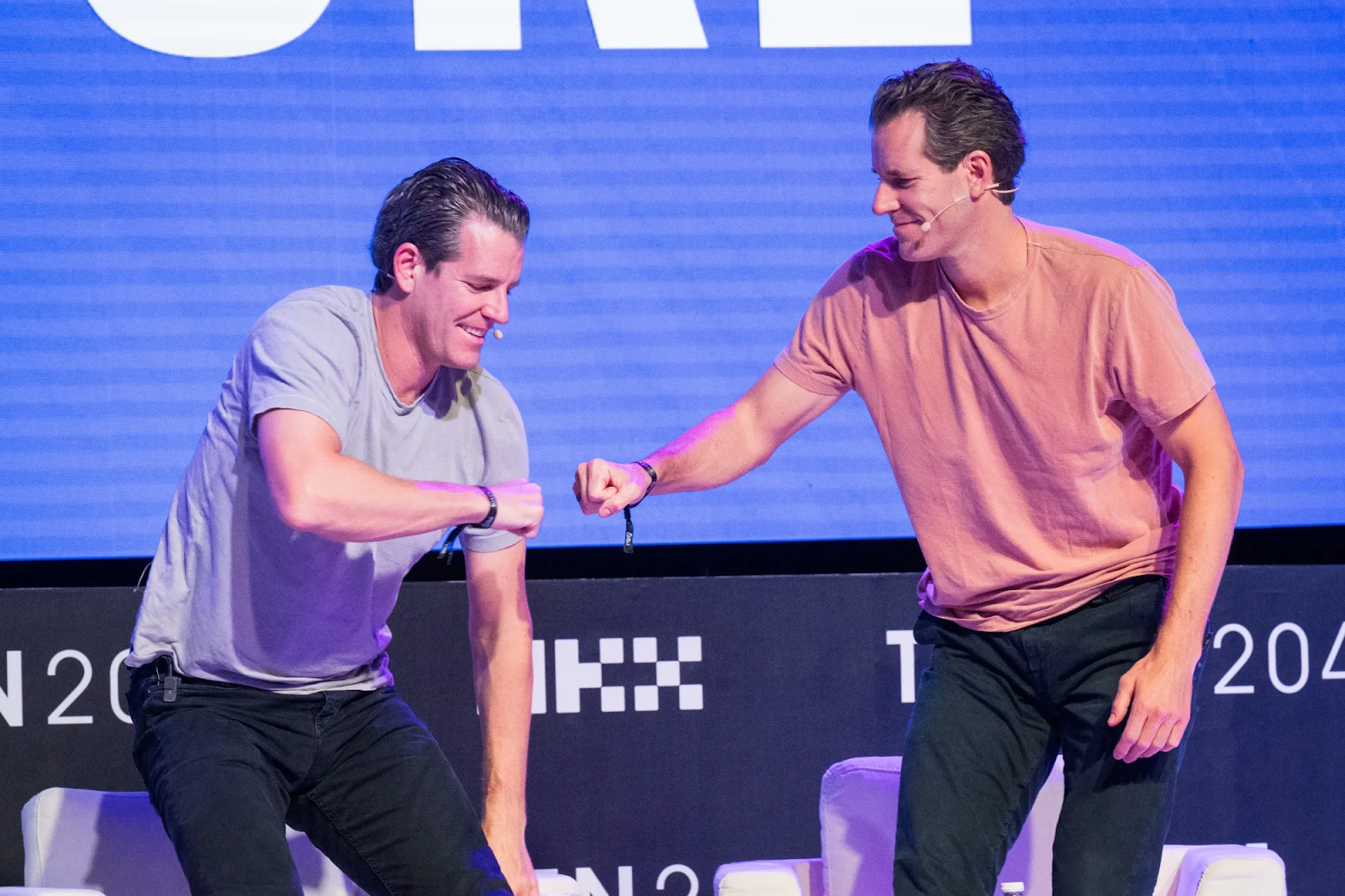
If you've heard of Bitcoin, you've probably heard of Cameron and Tyler Winklevoss. These identical twins rowed at the Olympics, battled Mark Zuckerberg in court, and became some of the earliest big believers in cryptocurrency. They founded Gemini, one of the first regulated crypto exchanges in America, and they've been vocal advocates for Bitcoin ever since. Their story blends Silicon Valley drama with Olympic athleticism and a billion-dollar bet on digital money.
Early life and education
Cameron and Tyler Winklevoss were born on August 21, 1981, in Southampton, New York, and grew up in Greenwich, Connecticut. Their dad, Howard, was a professor at Wharton and worked as an actuarial consultant. Their mom, Carol, raised them in a competitive household.
The twins went to Brunswick School and played several sports, but rowing became their passion. They got good enough to earn spots at Harvard in 2000, where they studied economics and rowed on the varsity crew team. They competed at the highest levels and eventually made it to the 2008 Beijing Olympics, finishing sixth in the men's pair event.
The Facebook lawsuit
Back at Harvard, the Winklevoss brothers came up with an idea for a social network called HarvardConnection (later renamed ConnectU). It was supposed to be an exclusive platform for college students. They needed help building it, so in 2003, they asked fellow student Mark Zuckerberg to join the project.
According to the twins, Zuckerberg said yes but then went off and built Facebook instead, using ideas they'd shared with him. The twins felt betrayed enough to sue.
The lawsuit became huge news. It dragged on for years and got turned into a major plot point in "The Social Network," the 2010 movie about Facebook's founding. Public opinion wasn't exactly kind to the twins at the time.
According to the New York Times, they settled in 2008 for about roughly $65 million in cash and Facebook stock. They tried to back out later, claiming Facebook had misled them about the company's value, but courts said the deal stood. That settlement turned out to be just the beginning of their story.
Entry into Bitcoin
Fast forward to 2012. The twins were on vacation in Ibiza when someone at a beach bar mentioned Bitcoin. Most people would've shrugged it off, but Cameron and Tyler got curious. They started digging into how it worked and saw something most people missed.

"We have elected to put our money and faith in a mathematical framework that is free of politics and human error," Tyler Winklevoss said in an interview. They started buying when Bitcoin was under $10 a coin.
By 2013, they went public with the fact that they owned about one percent of all Bitcoin in existence, roughly $11 million worth at the time. Their bet was that Bitcoin would become "digital gold," a way to store value in an increasingly online world. A lot of people thought they were crazy.
But the Winklevoss twins took a different approach from most early Bitcoin enthusiasts. Instead of railing against "the system," they put on suits and went to talk to regulators and bankers. They figured if crypto was going to go mainstream, it needed to play by some rules.
Founding Gemini
In 2014, they started Gemini Trust Company. The name works on multiple levels it's their astrological sign, it means "twins," and it represents connecting old-school finance with new-school crypto.
In 2015, they got a New York Trust Company charter, making them one of the first properly regulated crypto exchanges in the US. While other exchanges operated in legal gray areas, the Gemini exchange was playing by the book.
"We saw an opportunity to build a bridge to the future of money," Cameron Winklevoss explained. The platform focused on security and following regulations, which made it attractive to serious investors who wanted to get into crypto but were nervous about sketchy exchanges.
Gemini added insurance for customer funds, clear fee structures, and eventually launched the Gemini dollar, a stablecoin that's always worth one US dollar. Under the Winklevoss brothers' leadership, the company grew into a major player, handling billions in trades and serving millions of customers.
What is the Winklevoss twins' net worth?
This is where things get tricky. The Winklevoss twins' net worth bounces around a lot because crypto prices are so volatile, and they don't publicize exactly how much Bitcoin they still hold.
When Bitcoin hit around $69,000 in late 2021, its holdings were probably worth several billion dollars. Forbes has put them on various rich lists over the years, but the rankings change as crypto prices swing.
Most estimates for the Winklevoss twins' net worth in 2025 put each brother somewhere between $3 billion and $4 billion, though nobody knows for sure.

Their wealth comes from Bitcoin, their stake in Gemini, and other crypto investments. That $65 million Facebook settlement? It's basically pocket change compared to what their crypto bet became worth.
Tyler Winklevoss and Cameron Winklevoss have mostly held onto their Bitcoin through the ups and downs. That means they've seen their net worth jump by billions during bull runs and crash by billions during bear markets.
Business ventures and investments
The twins haven't just focused on Gemini. Cameron and Tyler Winklevoss have invested in dozens of crypto and blockchain companies over the years. They've backed infrastructure projects, decentralized finance platforms, and startups building new blockchain applications.
Beyond investing, the Winklevoss twins have become public voices for the industry. They do interviews, speak at conferences, and they've testified before Congress multiple times about crypto regulation. Their basic argument to politicians has been consistent: don't ban crypto, regulate it properly.
Challenges and regulatory hurdles
It hasn't all been smooth sailing. The Gemini Winklevoss twins hit a major rough patch in 2023 with their Earn program.
Gemini had a product that let customers lend out their crypto to earn interest. Gemini partnered with a company called Genesis Global Capital to make it work. Then Genesis went bankrupt during a crypto market crash, and customer funds got frozen.
The SEC came after Gemini, claiming the Earn program was actually an unregistered security. Customers couldn't access their money. Lawsuits piled up. The twins publicly blamed Genesis and its parent company, DCG, for mismanaging funds, but they also caught heat for not having better oversight.
The whole mess damaged the Gemini Exchange's reputation and forced it to shut down the Earn program. Beyond that crisis, the company faces ongoing challenges. When crypto prices drop, trading volume dries up. They're competing with bigger exchanges like Coinbase and Binance, plus decentralized platforms.
Influence and legacy
Love them or hate them, the Winklevoss twins have had a real influence on how crypto developed in the United States. They've pushed the idea that Bitcoin deserves to be taken seriously as an investment.
Their focus on working with regulators helped shift the conversation. Crypto went from being seen as something only used by criminals to something your financial advisor might recommend. Not everyone in the crypto world loves this. Plenty of people think the twins are too cozy with Wall Street, but it's hard to argue that they haven't moved the needle toward mainstream acceptance.
The Winklevoss brothers have also gotten involved in politics, donating significant money to candidates who support crypto-friendly policies.
Both keep their personal lives pretty private. They don't talk much about their romantic relationships publicly, preferring to keep the focus on business.
Their path is unusual. After losing their legal battle with Mark Zuckerberg, they took the settlement money and placed a bet that paid off spectacularly. Instead of staying bitter about Facebook, they found something potentially bigger in cryptocurrency.
Conclusion
Tyler and Cameron Winklevoss have had quite a journey. From the Harvard rowing team to the Beijing Olympics, through a contentious lawsuit, and finally into early Bitcoin investment, nobody could have predicted this path.
Their decision to buy Bitcoin back in 2012 and 2013, when it was under $10 and most people thought it was worthless, looks pretty smart in hindsight. Building the Gemini exchange and getting it properly licensed helped legitimize the whole industry in the US.
Sure, they've had setbacks. The Earn program mess hurt their reputation. Crypto markets crash regularly, taking their net worth along for the ride. Competition keeps getting tougher.
But Cameron Winklevoss and Tyler Winklevoss are still in the game, still running Gemini, still advocating for Bitcoin and crypto regulation. Whether their vision of Bitcoin as digital gold actually plays out remains to be seen. What's clear is that they played a real role in bringing crypto from the fringes into the mainstream conversation.
Their story is a reminder that sometimes your biggest setback can point you toward your biggest opportunity. And that being early to something, even when everyone thinks you're wrong, can change everything.
 Tanya Petrusenko
Disclaimer: All materials on this site are for informational purposes only. None of the material should be interpreted as investment advice. Please note that despite the nature of much of the material created and hosted on this website, HODL FM is not a financial reference resource, and the opinions of authors and other contributors are their own and should not be taken as financial advice. If you require advice. HODL FM strongly recommends contacting a qualified industry professional.