




Imagine a scenario where, rather than merely debating with your pals regarding the upcoming election's winner or the future of Bitcoin, you could actually place your bet on your forecast. Prediction markets are precisely what allow you to do that.
These platforms really hit the mainstream during the 2024 election cycle. Suddenly, everyone was checking Polymarket alongside traditional polls. Then Robinhood and Coinbase decided to jump in, and now we're seeing them pop up everywhere, from crypto exchanges to gaming platforms.
So, are they actually useful, or just another way to gamble online? Let's break it down.
What are prediction markets?
Think of them as betting markets for real-world events. You're betting on whether something specific will happen. Will the Fed cut interest rates in its next meeting? Will Bitcoin break $150k by the end of 2026? Will a specific film win Best Picture at the next Oscars?
Here's how it works: you buy a contract for somewhere between 0 and 100 cents. If your prediction comes true, you get a dollar. If not, you get nothing.
The clever part is that the price tells you what everybody thinks is going to happen. If a contract trades at 65 cents, the crowd is essentially saying, "There's a 65 percent chance this happens."
What makes this different from just taking a random poll is simple: people have skin in the game. When your own money is on the line, you tend to think a bit harder before clicking "buy."
How do prediction markets work?
Let me walk you through a real example. There's a market asking: "Will Apple release a Macbook with cellular connectivity by June 30?"
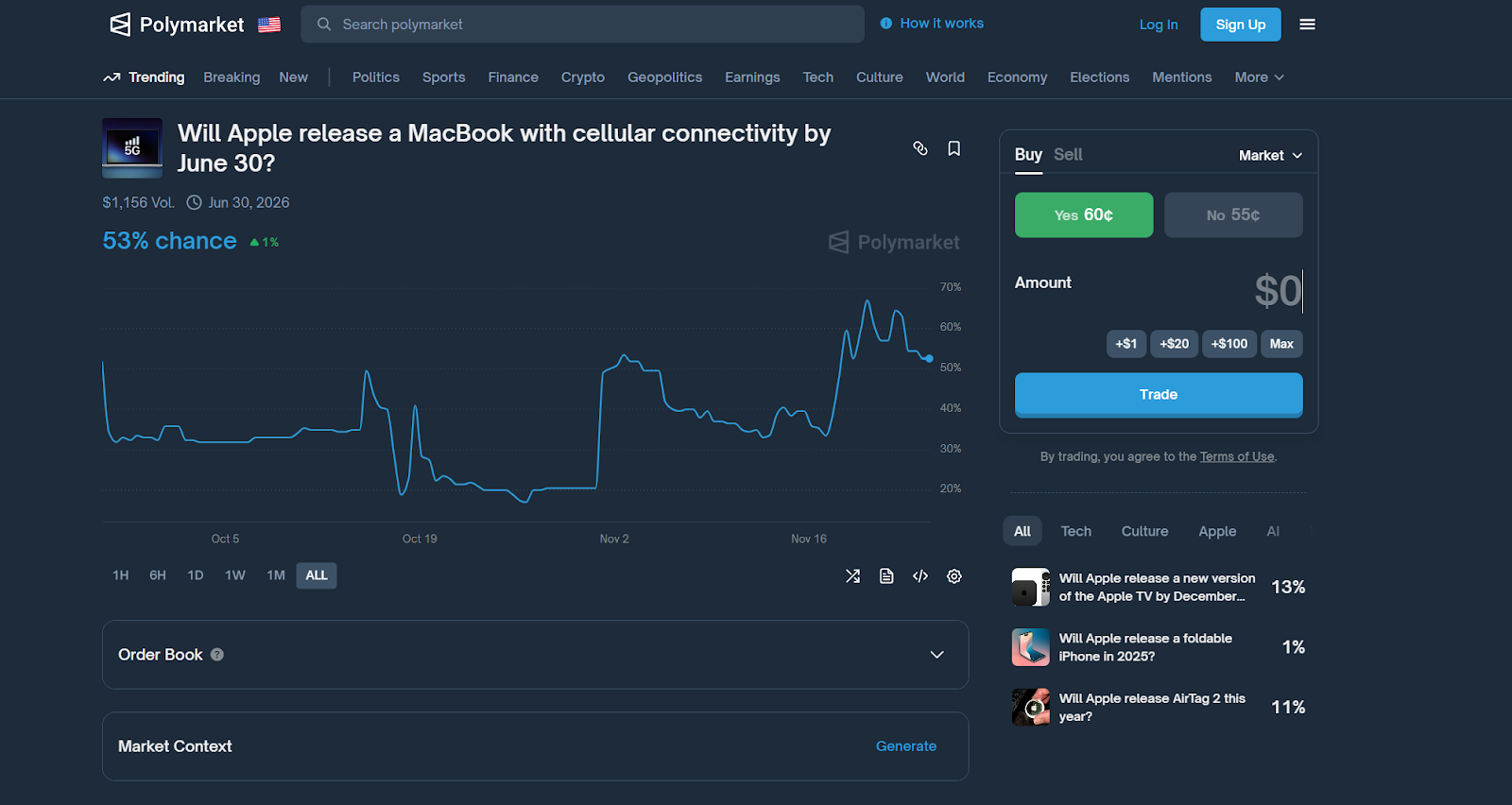
You think they definitely will, so you buy "yes" shares at 70 cents each. You're betting 70 cents to potentially win a dollar, a 30-cent profit if you're right.
If Apple's CEO tweets something suggestive, more people might rush to buy "yes" shares, pushing the price to 80 cents. Bad rumors about production delays? The price might drop to 60 cents. You're watching this price bounce around in real-time based on news and sentiment.
When June 2026 rolls around, someone checks whether Apple actually announced a new iPhone. If they did, everyone holding "yes" shares gets paid a dollar. If not, those shares become worthless.
It's surprisingly straightforward once you see it in action. The hard part isn't understanding the mechanics; it's making accurate predictions.
Traditional vs decentralized prediction markets
Traditional platforms work like any normal company. You sign up, verify your identity, deposit money, and start trading. They hold your funds, run the markets, and decide what questions you can bet on.
The downsides? If you're not in the right country, you're out of luck. You're trusting one company with your money. And you can only bet on whatever markets they decide to offer.
Then crypto came along and flipped the script. Platforms like Polymarket and Augur run on blockchains instead of company servers. Your money stays in your own crypto wallet until you actually trade. Nobody can block you based on your location (though you're still supposed to follow your local laws). And pretty much anyone can create a new market for anything.
Sounds great, right? There's a catch, though. You need to understand crypto basics, setting up wallets, paying gas fees, and managing private keys. If you've never touched cryptocurrency before, it's a lot to learn just to place a bet.
Kalshi tried something different. They built a normal, centralized platform, but actually got approval from US regulators. According to their CFTC approval documentation, they're the first federally regulated exchange for trading on event outcomes. So you get the simplicity of a traditional service with legal clarity. The tradeoff is fewer markets to choose from.
How to bet on prediction markets
Getting started isn't as complicated as it sounds, though it varies depending on where you go.
First, pick a platform. Kalshi is great if you want something regulated and simple. Robinhood is seamless if you already use their app for stocks. Want more exotic markets and don't mind crypto? Check out Polymarket.
Setting up an account looks familiar if you've used any financial app. Centralized platforms want your ID and basic info standard stuff. Crypto platforms skip that but expect you to bring your own wallet.
Funding your account depends on what you choose. Robinhood and Kalshi let you link your bank account like normal. Polymarket needs a USDC stablecoin, which means you'll need to buy some crypto first.
Here's my advice before you start trading: actually do some research. Check the news, look at historical patterns, and think about what could move the needle. Also, make sure the market has decent trading volume; you don't want to get stuck unable to sell if you change your mind.
When you're ready, just place your order. Most platforms let you buy at the current price or set a limit. Then you wait. Some bets resolve in days, others take months. Once the event happens and the outcome is clear, winners get paid automatically.
Best prediction markets
Let me give you the rundown on what's actually out there:
Polymarket is the big player right now. They've got markets on everything: politics, crypto prices, sports, tech news. Built on Polygo, so transactions are fast and cheap. The interface is clean, and they usually have good liquidity in popular markets. Just know you'll need crypto to use it.
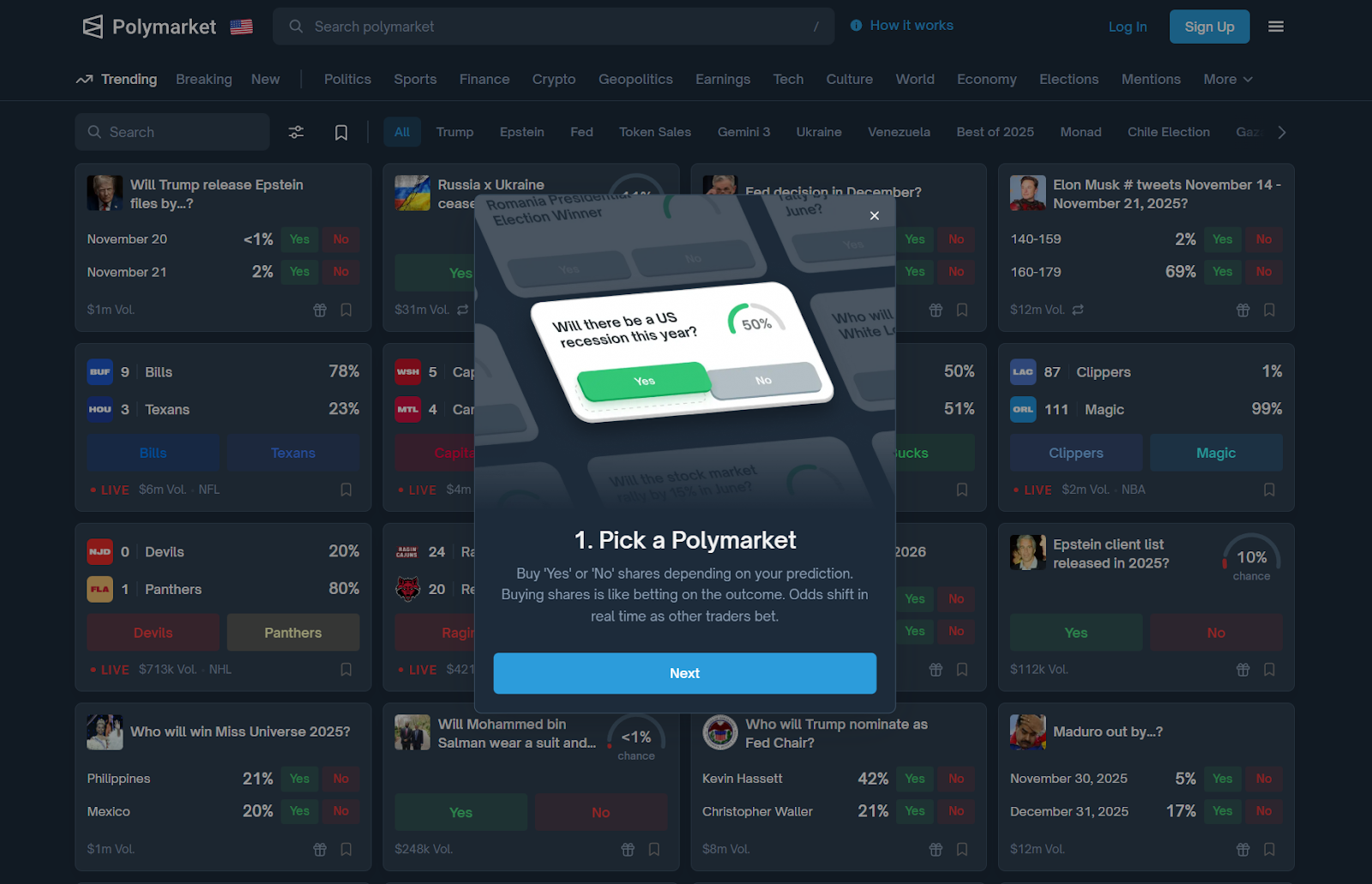
Kalshi is your choice if you want something above board with US regulators. They focus on economic data, weather, and award shows. Fewer markets than Polymarket, but you won't wonder if you're breaking any laws.
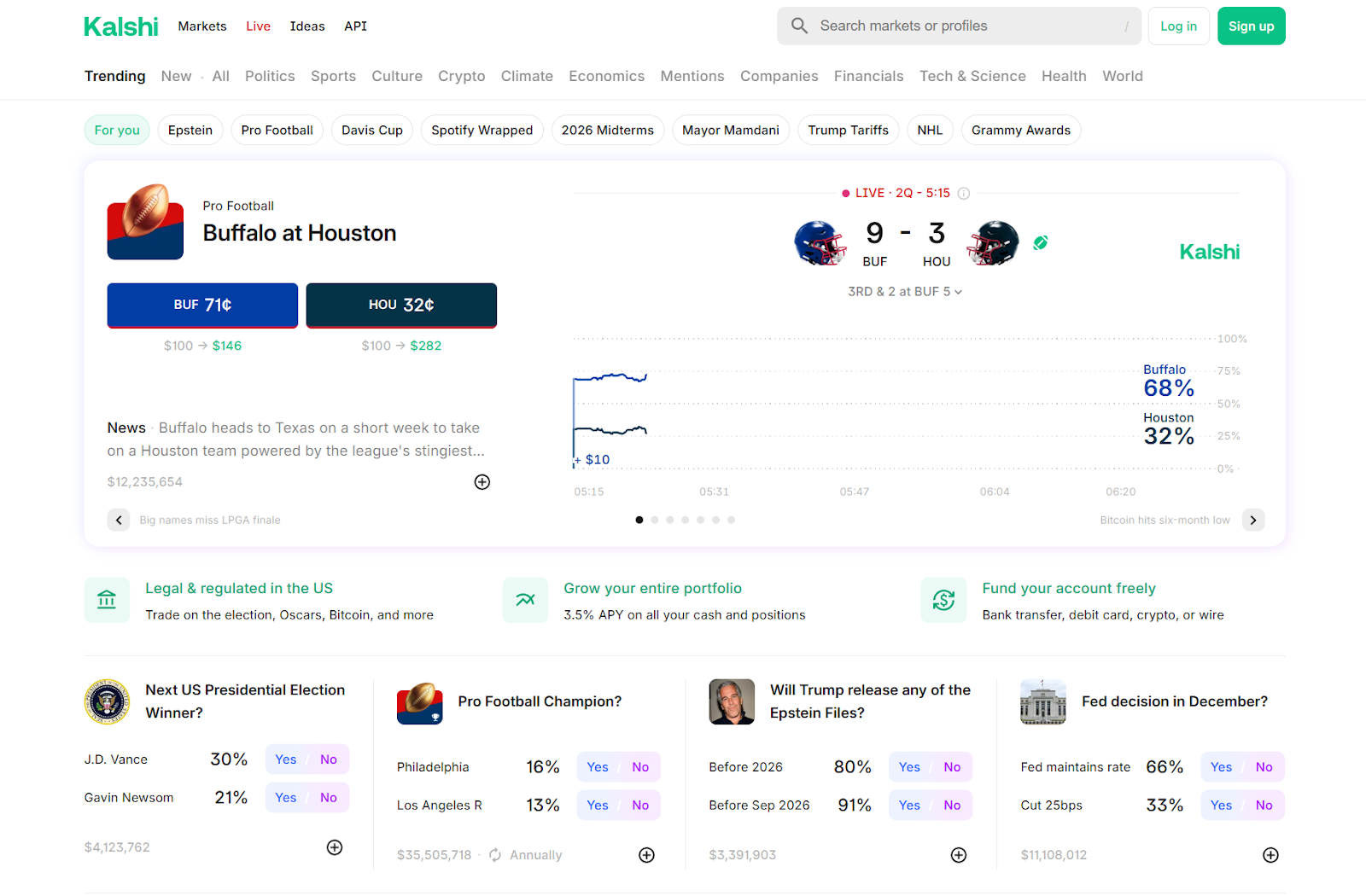
Robinhood entered the game in 2024. If you already use their app, it's dead simple to try their event contracts.

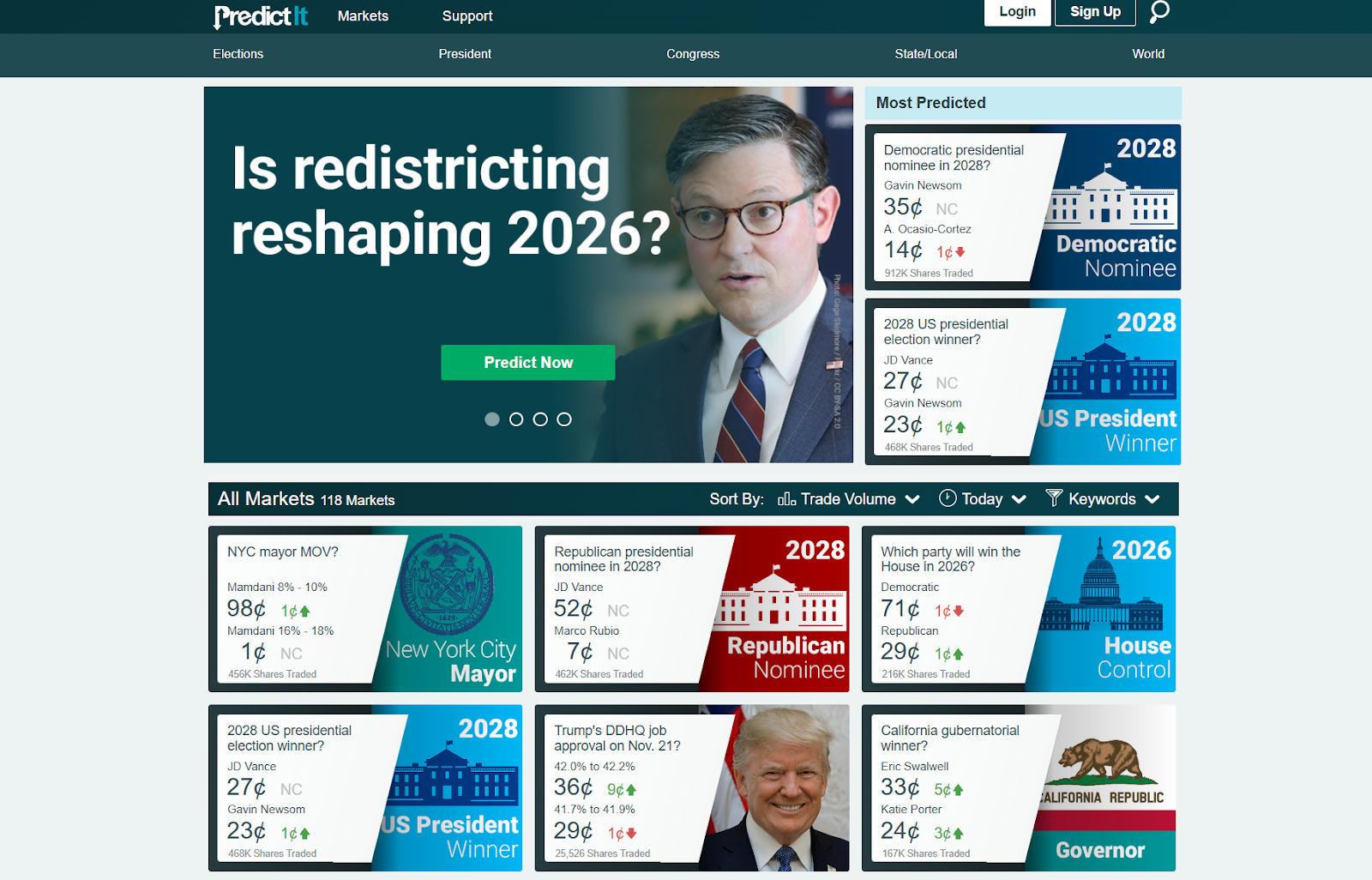
PredictIt has been around for years and focuses primarily on political markets, operating under academic research exemptions in the US.
Manifold Markets offers a unique approach where you can create markets on virtually anything and trade using play money or real funds, making it accessible for beginners.
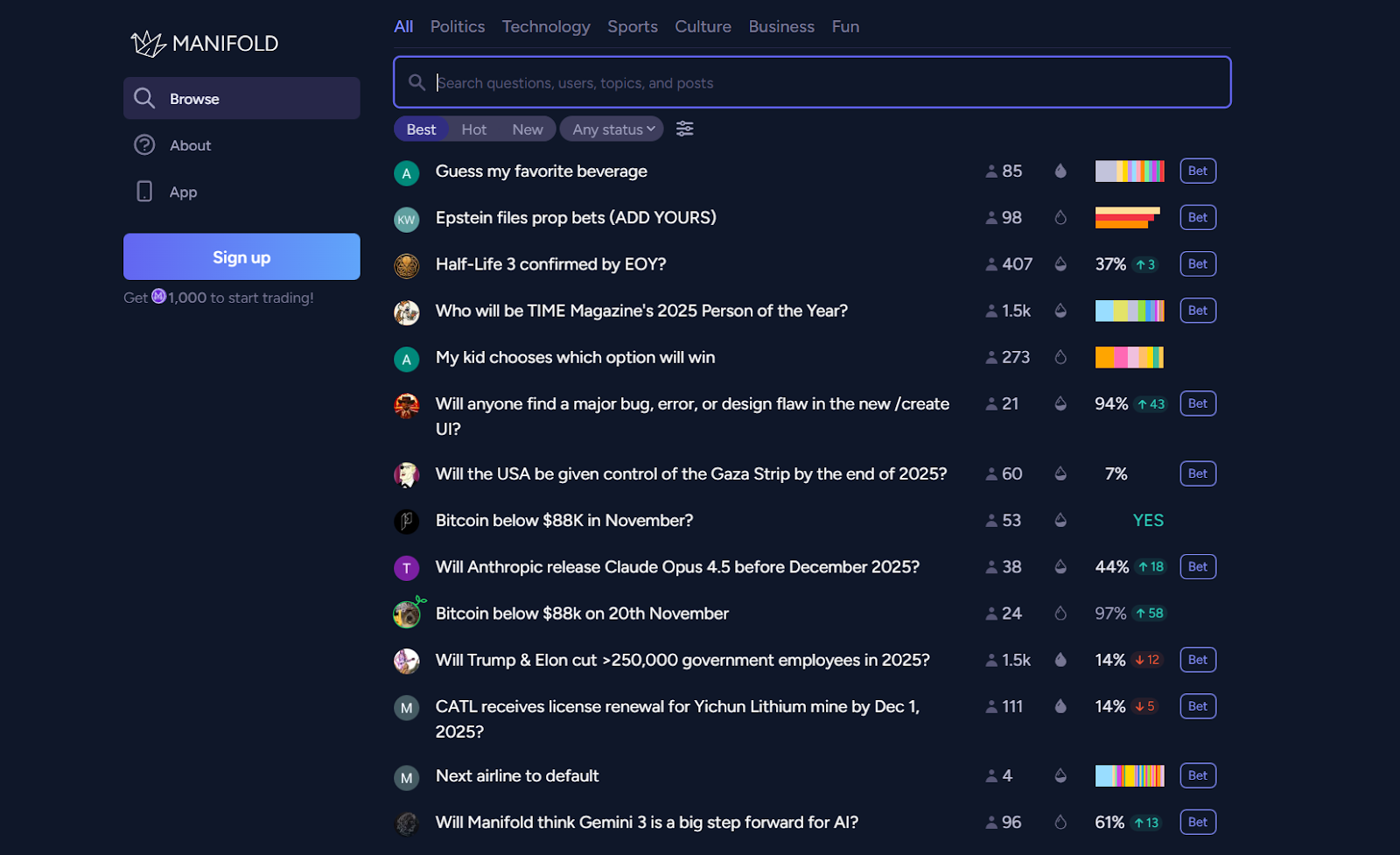
Honestly, if you're just curious and want to try it out, start with Kalshi or Robinhood. If you're already into crypto and want maximum selection, go with Polymarket.
Recent prediction market launches in crypto
Things have been moving fast over the past year. Gemini launched its platform, adding another big-name crypto exchange to the mix.
Jupiter brought these markets to Solana, which is interesting because Solana has way lower fees than Ethereum. For active traders, that matters.
Even gaming companies are getting in on this. MyPrize teamed up with Crypto.com to let people bet on esports tournaments and gaming outcomes.
The fact that so many established companies have launched platforms in 2025 should tell you that this is no longer some fringe experiment.
Risks and regulatory challenges
These platforms aren't without problems.
Manipulation happens, especially in smaller markets. A whale could dump money into one side, make it look like the outcome is certain, then flip their position when others follow. It's harder in big, liquid markets, but it's a real risk.
Fake news can mess with prices, too. Someone spreads a convincing rumor, prices move, they profit, and then the truth comes out.
The biggest headache is regulation. Laws are all over the place. Some countries ban these outright as gambling. The US has different rules depending on the platform. Kalshi got regulatory approval, but others operate in gray areas. Investopedia's guide provides a good overview of the regulatory landscape.
Taxes are another mess. Are your winnings gambling income? Capital gains? It depends on where you live and which platform you use. Good luck with tax forms if you're trading on decentralized platforms that don't send you any documentation.
If you're using blockchain platforms, there's always smart contract risk. Code can have bugs. Funds can get locked or stolen. It's rare, but it happens.
And here's the thing nobody likes to admit: these markets can be wrong. Like, really wrong. They're just reflecting what the crowd thinks, and crowds aren't always smart.
Conclusion
Prediction markets are genuinely interesting. They're a clever way to see what people actually believe will happen when they have to put money behind it.
Crypto has made them accessible to way more people. You've now got options ranging from regulated platforms like Kalshi to fully decentralized ones like Augur.
But let's be real, they're not magic. The regulatory situation is messy, the risks are real, and if you go the crypto route, there's a learning curve. Don't jump in without understanding what you're doing, and definitely don't bet money you can't afford to lose.
Whether you actually trade on these platforms or not, they're worth understanding.
 Maryna Hornieieva
Disclaimer: All materials on this site are for informational purposes only. None of the material should be interpreted as investment advice. Please note that despite the nature of much of the material created and hosted on this website, HODL FM is not a financial reference resource, and the opinions of authors and other contributors are their own and should not be taken as financial advice. If you require advice. HODL FM strongly recommends contacting a qualified industry professional.