




If you only followed price charts in 2025, the year probably looked familiar. Bitcoin surged to fresh all-time highs above $120,000, volatility returned with force, and a sharp correction erased months of gains in a matter of weeks.
Headlines swung between triumph and despair, as they always do.
But behind the charts, the crypto market changed in ways that were far more consequential than any single rally or crash. Regulation moved from theory to enforcement, institutions embedded themselves deeper into market plumbing, and the industry absorbed shocks that would have been existential just a few years earlier.
2025 didn’t make crypto calmer or safer. It made it sturdier. And that distinction matters.
Regulation finally stopped being hypothetical
For most of crypto’s history, regulation existed as a looming threat rather than a defined framework. That changed decisively in 2025, particularly in the United States.
The creation of a U.S. Strategic Bitcoin Reserve marked a symbolic break from years of regulatory hostility. For the first time, Bitcoin was treated not merely as a speculative asset, but as something the state itself was willing to hold long term. The message was subtle but powerful: digital assets were no longer operating entirely outside sovereign finance.
That shift became structural with the passage of the GENIUS Act. Stablecoin issuers were given a clear federal rulebook covering reserves, audits, and compliance. While the law barred direct interest payments to holders, it ended years of regulatory ambiguity that had frozen institutional adoption.
The impact was immediate.
Banks, asset managers, and payment firms no longer had to guess how regulators might react. They could operate “in the clear,” even if the rules themselves remained imperfect.
Europe took a very different path. MiCA came fully into force, imposing strict asset-segregation requirements and forcing exchanges to delist non-compliant stablecoins and asset-referenced tokens. The result was a narrower product offering for European retail users, but also a cleaner regulatory perimeter.
Together, these approaches revealed a defining tension of 2025: the U.S. prioritized market access and competitiveness, while Europe prioritized control and consumer protection. Neither approach resolved crypto’s contradictions, but both ended the era of regulatory limbo.
Bitcoin proved resilient, not invincible
Bitcoin’s 2025 price action was dramatic, but its real story played out beneath the surface.
ETF inflows continued to anchor demand throughout the year. By December, spot Bitcoin ETFs controlled more than 6% of total supply, while corporates and treasuries pushed institutional ownership well beyond 10%. These vehicles didn’t eliminate volatility, but they changed its character. Drawdowns became sharper, yet less disorderly.
That distinction mattered during October’s collapse. A single day saw nearly $20 billion in liquidations, the largest on record. In earlier cycles, an event of that magnitude would have triggered cascading failures. In 2025, the system bent but did not break.
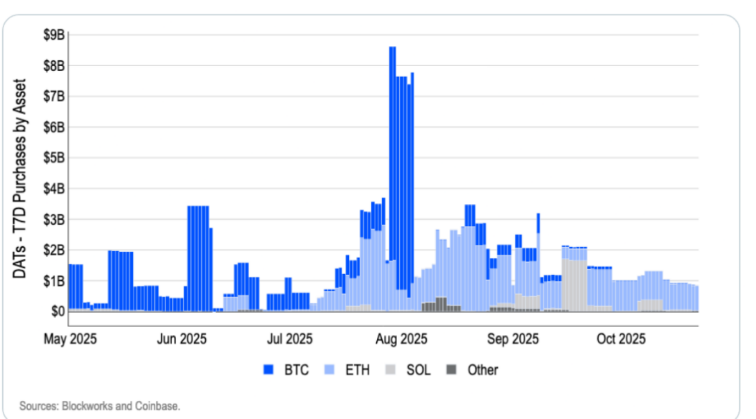
Bitcoin finished the year well below its highs, and talk of bear markets returned. Yet few credible voices argued the asset itself was facing existential risk. Instead, the debate shifted toward how Bitcoin behaves when sovereigns, funds, and ETFs dominate marginal supply.
Bitcoin's growth trajectory for this 4th halving cycle is now much below the historical range set by previous halving cycles.
— ecoinometrics (@ecoinometrics) March 17, 2025
At this stage of the cycle, the lower bound of the historical range should be around $250,000. pic.twitter.com/CAw2vpgYKn
The old four-year halving cycle lost relevance. Bitcoin didn’t become stable, it became institutional.
But markets rarely move in straight lines.
As the year draws to a close, Bitcoin has undergone a sharp correction of roughly 30%, pulling prices back toward the $90,000 level. Familiar dynamic: profit-taking by early entrants, the unwinding of leveraged positions, and thinner year-end liquidity amplifying downside moves. Even with sovereign recognition and ETF demand in place, volatility remains a defining feature of the asset.
🚨 TOM LEE JUST SAID LIVE ON CNBC 🚨
— Crypto News Hunters 🎯 (@CryptoNewsHntrs) December 1, 2025
BITCOIN IS GOING TO $126,000 IN THE NEXT 60 DAYS!!! 💥🚀#Bitcoin #Crypto #TomLee #BTC #Bullish #CryptoNews #CryptoMarket pic.twitter.com/6sjd7tLI6o
Ethereum focused on infrastructure, not price
If Bitcoin’s year was defined by legitimacy, Ethereum’s was defined by quiet engineering.
Two major upgrades reshaped the network. Pectra improved validator operations and introduced deeper account abstraction, making wallets more flexible but also exposing new phishing risks. Fusaka delivered a substantial increase in gas limits and laid groundwork for long-term scalability, pushing Ethereum closer to its role as a high-capacity settlement layer.
These changes mattered.
By late 2025, Ethereum processed record transaction volumes at historically low fees, and staking queues flipped decisively toward deposits. Developers continued deploying contracts at record rates, suggesting renewed confidence in Ethereum’s base layer rather than exclusive reliance on rollups.
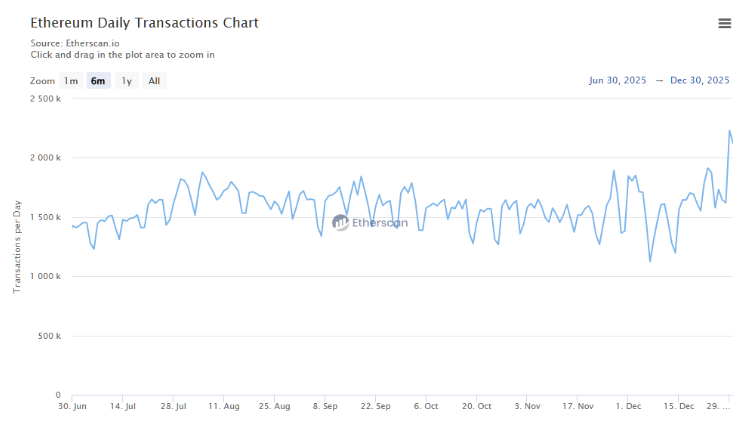
Yet the market remained unconvinced. ETH underperformed expectations, missed lofty price targets, and failed to ignite the long-awaited altseason.
BitMine one of the largest known institutional Ethereum holders, has seen its ETH position dip below its on-chain cost basis around the $4,000 level. The firm’s Ethereum exposure, estimated at roughly $7.5 billion.
Large holders are often viewed as stabilizing forces during market stress, absorbing sell pressure and providing liquidity. When their unrealized profits evaporate, it signals that the correction is no longer just flushing out short-term leverage but testing conviction across the spectrum of market participants.
Stablecoins became financial infrastructure
No sector matured faster in 2025 than stablecoins.
Market capitalization surged past $300 billion, while transfer volumes reached levels rivaling and in some cases exceeding, traditional payment networks. What changed wasn’t just scale, but usage. Stablecoins increasingly functioned as settlement rails rather than trading tools.
Banks began piloting stablecoin settlement, payment processors expanded cross-border functionality, and institutions treated dollar-pegged tokens as programmable cash rather than crypto curiosities. Gold-backed stablecoins also quietly gained traction, offering an alternative store of value during periods of macro uncertainty.
Crucially, illicit usage declined even as volumes rose, undermining long-standing narratives that stablecoins exist primarily to facilitate crime. By the end of 2025, stablecoins looked less like an experiment and more like unfinished financial infrastructure.
The biggest hack tested the market and it held
February’s $1.5 billion Bybit hack was the largest in crypto history. It was also one of the most instructive moments of the year.
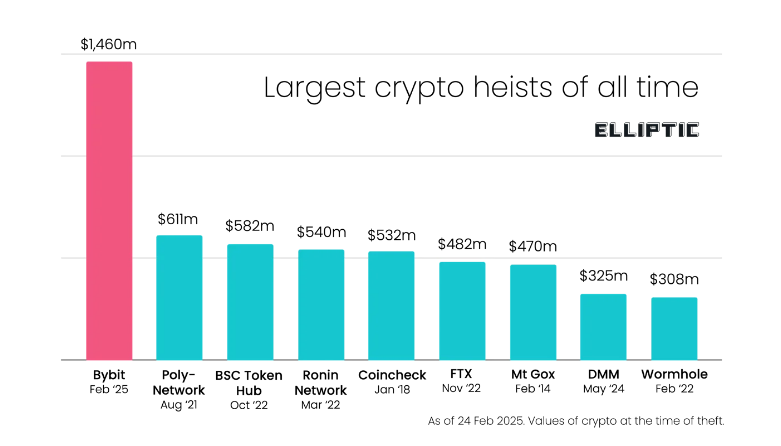
The breach exploited operational weaknesses, not protocol flaws. Funds were laundered rapidly, largely irrecoverable, and attributed to North Korea’s Lazarus Group.
Yet despite the scale, panic never fully took hold.
Bybit remained solvent. Withdrawals continued. Credit lines materialized. No major exchange collapsed. There was no domino effect.
In 2025, resilience replaced fragility as the industry’s defining trait.
DeFi evolved quietly and competitively
While retail attention drifted toward ETFs and memecoins, decentralized derivatives platforms staged one of the year’s most significant advances.
Perpetual DEX volumes surged, driven by platforms offering deep liquidity, rapid execution, and minimal friction. Traders followed liquidity rather than ideology, and in many cases preferred transparent on-chain venues to opaque centralized exchanges.
This shift wasn’t without controversy. Governance disputes, validator centralization, and suspected volume inflation surfaced repeatedly. Yet usage kept growing.
DeFi in 2025 wasn’t about idealism. It was about function.
Memecoins exposed crypto’s cultural fault lines
If institutions represented crypto’s maturation, memecoins represented its unresolved excesses.
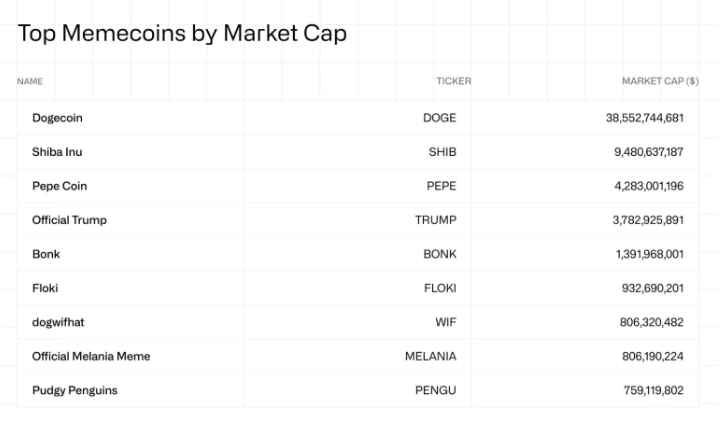
Celebrity-backed tokens dominated social media cycles, often collapsing just as quickly as they rose. Losses mounted, investigations followed, and ethical questions lingered. Yet demand never disappeared entirely.
The year crypto stopped asking for permission
Governments held Bitcoin. Banks settled with stablecoins. Exchanges went public. ETFs expanded beyond Bitcoin into altcoins and staking products. DeFi absorbed institutional flows. Hacks failed to trigger collapses.
None of this made crypto safer, simpler, or universally trusted.
The defining trend of 2025 wasn’t price, regulation, or technology alone. It was endurance. Crypto absorbed pressure political, technical, financial and kept functioning.
That, more than any rally, is what changed the market.
 Tanya Petrusenko
Disclaimer: All materials on this site are for informational purposes only. None of the material should be interpreted as investment advice. Please note that despite the nature of much of the material created and hosted on this website, HODL FM is not a financial reference resource, and the opinions of authors and other contributors are their own and should not be taken as financial advice. If you require advice. HODL FM strongly recommends contacting a qualified industry professional.