


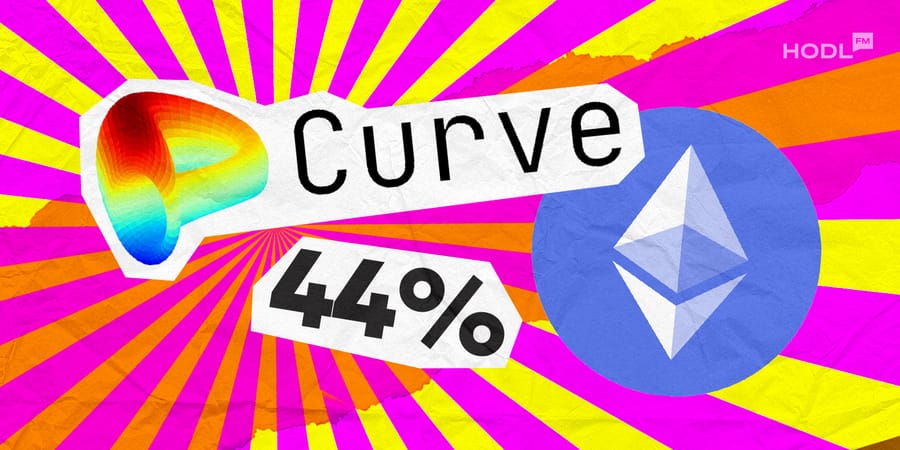



Curve Finance has reached a big goal in the Ethereum decentralized exchange (DEX) ecosystem. According to data from DeFiLlama, Curve has recorded a 44% share of all Ethereum DEX fees over the past 30 days, ahead of several long-standing competitors and redefining its role as a leading trading hub for stablecoins and wrapped digital assets.
Curve strengthens position among top Ethereum DEXs
Ethereum’s DeFi market remains one of the most active and competitive sectors in cryptocurrency. It largely revolves around core assets such as ETH, wrapped BTC, and stablecoins, rather than short-lived speculative tokens. That structure makes network fee metrics one of the most accurate indicators of genuine trading activity.
DeFiLlama data shows that Curve now ranks among the top Ethereum-based decentralized exchanges by total fees collected, pulling ahead of other key players. This growth represents a notable shift in market share. A year ago, Curve accounted for about 1.6% of all Ethereum DEX fees. By December 2025, its percentage had increased to 44%.
Curve is nearly surpassing Uniswap in DEX fee dominance.
— naly (@defi_naly) December 18, 2025
This time last year, @CurveFinance contributed 1.59%; today, it accounts for 44.06% of all DEX fees on Ethereum. pic.twitter.com/dzpLUHIpAg
This turnaround marks one of the most notable structural changes in decentralized trading seen this year. Curve’s 30-day fee total stands at roughly $15.1 million, placing it just behind Uniswap in dollar terms. But Curve's model only looks at a small number of highly liquid and yield-efficient assets, which makes its performance stand out even more within its category.
Rising activity around crvUSD stablecoin
One of the main factors behind the surge in Curve’s fee share is the growing activity around its native stablecoin, crvUSD. The launch of crvUSD has accelerated trading and deepened liquidity in Curve’s pools. By 24-hour trading volume, crvUSD now ranks among the top five stablecoins globally, trailing only major players such as USDT and USDC, according to CryptoRank.io.
This increased usage demonstrates crvUSD’s expanding role as a foundational part of on-chain liquidity. The token has quickly become an essential component of many DeFi strategies that seek stable, efficient yield-generating mechanisms.
Growth in on-chain Bitcoin liquidity through Yield Basis
Another major contributor to Curve’s rise has been its integration with Yield Basis, which has concentrated the largest on-chain Bitcoin liquidity in decentralized finance within the Curve ecosystem. The platform now hosts three of the most liquid BTC trading pools in DeFi based on total value locked (TVL) and pool depth. These pools are the most efficient way to trade BTC-pegged assets, which strengthens Curve's position as a key place for both stablecoin and wrapped Bitcoin markets.
Founder’s perspective on DeFi direction
Curve founder Michael Egorov has emphasized the broader industry shift reflected in these trends.
“DeFi users are increasingly prioritising sustainable revenue models over short-term speculation. We're seeing a clear move away from hype-driven trading and towards protocols with transparent economics and real yield. This change in long-term behaviour is reshaping where liquidity and volume ultimately settle,” Egorov said in the statement.
His comments highlight the maturing landscape of decentralized finance, with users and institutions focusing more on stable, long-term protocol performance instead of fleeting speculative cycles.
Community governance and ecosystem expansion
Curve DAO’s governance developments have also continued in parallel. A recent proposal to allocate 17.4 million CRV tokens, valued at roughly $6.2 million, to the DEX’s development team was rejected. A revised version of that proposal is now under community consideration, alongside other active governance discussions related to adding liquidity gauges for new pools.
Meanwhile, Curve has expanded across multiple blockchain layers, including X Layer and Plasma, extending its interoperability and liquidity distribution capabilities beyond Ethereum’s main network. These ecosystem moves have contributed additional depth and access for users.
Reinforcing DeFi infrastructure
Curve’s specialized design, built around efficient trading of like-kind assets with low slippage, continues to define its success. The protocol aims to deliver stable yield distribution through its combination of liquidity pools, governance, and its crvUSD stablecoin. Since launching in 2020, Curve has become one of the largest DeFi applications by total value locked and a critical infrastructure layer for Ethereum-based finance.
Currently in 2025, the project’s dominance reflects an ongoing adjustment in user preferences across decentralized markets. Fee data, stablecoin adoption, and TVL distribution suggest a stronger orientation toward sustainable operations and measurable economic activity across DeFi platforms.
 Roman Zaika
Disclaimer: All materials on this site are for informational purposes only. None of the material should be interpreted as investment advice. Please note that despite the nature of much of the material created and hosted on this website, HODL FM is not a financial reference resource, and the opinions of authors and other contributors are their own and should not be taken as financial advice. If you require advice. HODL FM strongly recommends contacting a qualified industry professional.