





Aave founder Stani Kulechov has announced the next chapter for the decentralized lending protocol, outlining a comprehensive master plan for 2026. The announcement came shortly after the U.S. Securities and Exchange Commission (SEC) ended its four-year investigation into the platform.
SEC ends probe into Aave
According to a letter dated August 12, 2025, the SEC has concluded its investigation into Aave without further action.
Kulechov confirmed the development in a post on X, where he wrote:
“DeFi has faced unfair regulatory pressure in recent years. We’re glad to put this behind us as we enter a new era where developers can truly build the future of finance. DeFi will win.”
Following the news, the AAVE token briefly rose 3% before settling at $185, according to data from TradingView.
The closure of the probe marks another sign of easing tension between regulators and the crypto industry under the Donald Trump administration. As reported by The New York Times, since January 2025 the SEC has paused or ended about 60% of its investigations into digital asset projects.
2025 marks Aave’s strongest year yet
Kulechov described 2025 as “the most successful year in the project’s history.”
Net deposits on the Aave protocol reached $75 billion, while cumulative deposits hit $3.33 trillion. Since launch, Aave has originated nearly $1 trillion in loans, placing it “alongside the 50 largest banks in the U.S.,” he stated in Aave's master plan on X.
Aave now controls 59% of the DeFi lending market and 61% of all active loans in decentralized finance. The protocol generated $885 million in fees this year, accounting for over half of all lending protocol revenues. According to Kulechov, part of this income will support a new AAVE token buyback program designed to strengthen the protocol’s economic foundation.
Aave’s 2026 master plan: Three pillars for growth
Kulechov’s “Aave Will Win: 2026 Master Plan” focuses on three core initiatives: Aave V4, Horizon, and Aave App.
Aave V4
Aave V4 is the next evolution of the protocol and aims to make Aave “the backbone of all finance.” The upgrade introduces a unified Hub and Spoke architecture, which integrates liquidity across multiple networks. Under this model, Hubs represent crosschain liquidity pools that act as the central vault, while Spokes enable specialized lending markets built on top of this liquidity.
“This will allow Aave to handle trillions of dollars in assets, making it the go-to choice for any institution, fintech, or company looking to access Aave’s deep, reliable liquidity,” Kulechov said.
He also highlighted that in 2026, Aave will expand into “new markets, new assets, and new integrations that have never existed before in DeFi.”
Horizon
The second pillar centers on Horizon, Aave’s market dedicated to real-world assets (RWA). It provides a compliant platform for institutions to use tokenized versions of traditional assets as collateral.
“Horizon currently sits at $550M net deposits. In 2026 we’ll look to quickly scale this to $1 billion and beyond by expanding our work with leading institutional partners like Circle, Ripple, Franklin Templeton, VanEck, and others to bring major global asset classes to Aave,” the founder said.
Aave App
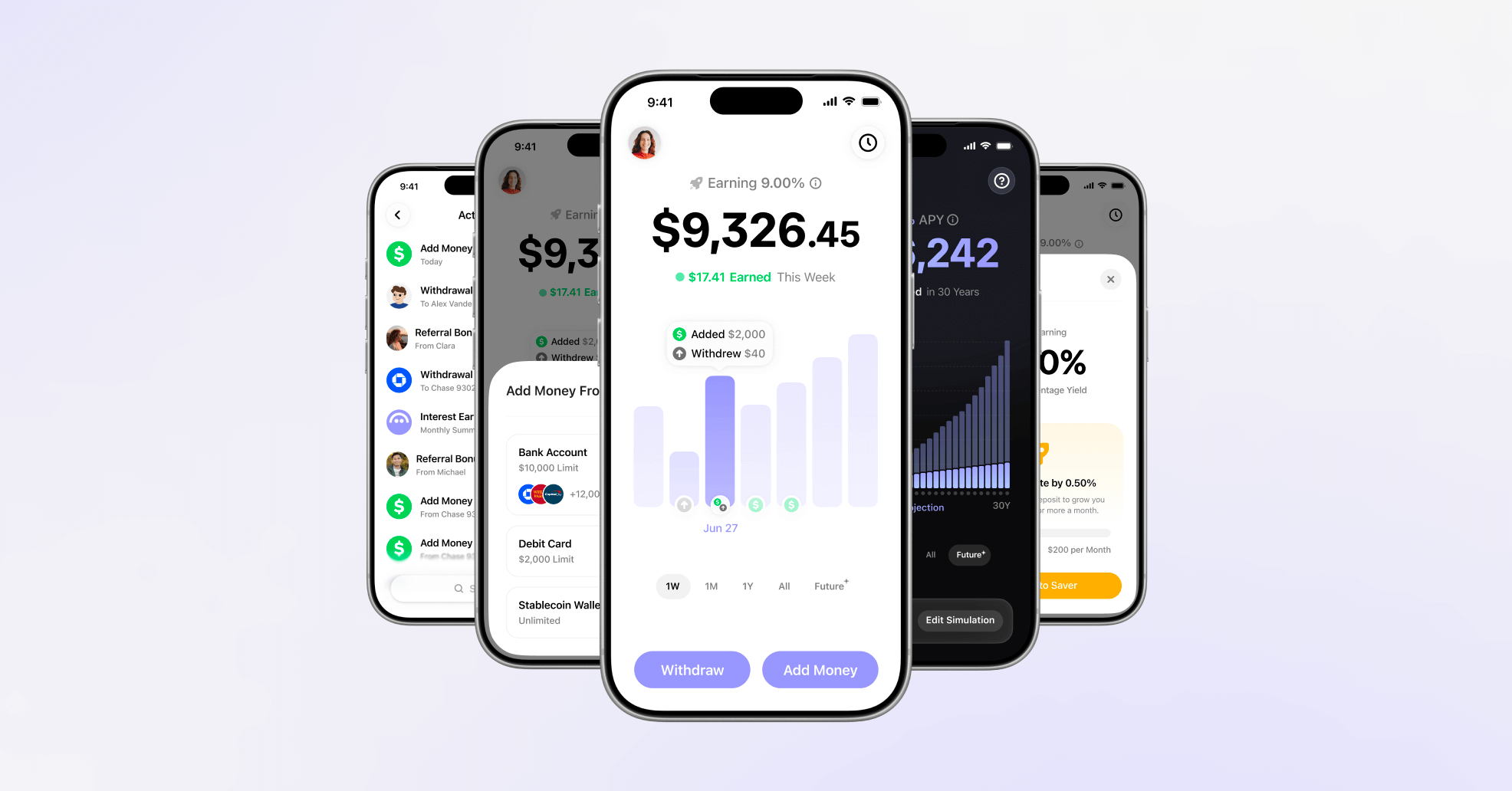
The third key component is the Aave App, which Kulechov called a “Trojan horse” for decentralized finance adoption. The mobile app abstracts the complexity of blockchain finance to give users a simple interface for borrowing, lending, and saving.
“At the beginning of next year we will begin the full-scale launch of Aave App and set out on the path to our first million users. This will directly spur growth of the Aave protocol through a completely new and untapped market. Aave cannot scale to trillions of dollars without mass product-level adoption,” he said.
DAO debate over control and monetization
In the Aave DAO community, participant tulipking proposed transferring Aave Labs’ intellectual property to the DAO to prevent a “stealth privatization” of the protocol. Marc Zeller, founder of Aave Chan Initiative, described it as “the most important proposal in the protocol’s governance history.”
Kulechov acknowledged the DAO’s concerns and said the CoW Swap integration, which rerouted front-end fees to a company wallet, was made to improve product performance. He conceded that “such a decision required prior discussion.”
Aave Labs is partnering with @CoWSwap to provide an improved swap experience across https://t.co/uaJ3qsRWMw.
— Aave (@aave) December 4, 2025
Swaps will now have better prices via CoW Swap's solver and protection against MEV attacks. pic.twitter.com/hlsVuWpLqO
Aave’s 2026 vision is clear: unify liquidity, connect traditional finance with onchain markets, and bring decentralized services to the masses. As Kulechov stated in conclusion, “The market has decided that Aave is here to stay.”
 Roman Zaika
Disclaimer: All materials on this site are for informational purposes only. None of the material should be interpreted as investment advice. Please note that despite the nature of much of the material created and hosted on this website, HODL FM is not a financial reference resource, and the opinions of authors and other contributors are their own and should not be taken as financial advice. If you require advice. HODL FM strongly recommends contacting a qualified industry professional.