

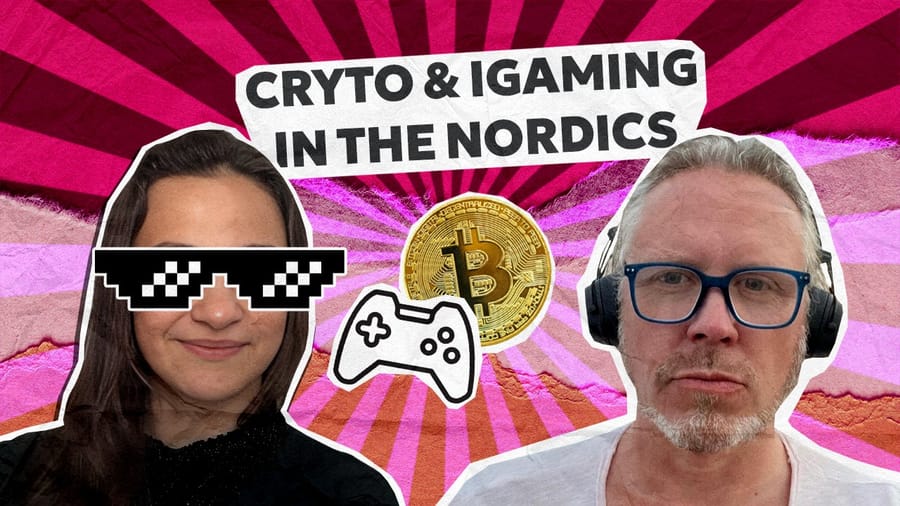



HodlFM sat down with Mikael Olsson, founder of Kryptovalutaguiden, the largest crypto media outlet in the Nordics. Mikael combines deep experience in iGaming and cryptocurrency, two industries now colliding faster than ever.
He built his first tech company 25 years ago in online recruitment for healthcare. After selling that firm, he moved into SEO and digital marketing.
“Pretty fast, I realized my SEO skills were really good for iGaming affiliate marketing and stuff,” he said.
A visit to a Lisbon industry fair introduced him to online trading platforms such as IG Markets and Plus500. That encounter changed his perspective.
“Maybe we should have something beyond old-school casinos,” he thought after the trip. Not long after, Mikael discovered crypto and saw a gap. “There was no easy-to-read and understand crypto news media in the Nordics,” he recalled. That insight led to the launch of Kryptovalutaguiden seven years ago.
Sweden’s complex relationship with crypto
Mikael described a paradox in Sweden’s technology scene. “Sweden is really interesting. We were number one in telecom and internet in the mid and late ’90s,” he said. Despite that early adoption history, crypto penetration today is only about 7%. “It’s the lowest in the Nordics, maybe even in Europe,” he noted.
He blamed a lack of government interest.
“We have zero interest or support from the government,” he said. Mainstream media attitudes worsen the problem. “Our mainstream media only covers crypto when there’s a disaster — scams, bankruptcies, fraud — never positive stories,” he continued.
Combined with high taxes and a strict regulatory mentality, this has slowed acceptance.
For Mikael, this conservative mindset also shapes perceptions of energy use. “Politicians think Bitcoin uses too much electricity, they’ve missed that AI uses thousands of times more,” he said. Mining still thrives in northern Norway and Sweden thanks to low electricity prices, even as southern regions face restrictions due to higher costs.
Regulation as a bridge to mainstream legitimacy
On the European Union’s MiCA regulation, Mikael expressed optimism.
“If you’re a hardcore Bitcoin maximalist from 2009, you’re probably afraid of this. But if you believe regulation is necessary for adoption — which I do — then it’s all good,” he explained.
Mikael argued that Nordic societies value accountability. “The more serious global players talk about crypto as legitimate, the more Nordic people will adopt it,” he said. For him, MiCA could change public sentiment and help the region embrace digital assets in a compliant way.
Why online gaming dominates Sweden
Sweden’s long history of regulated gaming shaped public habits.
“In Sweden, we had a state-run lottery and gaming company starting in the 1870s, with a monopoly for about 120 years,” he said.
Once private competition emerged, entrepreneurs launched global brands such as Unibet and Betsson.
Offline casinos remain rare. “Offline casinos have always been forbidden in Sweden,” Mikael said. The state allowed only three physical casinos around the millennium, and just one remains open. As a result, online play became the default.
The overlap between crypto users and gamblers
Crypto and iGaming users share a similar demographic.
“The main target group for both is men between 18 and 35,” Mikael explained. Adoption starts young. “My son turned 18 four years ago. On his birthday, he opened an account on Binance and Unibet.”
Younger users treat crypto not as speculation but as a daily financial tool. Many shift naturally toward crypto casinos. “As they get older, crypto casino adoption will also grow,” he said.
Mikael also switched to crypto casinos himself. “They’re a bit better, better bonuses, faster payouts, better user experience,” he said. Traditional Swedish casinos face strict limits such as a one‑time bonus cap of 500 kronas. “With crypto casinos, payouts are faster, and overall, it’s better for the player,” he said.
The next steps for Sweden’s crypto and iGaming ecosystem
Asked about the future, Mikael predicted larger international iGaming firms could pursue Swedish licenses if crypto regulations mature. “If they did, they could advertise in mainstream media and reach more people,” he said.
He expects MiCA to support that process.
“Everything that makes the space legit and regulated is positive for exchanges, crypto projects, or crypto casinos. It will open up the Nordic market since we’re used to government policies and rules.”
For Mikael Olsson, regulation does not stifle innovation. It anchors credibility. Sweden’s journey from an early tech powerhouse to a slow crypto adopter may soon reverse course as global frameworks bring legitimacy and as players continue to look for faster, fairer, and more accessible entertainment models online.
📺 Watch now on YouTube.
📩 Follow us and subscribe for more episodes from HODLFM!
🎧 Available on Spotify, Apple Podcasts.
 Tanya Petrusenko
Disclaimer: All materials on this site are for informational purposes only. None of the material should be interpreted as investment advice. Please note that despite the nature of much of the material created and hosted on this website, HODL FM is not a financial reference resource, and the opinions of authors and other contributors are their own and should not be taken as financial advice. If you require advice. HODL FM strongly recommends contacting a qualified industry professional.