

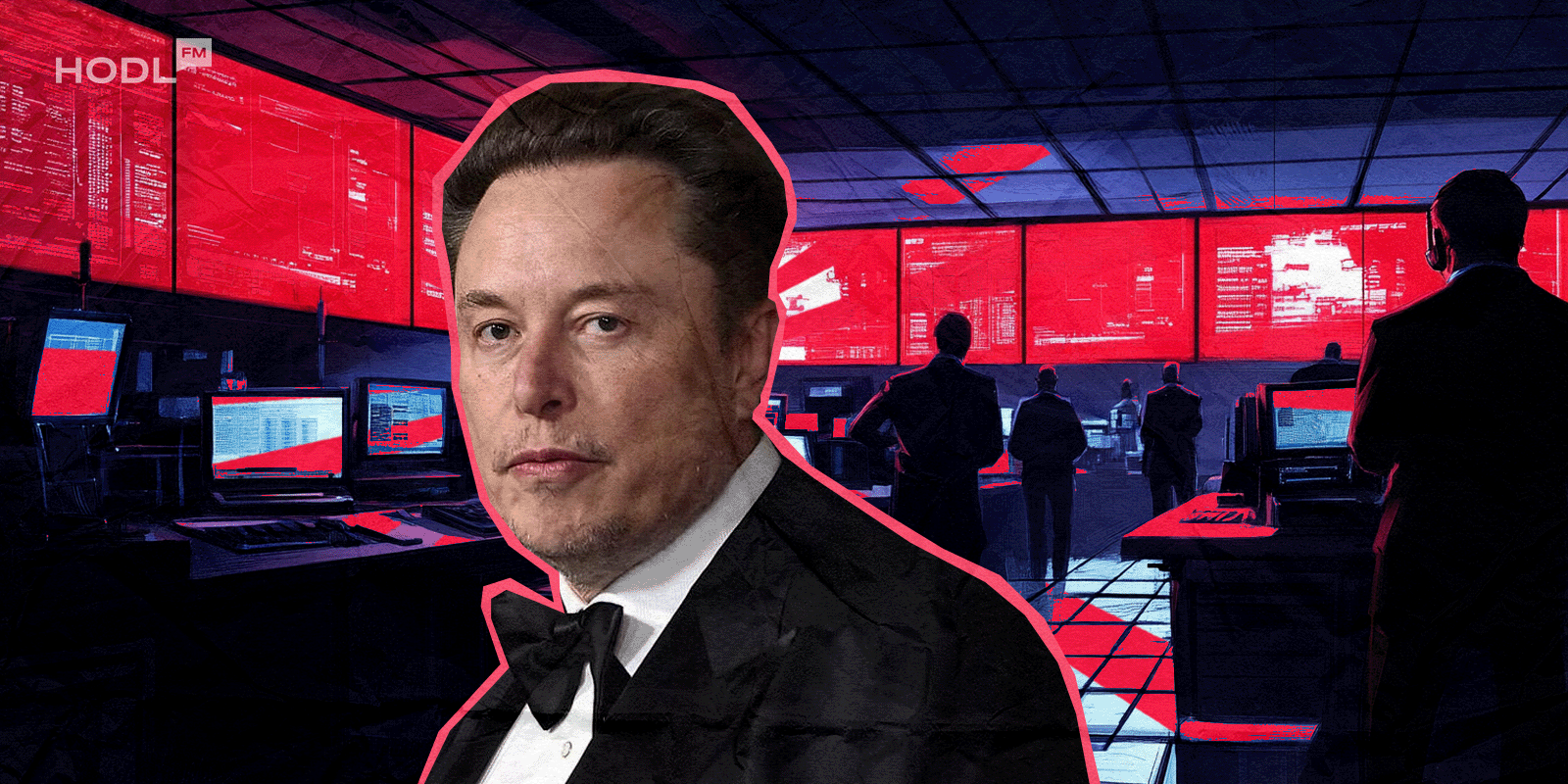


The Tesla CEO argues that AI-driven abundance could erase traditional currency, leaving energy as the only meaningful measure of value.
According to Musk, the concept becomes irrelevant when technology reaches a point where “anyone can have anything.” In a recent podcast with Indian entrepreneur Nikhil Kamath, he floated a future where money doesn’t just lose influence but fades out altogether.
The idea, he admitted, “sounds kind of strange,” but he framed it as a straightforward consequence of super-intelligent AI and robotics. If machines can produce and distribute goods so efficiently that scarcity evaporates, then currency, the mechanism civilizations have long used to coordinate labor and resources, no longer has a job.
“If AI and robotics are big enough to satisfy all human needs,” he said, “money… its relevance declines dramatically.”
To explain the world he’s imagining, Musk pointed not to macroeconomics but to the Culture novels by Iain M. Banks, a series he has recommended before. In that post-scarcity society, money has vanished, and material abundance is so extreme that acquisition doesn’t drive behavior.
Yet even in a future without money, he argued, something still has to anchor value.
JUST IN: Elon Musk says #Bitcoin is a fundamental currency based on energy 👀
— Bitcoin Magazine (@BitcoinMagazine) November 30, 2025
“Energy is the true currency” pic.twitter.com/sTWKLKV0Fd
Energy is the true currency
Once the conversation shifted from scarcity to power, Musk landed on the statement that became the centerpiece of his argument: “Energy is the true currency.”
Not metaphorically - literally.
Even in a world where goods are abundant, he said, energy remains a physical constraint. It cannot be printed, voted into existence, or redefined by decree.
“You can’t legislate energy,” he told Kamath. “You can’t just pass a law and suddenly have a lot of energy.”
That’s where Musk pulled Bitcoin into the picture. He called it a “fundamental physics-based currency,” not because it behaves differently than other digital systems, but because its proof-of-work model requires miners to expend real electricity and computation.
“This is why I say Bitcoin is based on energy,” he said. Its scarcity comes directly from physical effort a quality no central bank can imitate.
The framing is hardly new within Bitcoin circles, but Musk’s version blends cryptocurrency with his broader worldview: the idea that energy, not policy, ultimately defines capability. Governments can steer regulations or issue currency, but none of that translates into actual power generation.
In his words, “We probably will just have energy, power generation as the de facto currency.”
Power, policy, and civilizational scale
His comments echoed his long-standing interest in civilizational progress, which he connected here to the Kardashev scale, a theoretical system that ranks civilizations by the amount of energy they harness. Musk didn’t suggest humanity is close to higher levels of that scale, but he used the concept to illustrate a simple point: a society’s strength correlates directly with its control over energy.
By that logic, Bitcoin’s energy tie isn’t merely a technical detail; it’s a philosophical one. It transforms electricity into verifiable digital scarcity, creating a form of value that exists outside political influence. Supporters celebrate this, arguing it creates a monetary base that cannot be inflated or rewritten.
Critics, however, continue to challenge the environmental impact of mining. Bitcoin’s energy use remains a centerpiece of regulatory debates, with policymakers weighing grid stability, carbon footprints, and the role miners may play in renewable-energy economics. Musk didn’t engage with those disputes directly, but his remarks implied a broader view: that energy usage itself is foundational and in a technologically advanced society, unavoidable.
A future without money?
Despite the sweeping nature of his predictions, Musk stopped short of offering timelines. His vision relies on breakthroughs in AI and robotics that are still speculative, even by optimistic standards.
For now, fiat currencies still organize global trade, salaries, and savings, while Bitcoin functions as a digital asset with a philosophical edge.
But the idea at the heart of Musk’s argument remained clear: as technology pushes society toward abundance, the mechanisms we use to represent value will shift. And if money truly fades, the thing that might outlast it isn’t a new kind of credit system, it’s energy itself.
 Roman Zaika
Disclaimer: All materials on this site are for informational purposes only. None of the material should be interpreted as investment advice. Please note that despite the nature of much of the material created and hosted on this website, HODL FM is not a financial reference resource, and the opinions of authors and other contributors are their own and should not be taken as financial advice. If you require advice. HODL FM strongly recommends contacting a qualified industry professional.